


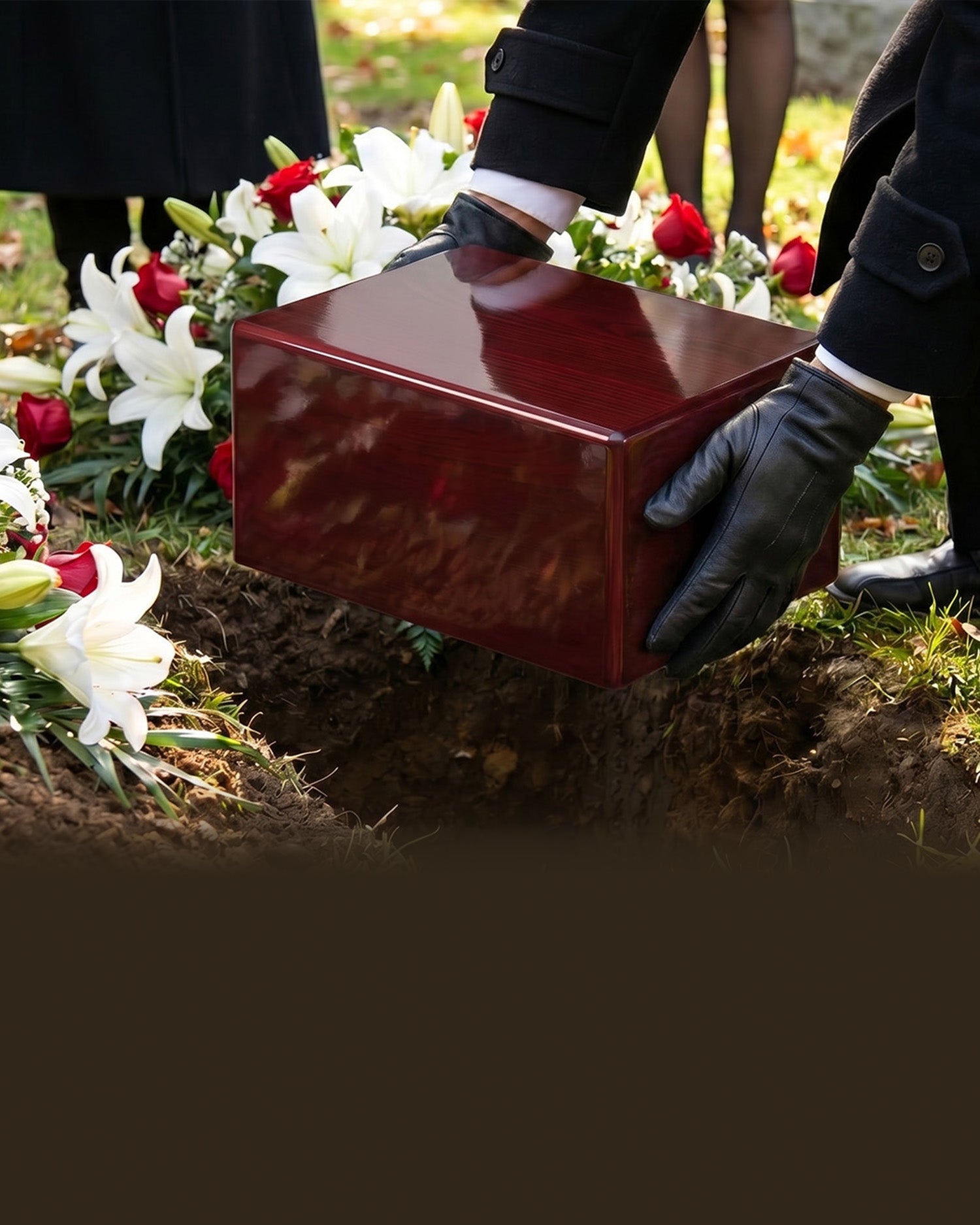
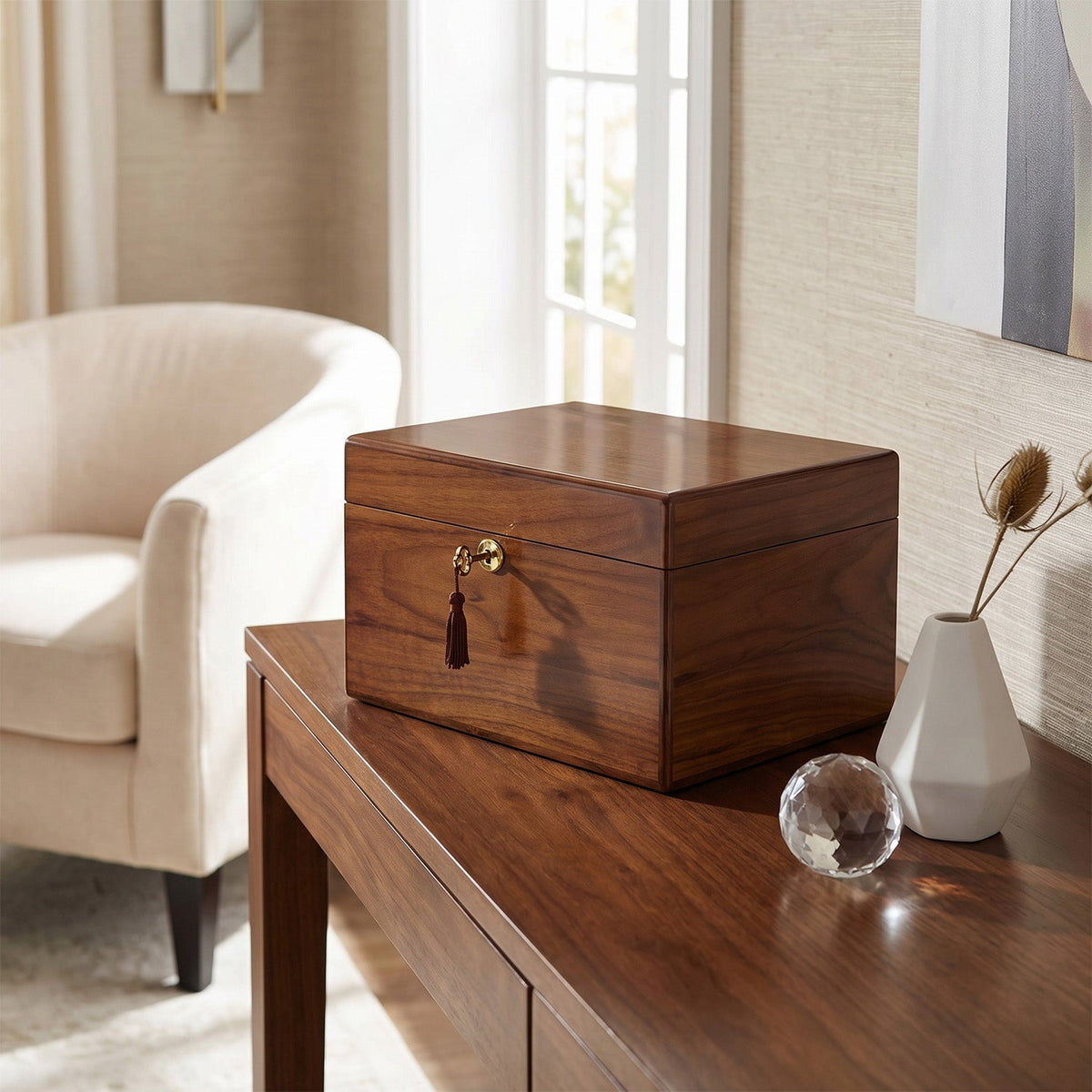
When families start looking at urns, the first thing they notice is how many materials there are. Warm wood, polished stone, lightweight aluminum, brass, ceramic, glass. It is fair to ask whether the material actually matters, or whether it is simply a matter of taste.
The short answer is that it matters most when you know where the urn will go. An urn that will sit on a mantel for decades has different needs from one that will be carried through an airport, placed in a columbarium niche, or buried. This guide compares the most common materials honestly, so you can choose the one that fits your plan.
Jump to a section
1. Does the urn material matter?
Every well-made urn, whatever it is made of, will hold and protect cremated remains. Where materials differ is in weight, how they look and feel in a room, how they handle travel and burial, how easily they can be personalized, and cost. None of these makes one material better than another in general. They make one material better for a particular family's plan.
Before comparing materials, answer three questions:
- Where will the urn rest long term? At home, in a cemetery, in a niche, or will the ashes be scattered?
- Will the urn need to travel? Especially by air.
- Who will handle it? An urn that an older family member will lift and move benefits from being lighter.
2. Wood urns
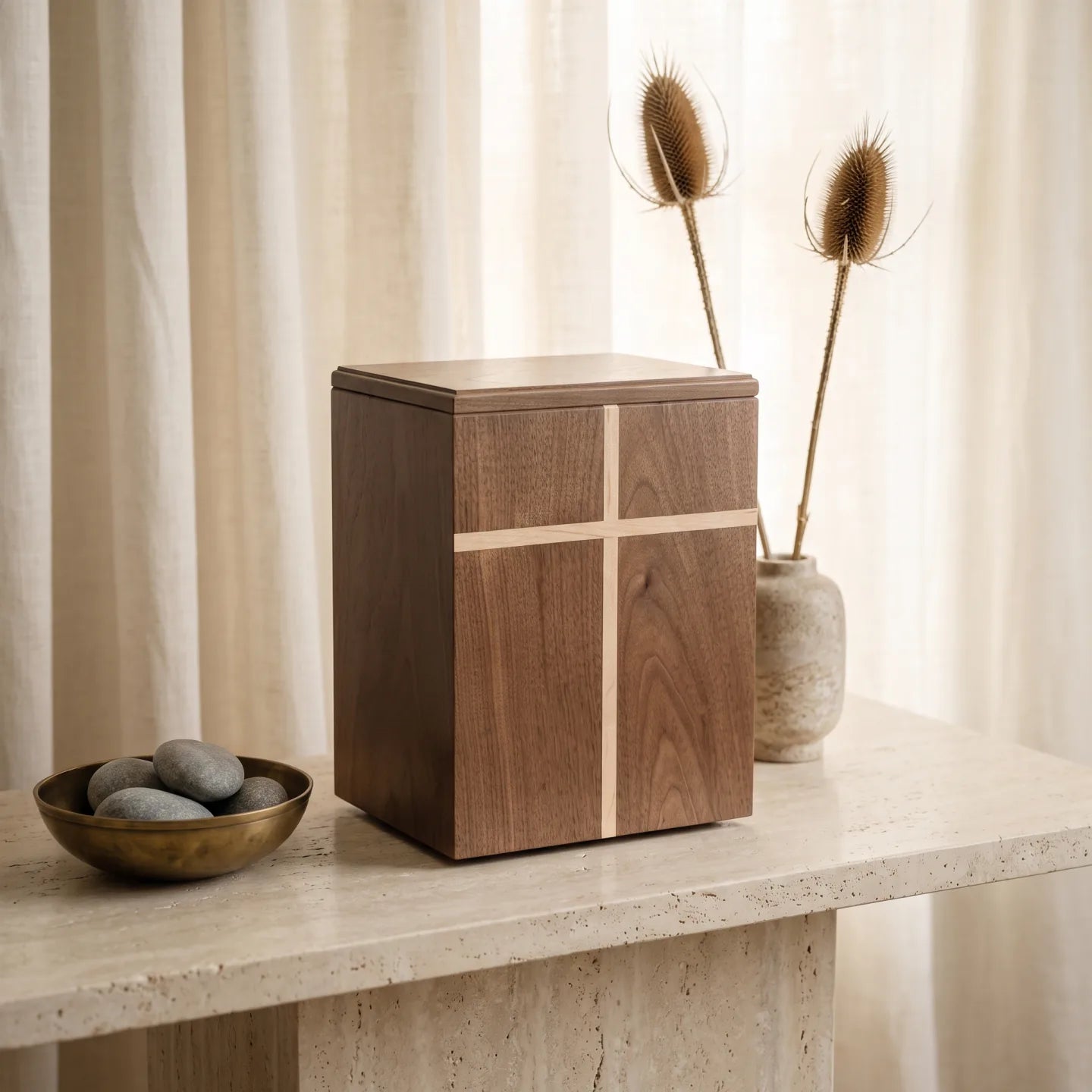
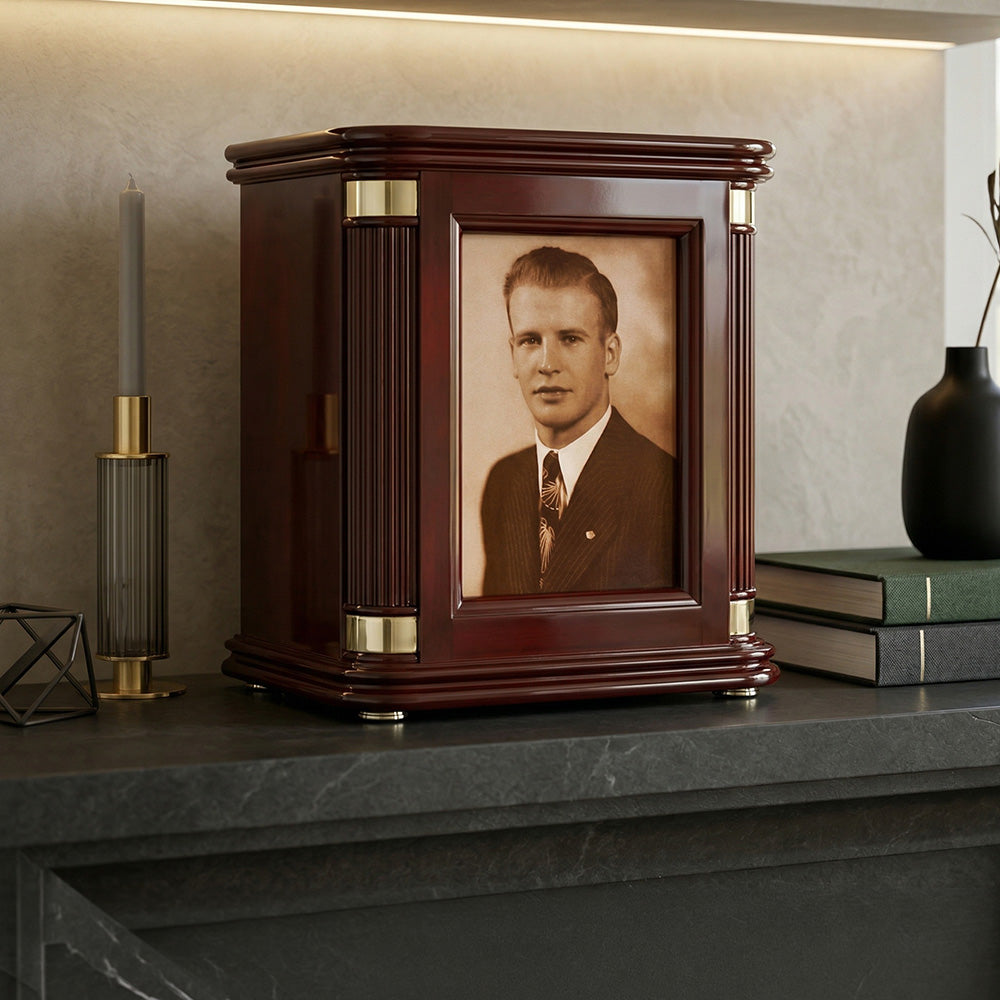
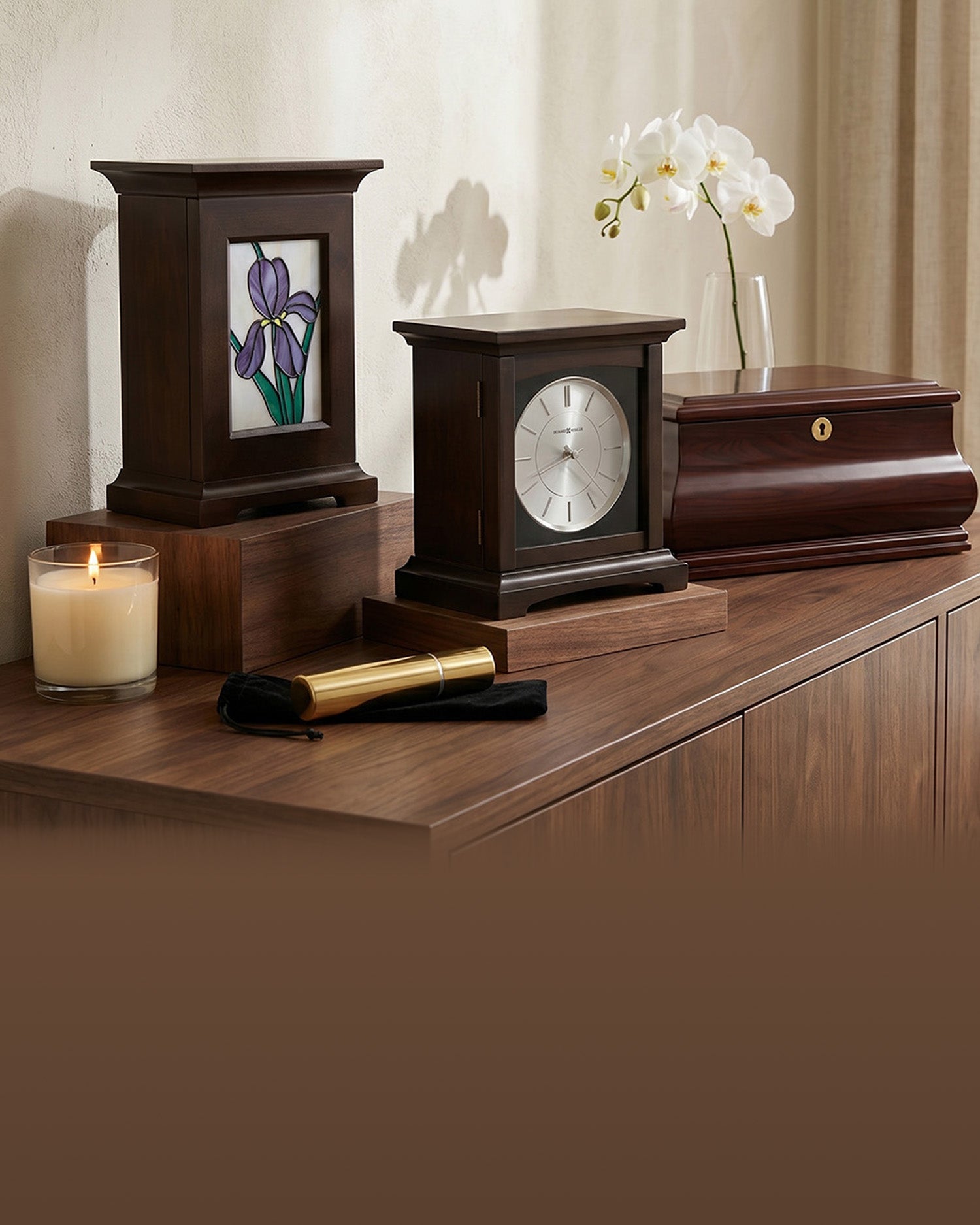
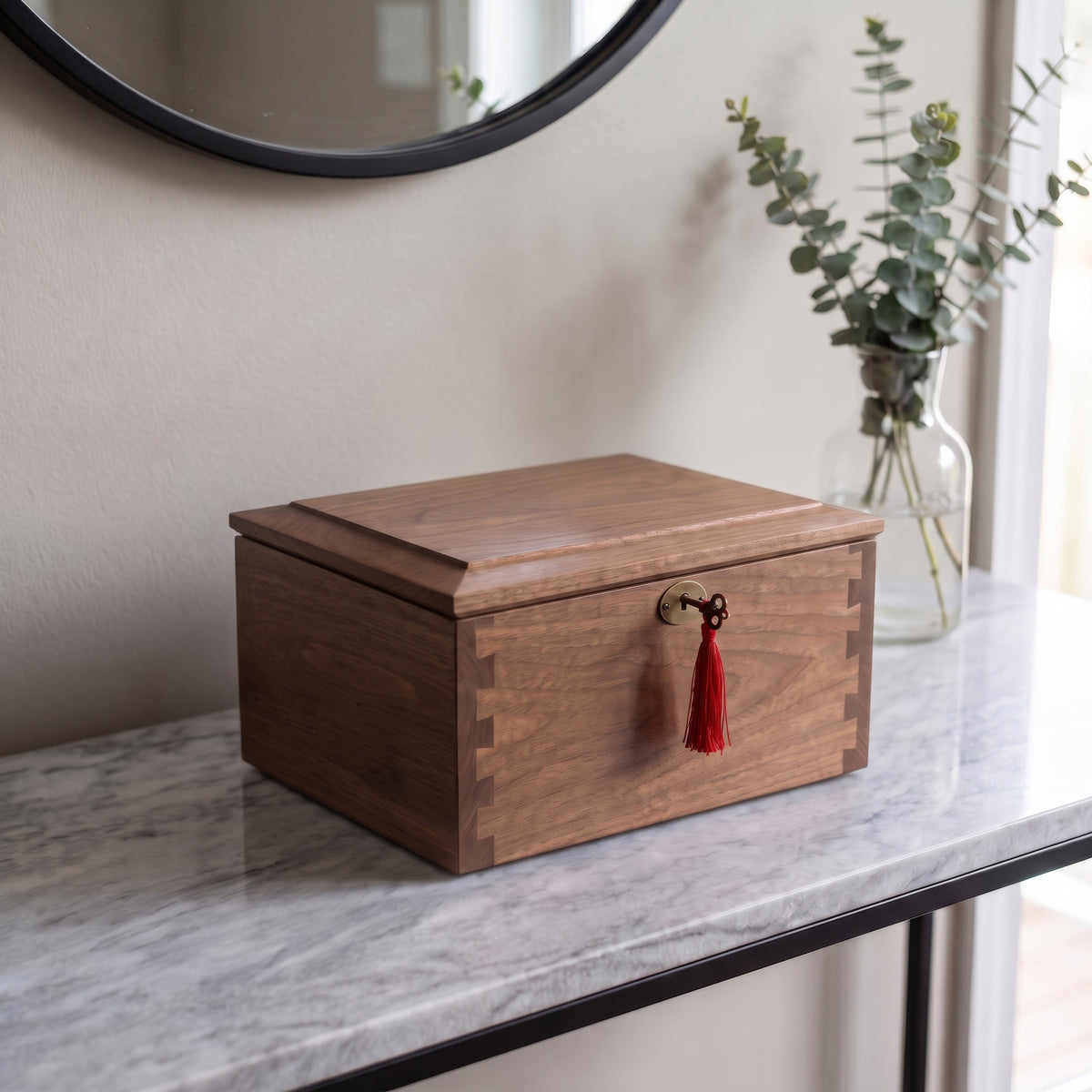
Wood is one of the most popular materials for urns kept at home, and it is easy to see why. It has warmth, it suits most interiors, and it often looks like a fine piece of furniture rather than something clinical. Wood urns range from simple boxes to chests with photo frames, and even clock urns that work as a mantel clock.
Strengths: warm appearance, moderate weight, easy to engrave or add a personalized plate, and generally easier to screen at airport security than dense materials. The TSA recommends lighter-weight materials such as wood or plastic for cremated remains going through a checkpoint. Many wood urns also hold the remains in a separate inner container, which adds another layer of protection.
Things to know: wood is a natural material, so it responds to its environment. Keep it out of strong direct sunlight and away from heat sources and damp areas. For burial, wood is best placed inside an urn vault, since direct contact with soil and moisture will break it down over time. Quality also varies widely between wood urns, which we cover in our guide to how wood urns are built.
3. Stone and cultured marble urns
Stone urns include natural marble and granite, as well as cultured marble, which is a cast blend of stone particles and resin. Stone has a formal, permanent presence, and it is a traditional choice for memorial gardens and cemetery settings.
Strengths: very durable, resistant to moisture, and in some cases suitable for burial without a vault where the cemetery allows it. Natural stone has unique veining, so no two pieces look exactly alike.
Things to know: stone is heavy, which can make it harder for some family members to move. It can chip or crack if dropped. Its density also means it may not screen clearly at airport security, so it is usually not the best choice for air travel. Engraving stone is possible but can cost more than engraving wood or metal.
4. Aluminum urns
Aluminum urns are often cast and then finished with paint, enamel, brushed metal or decorative patterns. They are widely available and come in a broad range of styles, from classic vase shapes to modern designs.
Strengths: lightweight for a metal, resistant to rust, and usually more affordable than brass or bronze. The light weight makes them easy to handle and ship.
Things to know: aluminum is softer than many metals, so it can dent or scratch more easily, and painted finishes can wear with frequent handling. Like other metals, it may not screen clearly at airport security, so confirm your plan before flying. Many aluminum urns use a threaded lid, which is simple and secure, but check that the threads are clean and the lid seats fully.
5. Brass, bronze and stainless steel
Brass and bronze are traditional memorial metals, heavier and more costly than aluminum, with a rich finish that ages well. Bronze in particular is used for cemetery markers and plaques because it resists corrosion. Stainless steel offers a clean, modern look and strong durability. All three are good choices for burial and long-term display, and all are dense enough that they may be difficult to screen for air travel.
6. Ceramic, glass and biodegradable urns
- Ceramic and porcelain offer color and artistry, but can chip or crack, so they are best kept indoors and displayed where they will not be bumped.
- Glass and art glass can be beautiful and unique, and are usually best suited to display in a protected spot.
- Biodegradable urns, made from materials such as paper, salt or plant fiber, are designed to break down naturally for green burial or water placement. They are not intended for long-term display.
7. Side-by-side comparison
| Material | Weight | Home display | Air travel | Burial | Typical cost |
|---|---|---|---|---|---|
| Wood | Moderate | Excellent, warm and furniture-like | Often a good choice | Best inside a vault | Low to high, depends on construction |
| Stone and cultured marble | Heavy | Excellent, formal look | Usually not ideal | Durable, some allowed without a vault | Moderate to high |
| Aluminum | Light | Good, many styles | Confirm screening first | Works inside a vault | Low to moderate |
| Brass, bronze, stainless | Heavy | Excellent, ages well | Usually not ideal | Very durable | Moderate to high |
| Ceramic and glass | Moderate | Excellent in a protected spot | Fragile for travel | Not recommended without a vault | Low to high |
| Biodegradable | Light | Not intended for display | Varies | Designed for green burial | Low |
Costs vary widely within every material. For a closer look at what drives price, see our guide on how much to spend on an urn.
8. How to choose
- Keeping the urn at home: choose the material you will be glad to see every day. Wood, stone and metal all work well; many families choose wood because it feels at home among furniture. Browse our urn chests and adult urns.
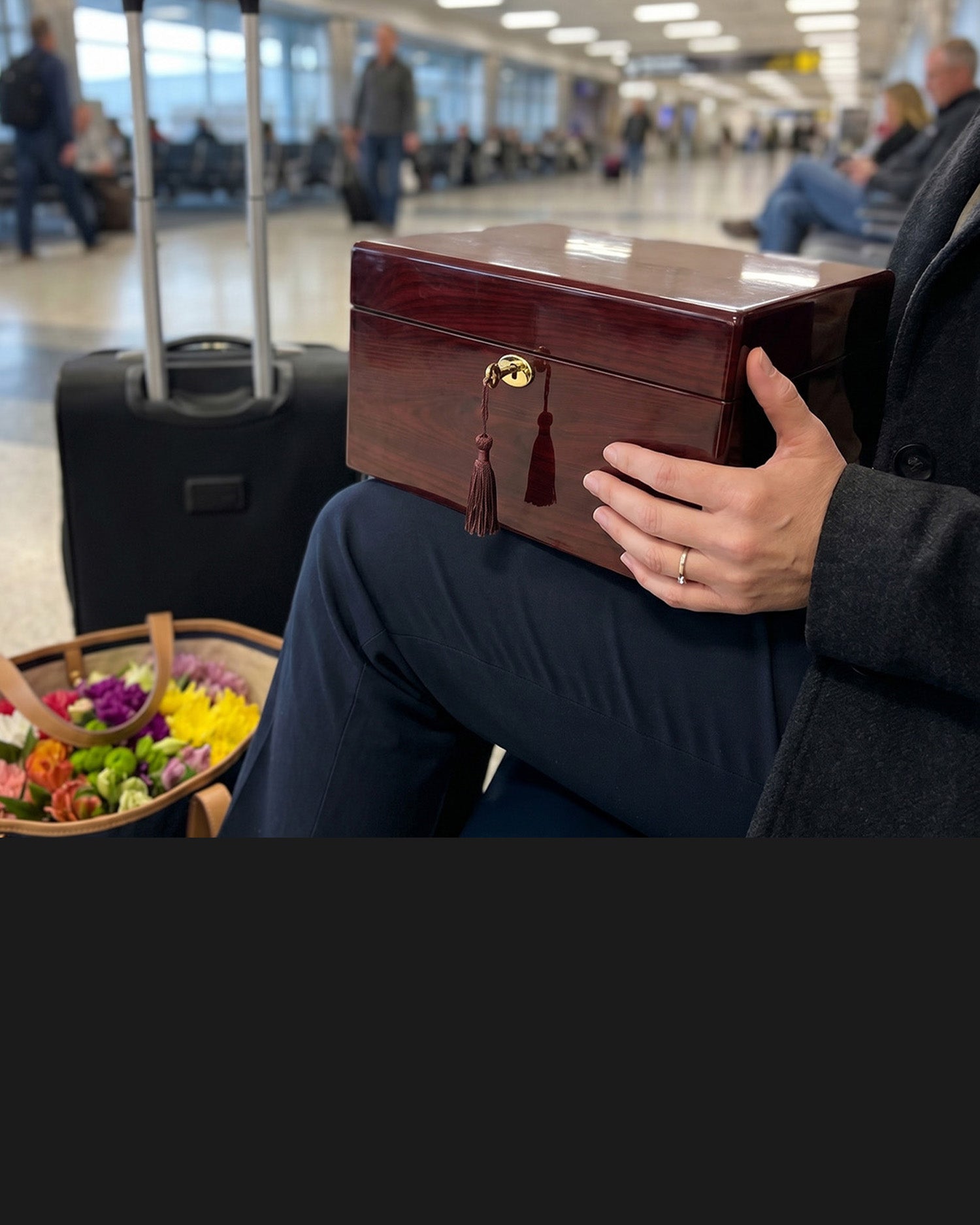
- Flying with the urn: a lighter material such as wood, or a temporary container, is usually easiest. Our guide to flying with ashes explains TSA screening.
- Burial: ask the cemetery what it requires first. Metal and stone are durable underground, and wood works well inside a vault. Our guide to burying an urn covers the questions to ask.
- A columbarium niche: exterior dimensions matter more than material. Measure the niche before you choose.
- Sharing ashes: keepsake urns in any material let several people hold a portion. See our keepsakes and scattering capsules.
9. Frequently asked questions
9.1 What is the best material for an urn?
There is no single best material. Wood is a popular choice for home display and travel, stone and metal are very durable for burial, and biodegradable materials suit green burial. The best choice depends on where the urn will rest and whether it needs to travel.
9.2 Is a wood urn or a metal urn better?
Neither is better in every case. Wood is warm, moderately weighted and often easier to screen for air travel. Metal, especially brass or bronze, is extremely durable and well suited to burial. Aluminum is a lighter, more affordable metal option.
9.3 Are aluminum urns good quality?
A well-made aluminum urn can be a practical, attractive choice. It is lightweight and resists rust, though it can dent or scratch more easily than heavier metals. Look for a smooth, even finish and a lid that seals securely.
9.4 How heavy is a stone urn?
Stone urns are among the heaviest options, and weight varies with size and type of stone. If family members will need to lift or move the urn, check the listed weight before buying.
9.5 Which urn material can be kept outdoors?
Stone, bronze and some metals hold up best outdoors. Wood, ceramic and glass are better suited to indoor display. For an outdoor memorial, ask the maker whether the specific urn is rated for outdoor use.


Leave a comment
All comments are moderated before being published.
This site is protected by hCaptcha and the hCaptcha Privacy Policy and Terms of Service apply.