

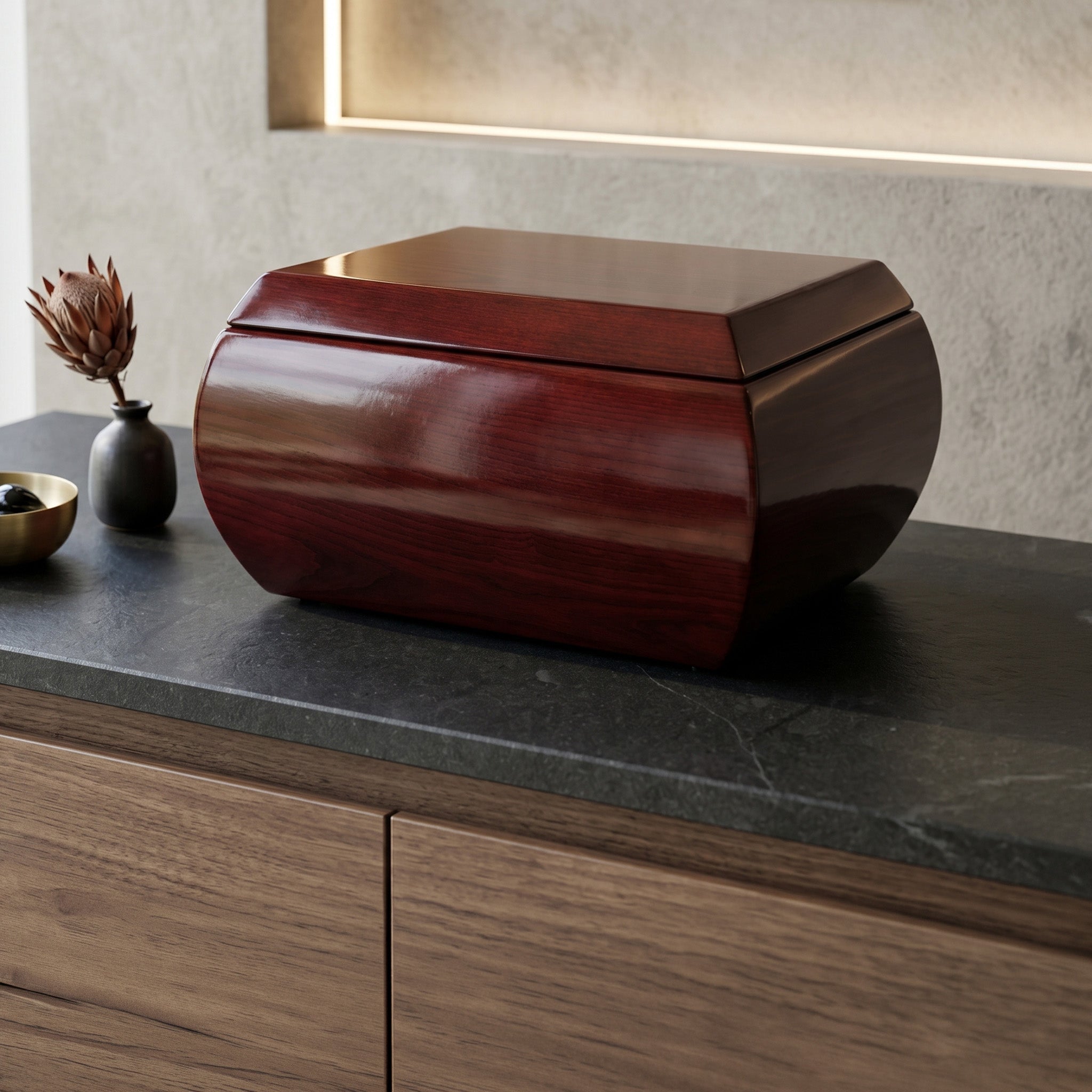
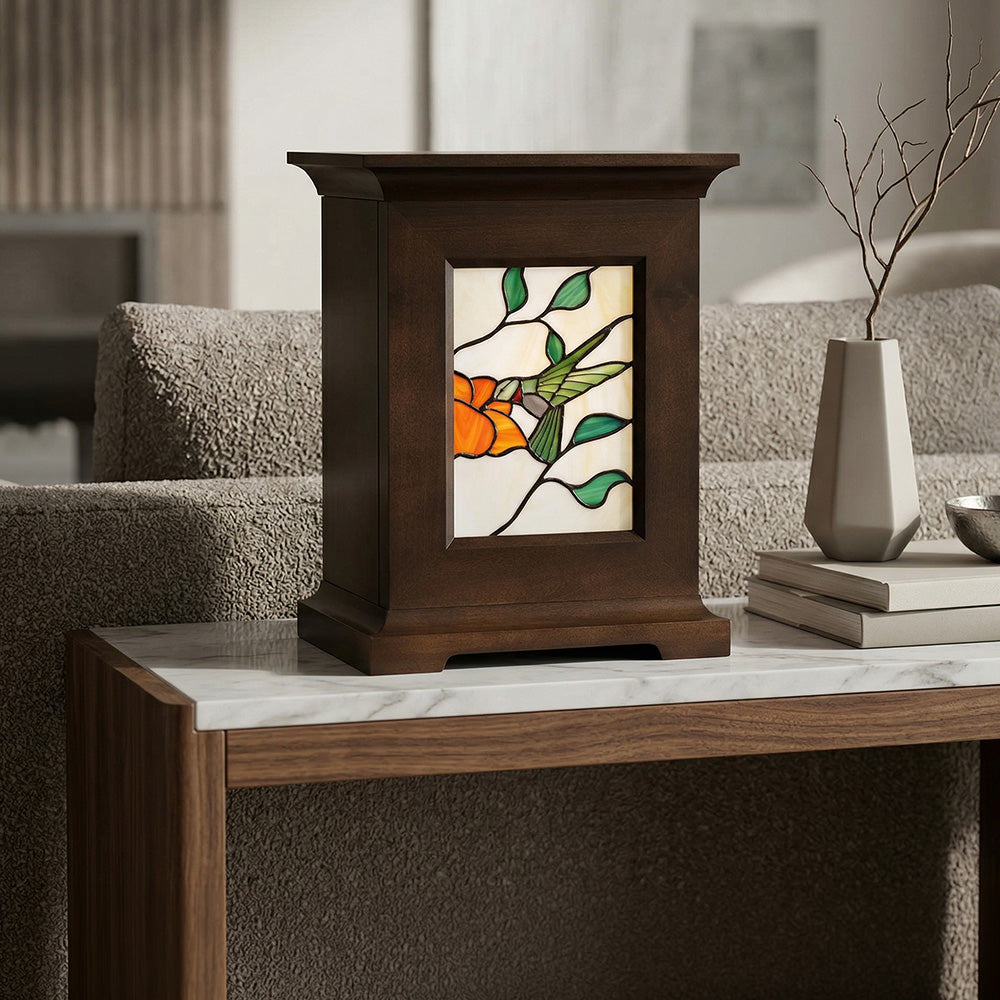
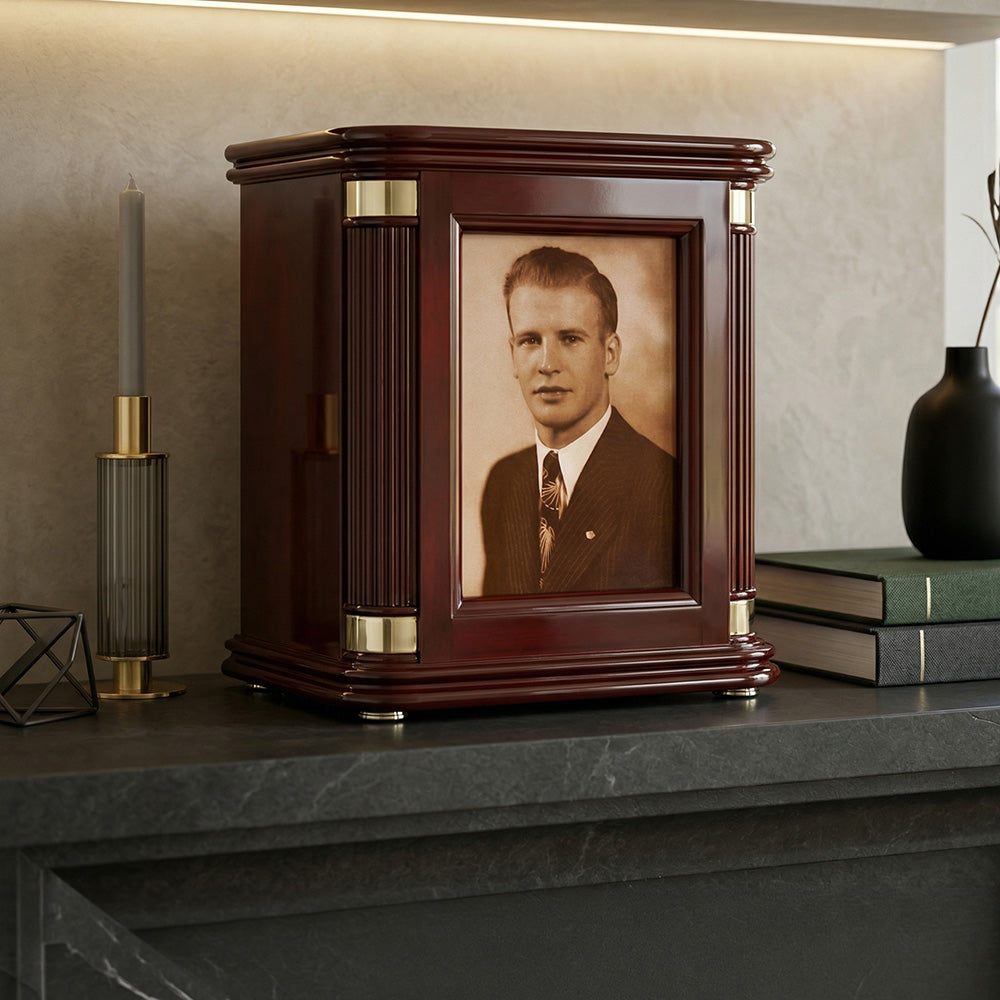
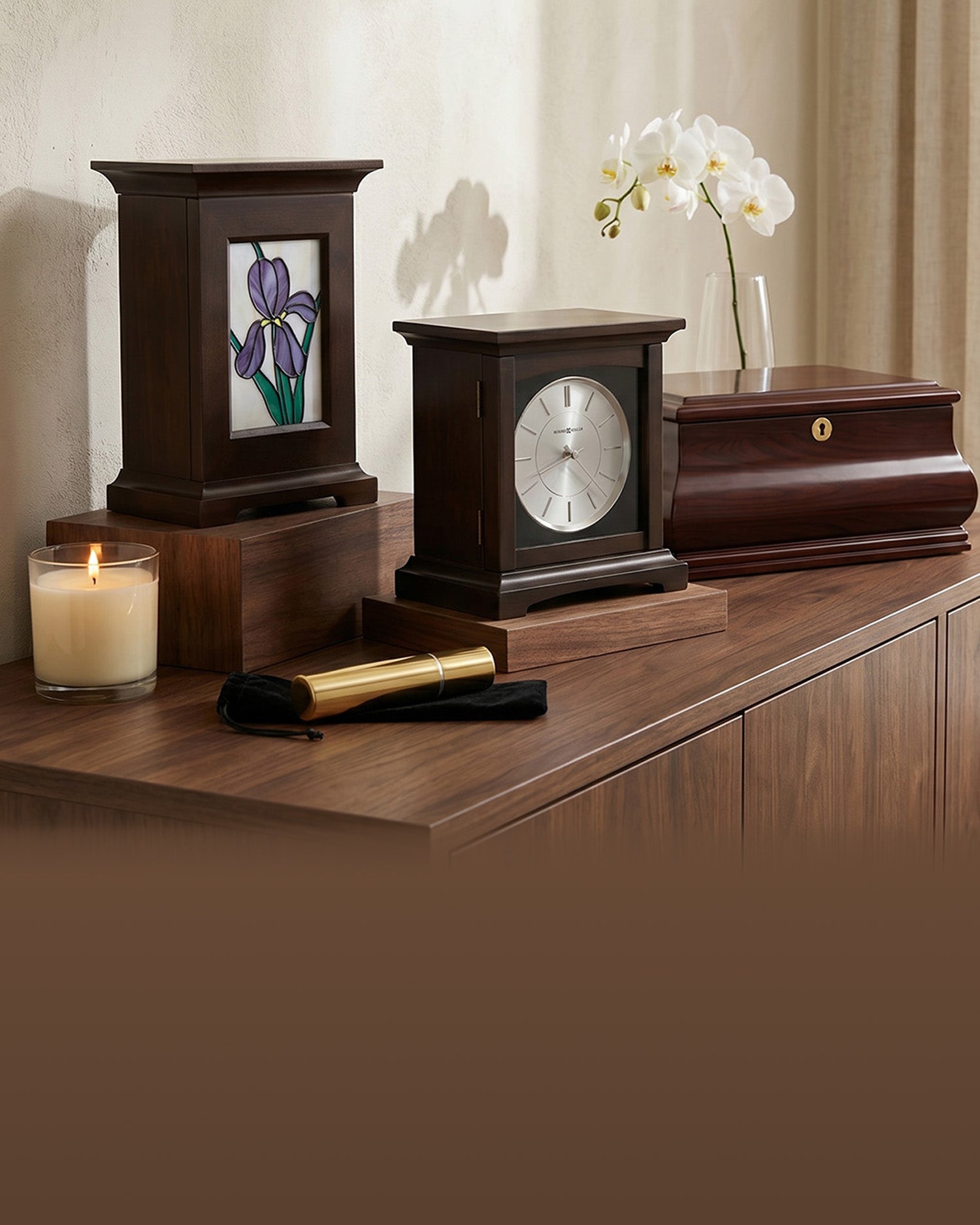
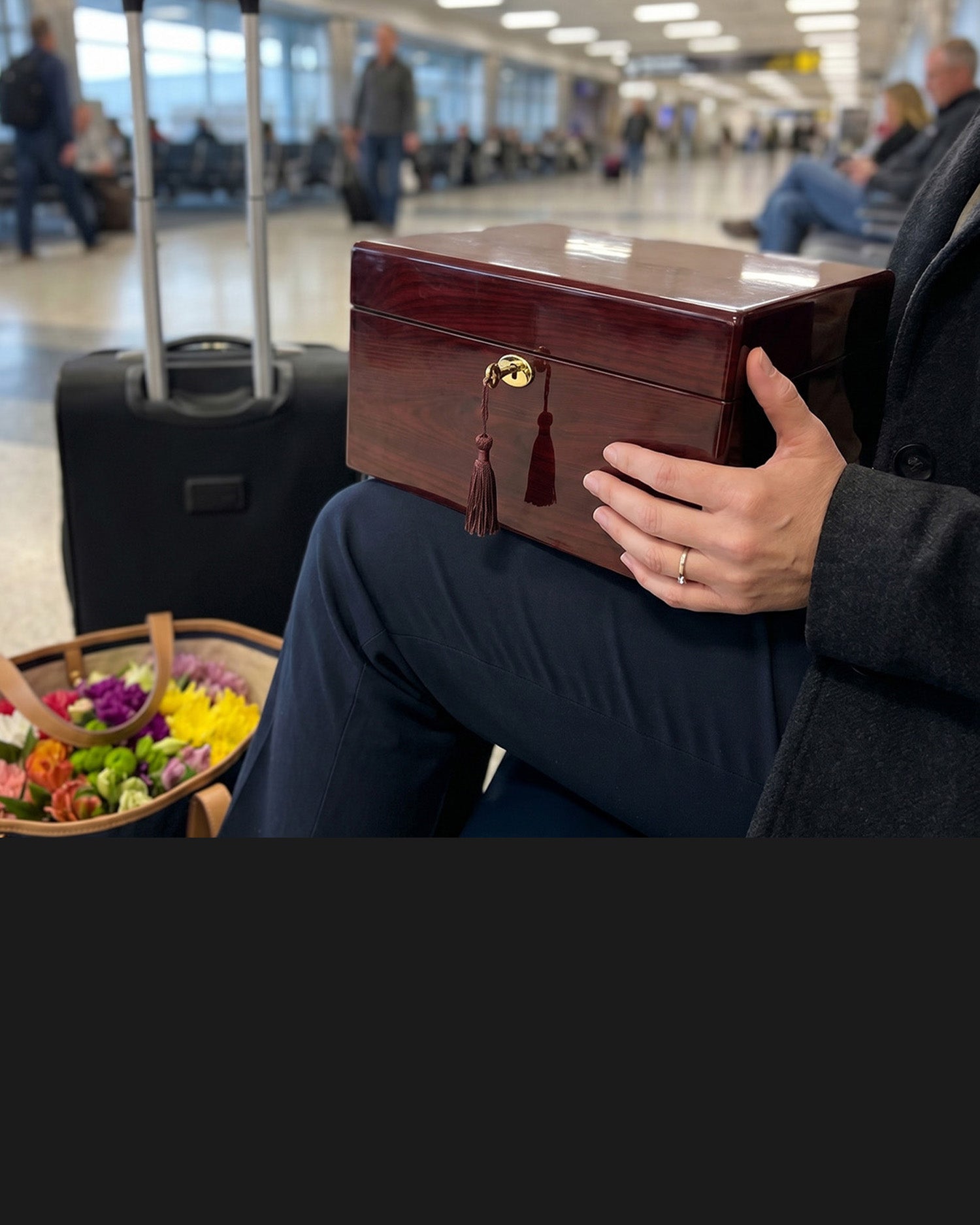
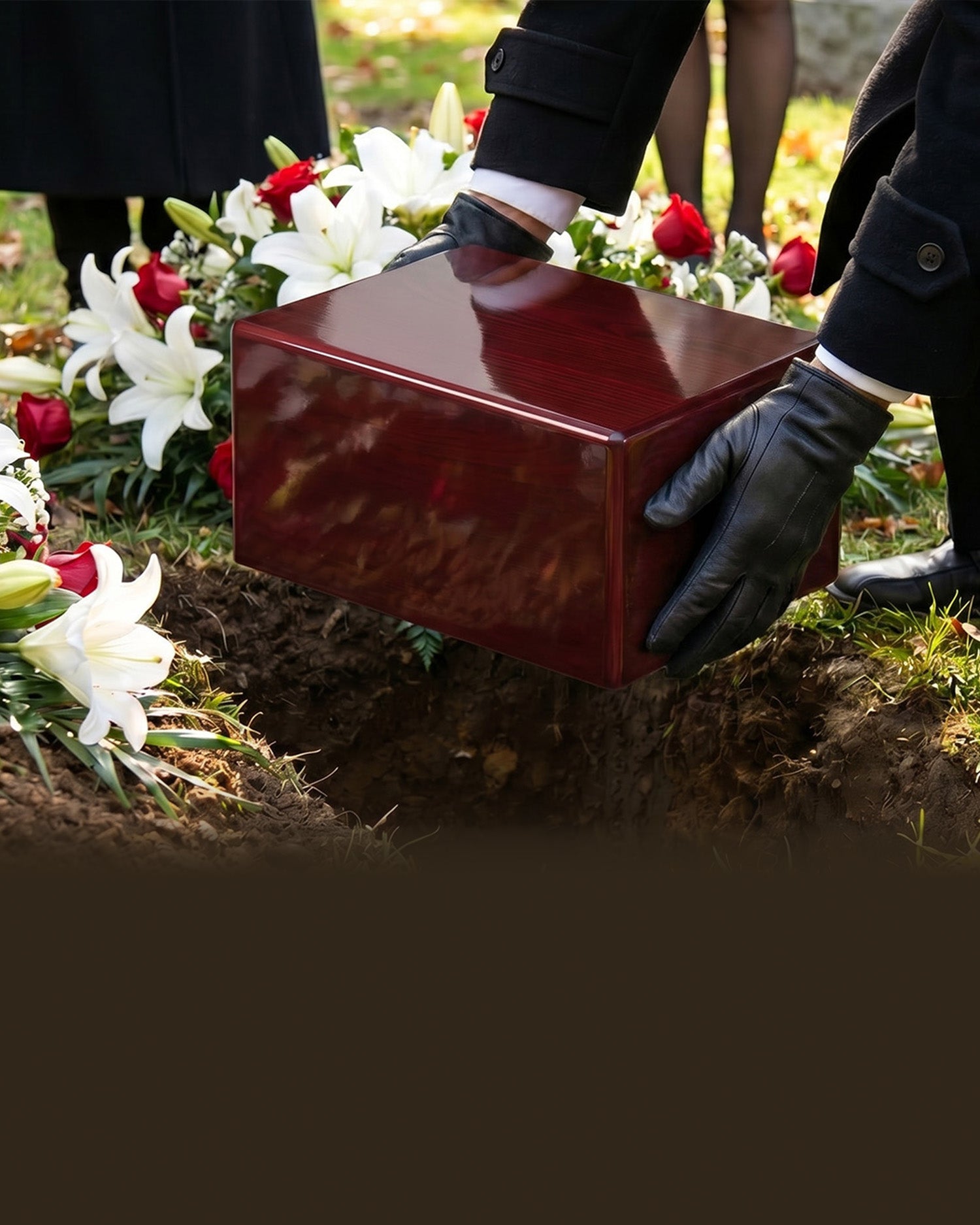
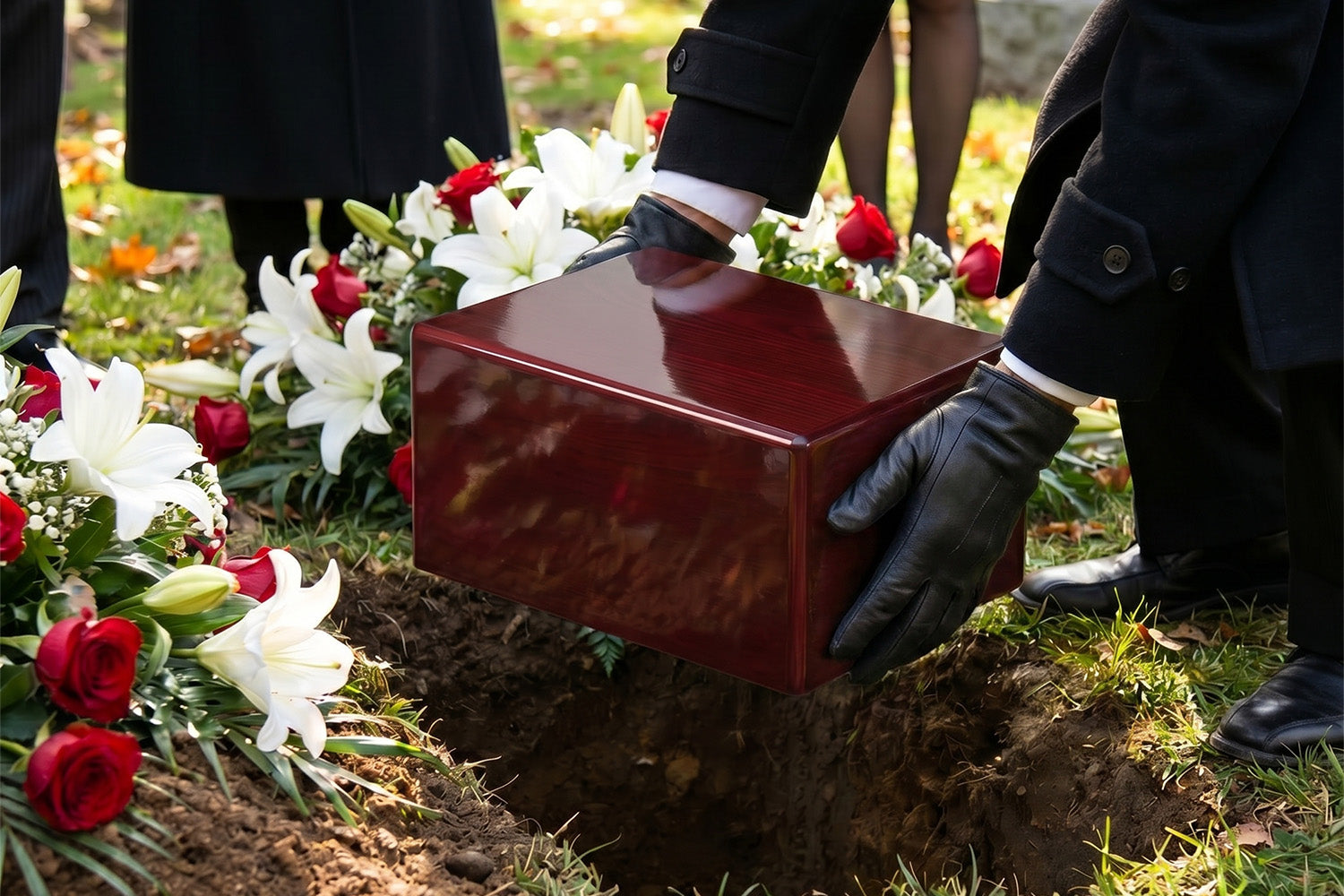
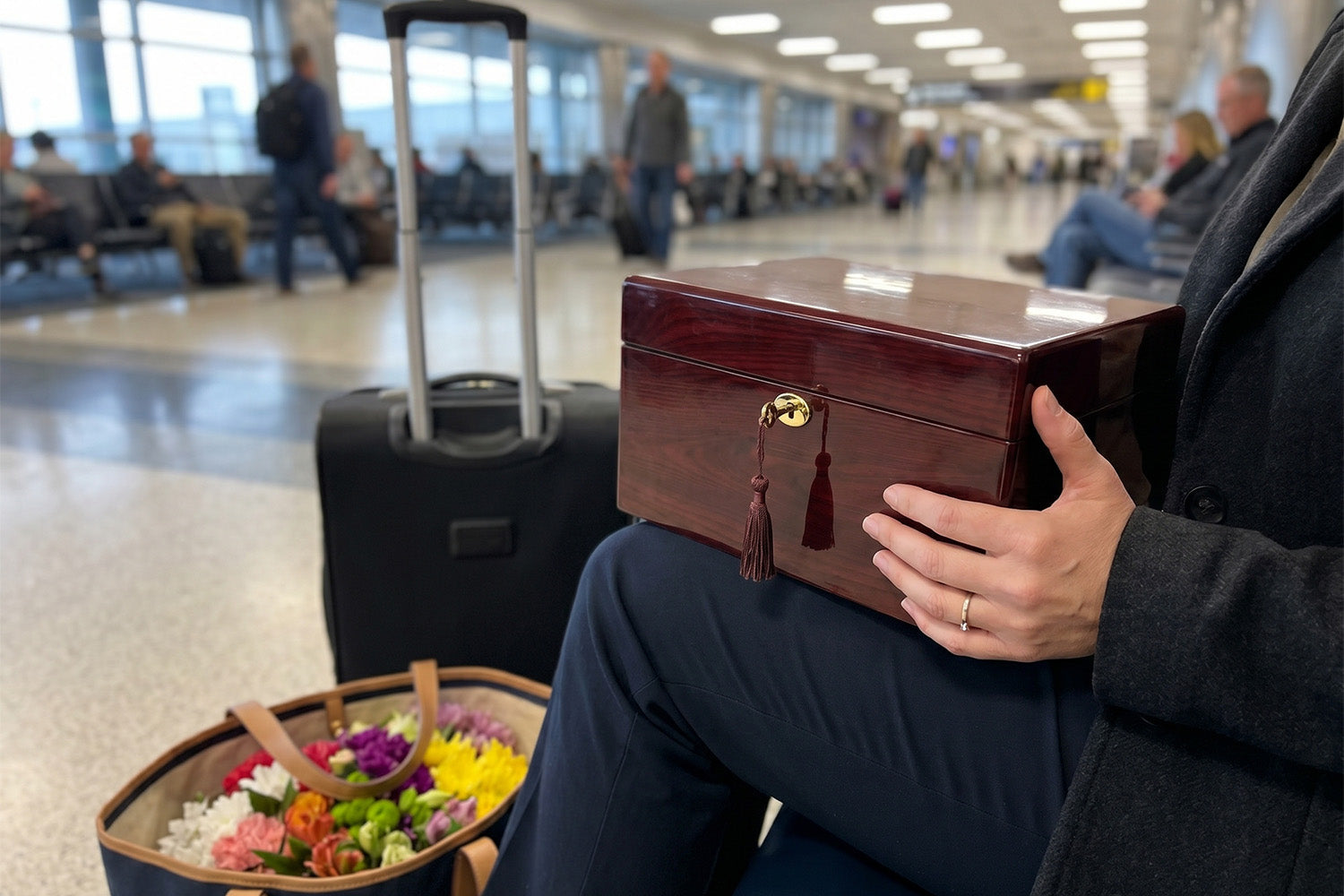
Yes, you can bury cremated remains, and many families choose burial because it creates a permanent place to visit. The right burial urn depends on where the ashes will be placed, whether the cemetery requires an urn vault, what material the urn is made from, and whether your family wants to bury all of the ashes or keep a portion in a keepsake.
I have seen families assume this part will be simple, then pause when the cemetery asks about vaults, plot rules, niche dimensions, or material requirements. It is not complicated once someone slows it down. You do not need to know every rule for every cemetery. You need to know what to ask before you choose an urn.
Some families are deciding between cremation vs burial. Others have already chosen cremation and now want burial as the final placement. Both are common. This guide walks through cemetery burial, urn vaults, materials, private property burial, columbarium niches, and how to choose an urn that serves your family at the service, the graveside, and the final placement.
Jump to a section
- 1. Can you bury cremated remains?
- 2. Cemetery burial: what to expect
- 3. Do you need an urn vault?
- 4. What urns work for burial?
- 5. Burying remains on private property
- 6. Columbarium niches: a different kind of placement
- 7. Choosing the right burial urn
- 8. Burial planning checklist
- 9. Final thoughts
- 10. Frequently asked questions
1. Can you bury cremated remains?
Yes, cremated remains can usually be buried in a cemetery, placed in a columbarium niche, buried on private property where allowed, or used in a green burial setting. The rules depend on the cemetery, property, local regulations, and the type of urn being used.
A burial urn is an urn chosen for final placement in the ground. Some are made specifically for direct burial. Others, such as durable wooden urns or urn chests, may be appropriate when placed inside an urn vault, depending on cemetery requirements.
The first step is not choosing the prettiest urn. It is calling the cemetery, funeral director, or local authority and asking what is allowed. Most cemeteries will share their requirements before you purchase, and asking early can save your family from an expensive or emotional change later.

One family I remember had already chosen a beautiful urn for the service. They loved how it looked beside the flowers and photo. Then, a day before final arrangements, they realized the cemetery required an outer burial container.
Nothing was wrong with the urn. They simply needed to confirm the vault requirement. Once that was settled, the same urn still served the family during the service and graveside ceremony, then went into the vault for burial.
2. Cemetery burial: what to expect
Most cemeteries allow cremated remains to be buried, but the details vary. A cemetery may have a dedicated cremation section, a cremation garden, a family plot that allows urn placement, or separate rules for placing multiple urns in one space.
This is where families sometimes feel surprised. Burying ashes is often simpler than a traditional casket burial, but it still has formal steps. There may be opening and closing fees, marker requirements, urn vault rules, service timing, and paperwork.
Some cemeteries allow cremated remains to be buried in an existing family plot. Others allow more than one urn in a single plot. Some restrict materials. Some require a marker, plaque, or headstone. Ask the cemetery for their rules in writing if you can.
2.1 Questions to ask before you buy
Before you purchase any urn for burial, I would ask these questions first:
- What size urns are accepted for this plot, section, or niche?
- Is an urn vault or outer burial container required?
- Are there material restrictions for the urn?
- Can cremated remains be buried in an existing family plot?
- Are multiple urns allowed in one plot?
- Is a marker, headstone, plaque, or inscription required?
- What are the opening, closing, and placement fees?
- If using a columbarium niche, what are the exact interior dimensions?
- Can the cemetery provide the requirements in writing?
That last question matters. When several family members are helping, written requirements reduce confusion. They also make it easier to choose a cremation urn that fits both the family’s wishes and the cemetery urn requirements.
3. Do you need an urn vault?
An urn vault is an outer burial container that holds the urn in the ground. Cemeteries often require one to help protect the urn and prevent the ground above the burial space from settling over time.
The Federal Trade Commission notes that outer burial containers are not required by state law in most areas, but many cemeteries require them as a condition of burial. That means the question is usually not “Is a vault legally required everywhere?” It is “Does this cemetery require one?”
A vault also changes how you think about urn material. If the urn goes inside a vault, it has less direct contact with soil and moisture. That can make a well-crafted wooden urn or urn chest a meaningful option when the cemetery permits it.
This is why I do not think of burial as “out of sight, so appearance does not matter.” The urn may be present at the memorial service, carried to the graveside, and seen during the final moments of the day. A well-crafted urn serves your family at every step.

4. What urns work for burial?
The best urn for burial depends on the cemetery rules, whether a vault is required, and whether the urn will be placed in soil, a vault, a niche, or a green burial setting. Material matters, but context matters just as much.
| Burial setting | Urn vault required? | Recommended urn materials | Key thing to confirm first |
|---|---|---|---|
| Cemetery ground burial, dedicated cremation section | Often required | Metal, stone-style, wood inside a vault, cemetery-approved options | Cemetery urn requirements and vault rules |
| Cemetery ground burial, family plot | Often required | Metal, stone-style, wood inside a vault, approved cremation urns | Whether multiple urns are allowed in the plot |
| Columbarium niche | No, usually not for above-ground niche placement | Wood, metal, stone-style, decorative memorial urns | Exact niche dimensions and material rules |
| Green burial or biodegradable option | Usually no, if direct natural return is intended | Green burial urn, biodegradable paper, fiber, salt, sand, or similar materials | Whether the cemetery or site allows biodegradable direct placement |
| Private property burial | Depends on local rules and family preference | Biodegradable urns, durable urns, or wood inside a protective container | Local zoning, landowner permission, and future property plans |
Metal urns, including brass, bronze, and stainless steel, are widely accepted for burial because of their durability. Stone-style urns can also be appropriate for burial or niche placement when dimensions and cemetery rules allow.
A wooden urn can be suitable for burial in many settings when placed inside an urn vault. Direct soil contact and moisture can affect wood over time, so the vault becomes an important part of the plan. Always confirm with the cemetery before purchasing.
Biodegradable urns are different. They are designed to break down naturally over time and may be used for green burial, direct earth placement, or water placement depending on the product and local rules. If your family wants a natural return, ask specifically about green burial urn options.
5. Burying remains on private property
Burying ashes on private property can be deeply meaningful. A family farm, garden, woodland, or place connected to the person’s life may feel more personal than a cemetery. But private property burial needs more care than many families expect.
Before burying ashes on private land, check local zoning rules, property ownership, and any state or municipal requirements. If the land is not yours, get clear permission from the landowner. If the property could be sold later, think about whether future owners will preserve or even know about the burial location.

I once heard of a family that buried a portion of the ashes beneath a favorite tree on family land, then kept a small keepsake for a sibling who lived far away. That kind of compromise can be helpful when one person wants a permanent place and another wants a personal remembrance close by.
A keepsake urn can hold a portion of the ashes while the rest is buried. If you are unsure how to divide the ashes, ask your funeral director if you are unsure how to transfer or divide the ashes.
Private property burial is not something I would treat casually. Record the location clearly. Tell the right family members. Keep any permissions or notes with important family documents so future generations know what was done and why.
6. Columbarium niches: a different kind of placement
A columbarium niche is an above-ground compartment that holds an urn. It may be located in a cemetery, mausoleum, church, memorial garden, or cremation memorial wall. It is not the same as ground burial.
The biggest practical issue is size. A niche has fixed interior dimensions. An urn may have enough cubic-inch capacity for the ashes but still be too tall, too wide, or too deep for the niche.
Ask the cemetery for the exact niche dimensions before ordering. I would also ask whether the niche will hold one urn or two, whether the front is visible, whether personalization is allowed, and whether there are material restrictions.
For niche placement, appearance may matter even more because the urn may remain visible or partly visible depending on the niche design. A urn chest, wood urn, stone-style urn, or other memorial urn may be appropriate if it fits the niche and meets the cemetery’s rules.
7. Choosing the right burial urn
Choosing the right burial urn comes down to three things: permanence, the service experience, and your family’s plan for the ashes. The urn needs to satisfy the cemetery, but it also needs to serve your family on the day you gather.
That is the part many guides skip. The urn is not only a container that disappears underground. It may be seen at the service, held at the graveside, placed near flowers and photos, and remembered by the people who were there.
Howard Miller Memorial’s urn chests are designed with craftsmanship and care. In many burial plans, especially when an urn vault is used, that quality can matter from the service through the graveside ceremony and final placement.
Before purchasing, confirm your cemetery’s specific rules. A well-crafted urn can bring dignity to the visible parts of the service, while the vault, cemetery requirements, and placement plan handle the practical side of burial.
If some family members are unsure whether to bury all the ashes, pause before transferring everything into one urn. Families can bury all of the ashes or only a portion. The remainder may be kept in keepsakes, placed in cremation jewelry, or saved for a future scattering ashes ceremony.
You might also want to compare this choice with other types of cremation urns. A family may choose burial, home display, keepsakes, scattering, or a mix of several options.
7.1 Sizing for burial
Cremation urn capacity is usually measured in cubic inches. A common rule of thumb is 1 cubic inch of capacity for every 1 pound of healthy body weight. A standard adult urn is often around 200 cubic inches.
For example, if your loved one weighed about 180 pounds, you would typically look for an urn with at least 180 cubic inches of capacity. If the person weighed 220 pounds, you would look for a larger urn or ask the funeral director what size is appropriate.
For burial, capacity is only one part of sizing. You also need the exterior dimensions, especially if the urn must fit inside a specific vault or columbarium niche. If the cemetery provides a vault, ask for its interior dimensions before choosing the urn.
8. Burial planning checklist
When families feel overwhelmed, I like to bring the decision back to a simple checklist. You do not need to solve every detail at once. Work through the order below, and the urn decision usually becomes clearer.
- Confirm the burial location. Decide whether the ashes will be placed in a cemetery plot, cremation garden, columbarium niche, green burial site, or private property location.
- Ask for the rules in writing. Confirm cemetery urn requirements, accepted materials, size limits, fees, and marker rules.
- Ask whether an urn vault is required. If yes, ask whether the cemetery provides it or whether your family must purchase one.
- Choose the right size urn. Use the 1 cubic inch per 1 pound rule as a starting point, then confirm the exterior dimensions.
- Decide whether all or part of the ashes will be buried. If some family members want a personal remembrance, plan for keepsakes before final placement.
- Plan the service and graveside ceremony. Think about whether the urn will be visible, carried, placed beside photos, or part of a table display before burial.
- Confirm the marker or record. Ask whether a plaque, headstone, or inscription is required or optional.
- Keep a record for future generations. Save the burial location, plot number, niche number, cemetery paperwork, and any private property notes with family documents.
9. Final thoughts
Burial gives memory a place. For some families, that place is a cemetery plot near other relatives. For others, it is a columbarium niche, a green burial setting, or a piece of private land that meant something to the person they loved.
You do not need to have every detail figured out before starting. Begin with the location. Ask the cemetery or local authority what is allowed. Then choose the urn, vault, keepsakes, and service details around that plan.
If your family wants an urn that brings dignity to the service and graveside ceremony, Howard Miller Memorial offers heirloom-quality urn chests, portrait urns, and clock urns designed with care. For burial, always confirm the cemetery’s requirements first, especially if an urn vault is part of the final placement.
10. Frequently asked questions
10.1 Can you bury cremated remains in a cemetery?
Yes, most cemeteries allow cremated remains to be buried, but each cemetery sets its own rules. Some have cremation gardens, some allow urns in family plots, and others have dedicated sections. Ask about size limits, fees, marker requirements, and whether an urn vault is required.
10.2 Do you need a special urn for burial?
You may need a cemetery-approved urn or an urn that fits inside an urn vault. Some cemeteries restrict materials, while others focus mainly on vault use and dimensions. Before buying any cremation urn, ask the cemetery what type of urns are accepted for burial.
10.3 What is an urn vault and do I need one?
An urn vault is an outer burial container that holds the urn underground. Many cemeteries require one to protect the urn and reduce ground settling. State law generally does not require outer burial containers, but cemeteries may require them as a condition of burial.
10.4 Can a wooden urn be buried?
Yes, a wooden urn can often be buried when placed inside an urn vault, subject to cemetery requirements. Wood may break down with direct soil and moisture exposure, so the vault helps reduce contact. Always confirm with the cemetery before choosing a wooden urn for burial.
10.5 Can you bury ashes on private property?
Burying ashes on private property may be possible, but you should check local zoning rules, ownership, and any state or municipal requirements first. Consider what happens if the property is sold later. Keep a clear written record of the burial location for future family members.
10.6 What size urn do I need for burial?
A common sizing rule is 1 cubic inch of urn capacity for every 1 pound of healthy body weight. Standard adult urns are often around 200 cubic inches. For burial, also check the urn’s exterior dimensions so it fits the vault, plot requirements, or niche.
10.7 What is the difference between a columbarium niche and ground burial?
Ground burial places the urn below the surface of the earth, often in a cemetery plot and sometimes inside a vault. A columbarium niche is an above-ground compartment that holds the urn. Niches have fixed dimensions, so measuring before ordering is essential.
10.8 Can you bury only part of the ashes and keep the rest?
Yes, families can bury part of the ashes and keep the rest in a keepsake urn, cremation jewelry, or another memorial container. This can help when one person wants a permanent burial place and another family member wants a small personal remembrance nearby.

Leave a comment
All comments are moderated before being published.
This site is protected by hCaptcha and the hCaptcha Privacy Policy and Terms of Service apply.