



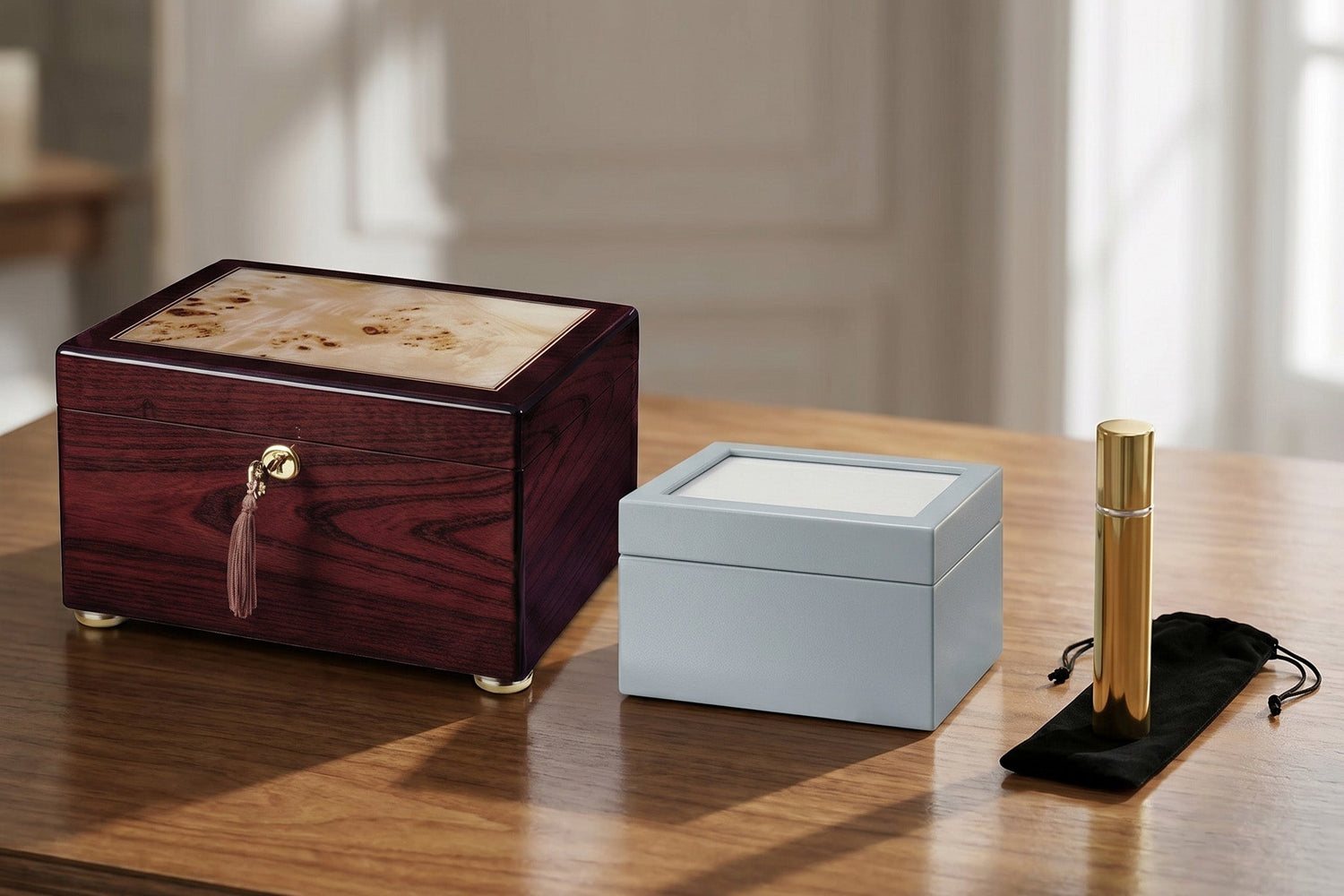
Most families come to urn sizing with no frame of reference. Urns are not sold in small, medium, or large. They are measured in cubic inches, which is simply a way of describing how much space is inside, and for most people that number means nothing until someone explains it.
The standard adult urn holds around 200 cubic inches. A widely used industry guideline says that about one pound of body weight before cremation equals about one cubic inch of capacity. So if your loved one weighed around 170 pounds, you would start by looking for an urn of at least 170 cubic inches, then round up to a standard adult size for peace of mind.
That answers the question for most situations. The rest of this guide walks through how to apply that guideline to your specific situation, what to do when you are not sure of the weight, how companion urns and keepsake urns work, and why exterior dimensions matter just as much as capacity when placement is part of the plan.
Jump to a section
- 1. What size urn do I need?
- 2. How urn size is measured: understanding cubic inches
- 3. Urn sizes explained: from keepsakes to companion urns
- 4. How to figure out the size you need
- 5. Special situations: companion, child, and oversize urns
- 6. Sharing or dividing the ashes: keepsakes and scattering
- 7. Sizing for burial, niches, and columbariums
- 8. Quick urn size guide
- 9. Final thoughts
- 10. Frequently asked questions
1. What size urn do I need?
The standard adult cremation urn is sized to hold around 200 cubic inches, and the Cremation Association of North America established this as the industry benchmark. Most adults' cremated remains fall within that capacity when you apply the guideline of roughly one cubic inch per pound of body weight. That rule answers the question for the majority of families choosing an urn for an adult loved one.
The caveat, and it is worth saying clearly upfront, is that this is a guideline, not a guarantee. The actual volume of cremated remains depends on bone density, height, frame, and the cremation process itself. Results vary from person to person, which is why rounding up is always the right instinct when you are near the edge between two sizes. A little extra space inside an urn causes no problem. An urn that turns out to be too small creates real difficulty at a moment when you do not need it.
The sections below walk through each part of the decision calmly, including size categories, how to work out what you need, special situations, and guidance on burial and columbarium niche placement.
2. How urn size is measured: understanding cubic inches
Urns are not labeled small, medium, or large. They are measured in cubic inches, and that number tells you how much space is available inside the urn. A cubic inch is simply a unit of volume: one inch long, one inch wide, one inch deep. When a product listing says an urn holds 200 cubic inches, it means the interior of that urn can accommodate 200 of those units of space.
This distinction matters because two urns that look visually similar on a shelf can have quite different interior capacities. A taller, narrower vase might hold fewer cubic inches than a shorter, wider box. The number in the product description is the figure to trust, not the visual impression from a photograph.
2.1 The rule of thumb: one pound of body weight, about one cubic inch
The Cremation Association of North America established 200 cubic inches as the standard capacity for an adult urn, and this figure flows directly from the widely used planning guideline: approximately one cubic inch of interior capacity for every pound of body weight before cremation.
In practice, the volume of remains is usually a little less than body weight, because cremation reduces the body to bone fragments, and what remains is driven by bone mass rather than overall body weight. The rule is a planning tool, not an exact formula. That is why the advice is always to round up when you are near the edge between sizes, not to cut it close.
The actual volume also varies based on factors the guideline cannot account for precisely: bone density, height, surgical implants, and specifics of the cremation process. For families who want a definitive answer rather than an estimate, the funeral home or crematory can confirm the actual volume of remains. That figure removes any uncertainty, and asking for it is entirely routine.
The bottom line: if your calculation brings you to 185 cubic inches, choose a standard adult urn at 200 cubic inches rather than looking for an urn sized exactly to the number. If the calculation comes out above 200, look at an oversize or extra-large option rather than stretching a standard urn to its limit.
2.2 Capacity vs. exterior dimensions
This is the distinction that catches families off guard most often, and it is worth understanding clearly before you order anything. Capacity, measured in cubic inches, tells you whether the cremated remains will fit inside the urn. Exterior dimensions tell you whether the urn will fit on a shelf, inside a columbarium niche, or within an urn vault at a cemetery.
They are not the same number, and both matter. An urn can have the right capacity and still be too tall or too wide for a niche. If placement is part of your plan, check both figures before ordering. There is more detail on this in the burial and niches section below.
3. Urn sizes explained: from keepsakes to companion urns
Urns come in several size categories, each designed for a different situation. Here is a practical overview of each, followed by a reference chart you can use as a quick guide.
Keepsake urns are small by design. They hold a portion of remains rather than the full set, and families use them when several people want something to keep while a primary urn holds the rest. Capacities typically range from a few cubic inches up to around 50, depending on the design.
Infant and child urns are sized using the same one-cubic-inch-per-pound guideline as adult urns, so the resulting capacity reflects the child's weight. The ranges vary considerably from very small infant urns up to child-sized urns that approach the lower end of adult capacity.
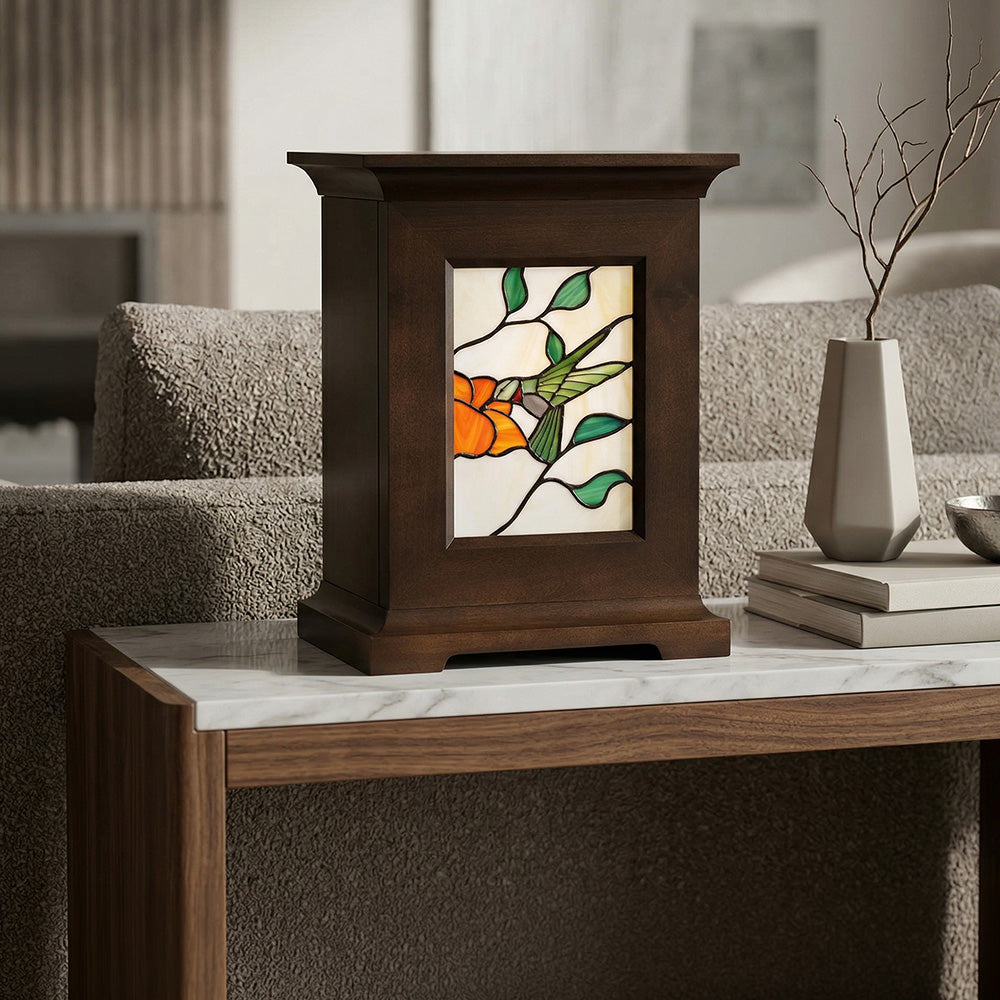
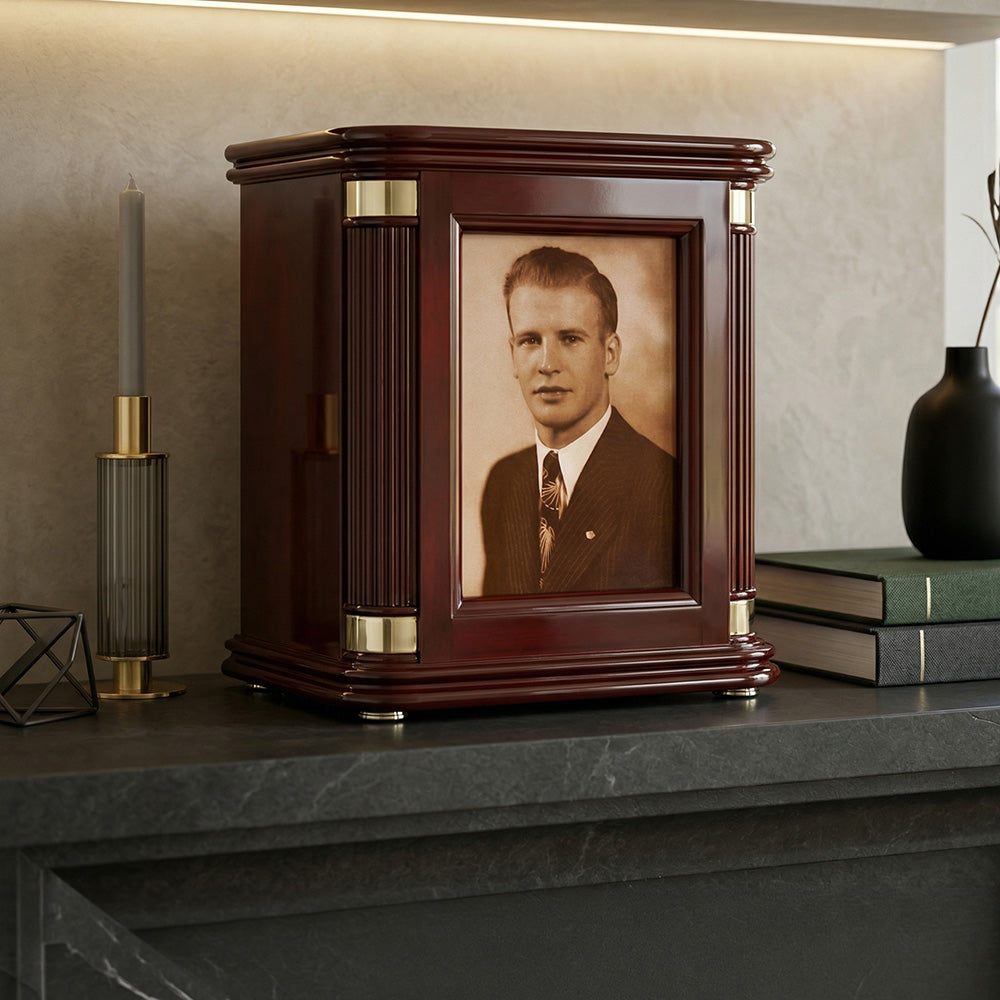
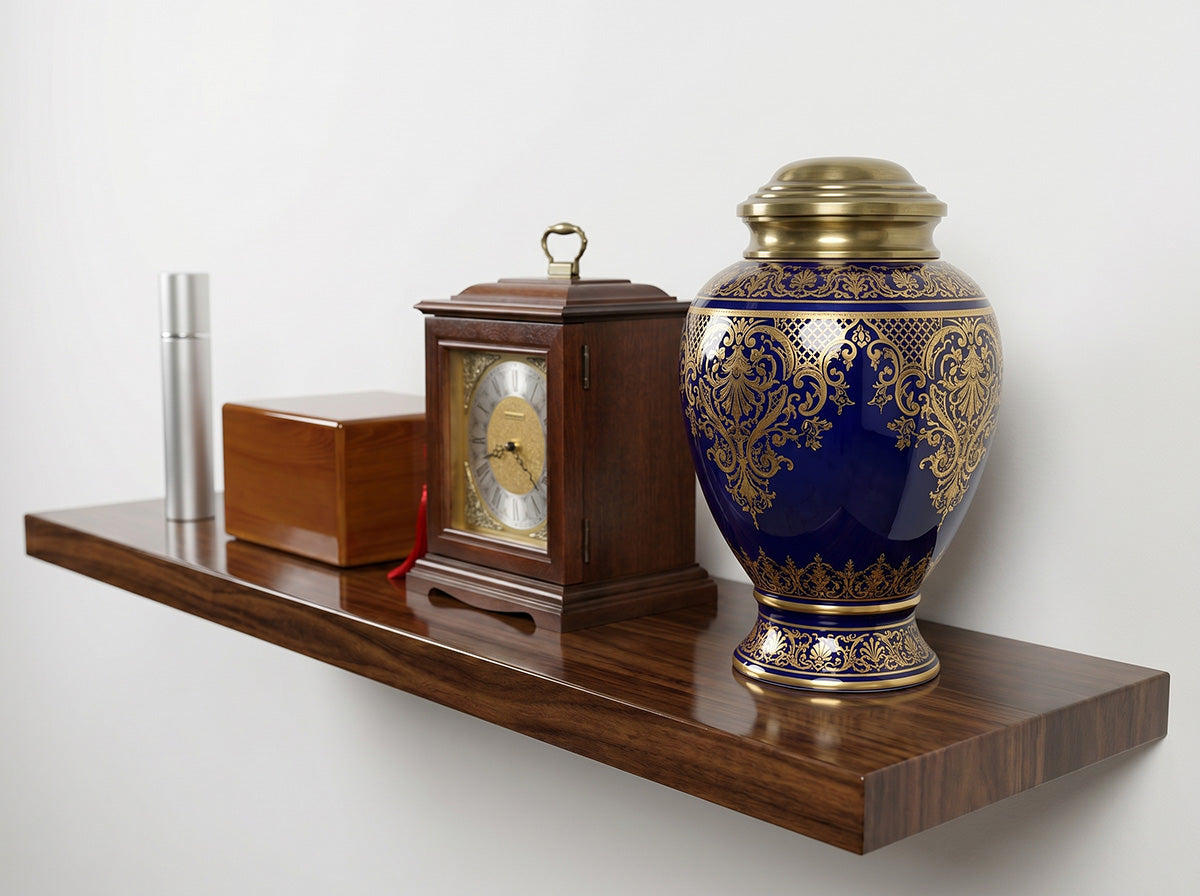
Standard adult urns are the most commonly purchased category, designed to hold the full set of remains for most adults. Howard Miller Memorial's adult urns cover this standard range, with capacity confirmed on each product page so you can verify the figure directly before ordering.
Oversize and extra-large urns provide additional capacity for larger individuals, or for families who prefer the assurance of more room than the standard calculation suggests.
Companion urns are designed to hold the remains of two adults. The commonly cited capacity is around 400 cubic inches, reflecting roughly double the standard adult benchmark, though designs vary.
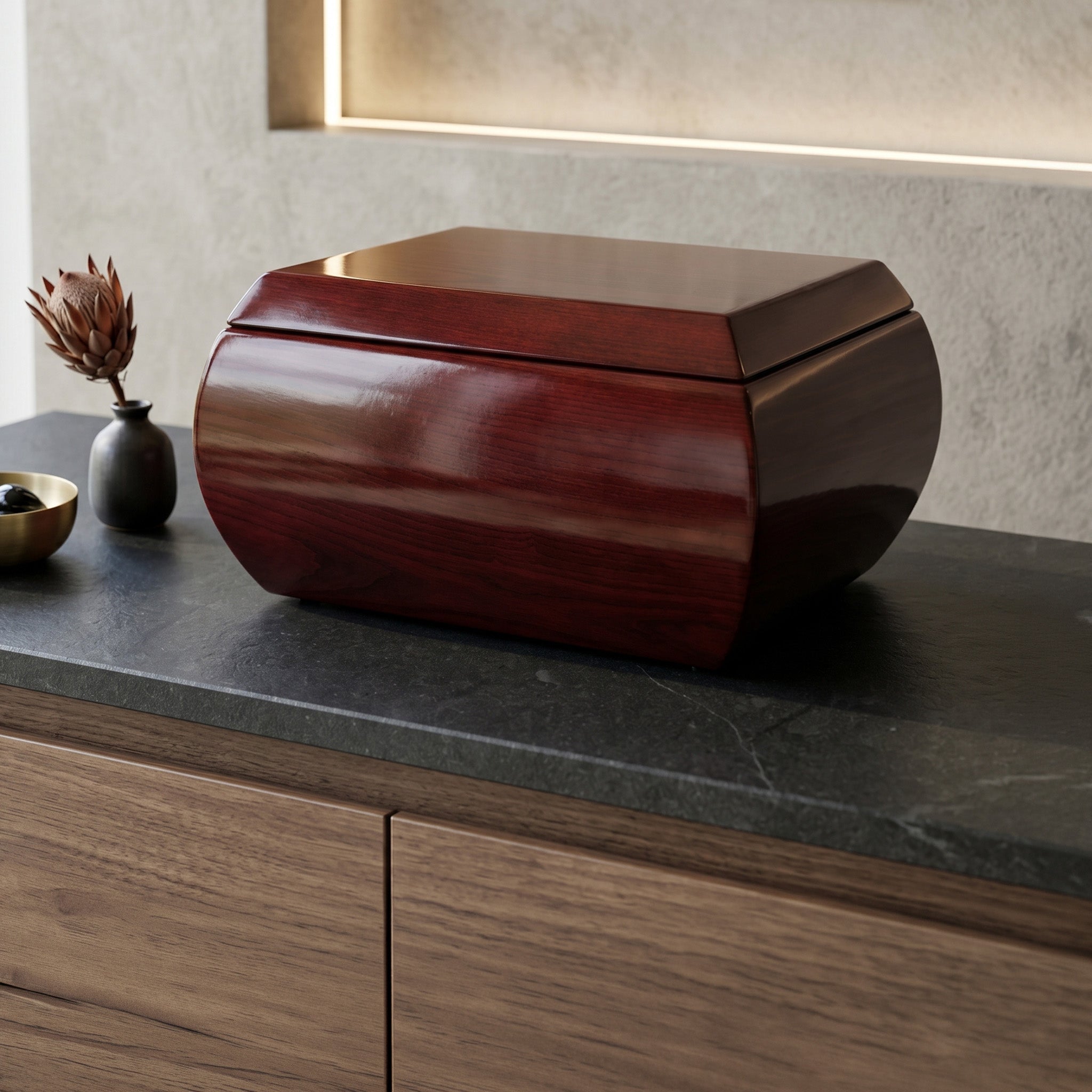
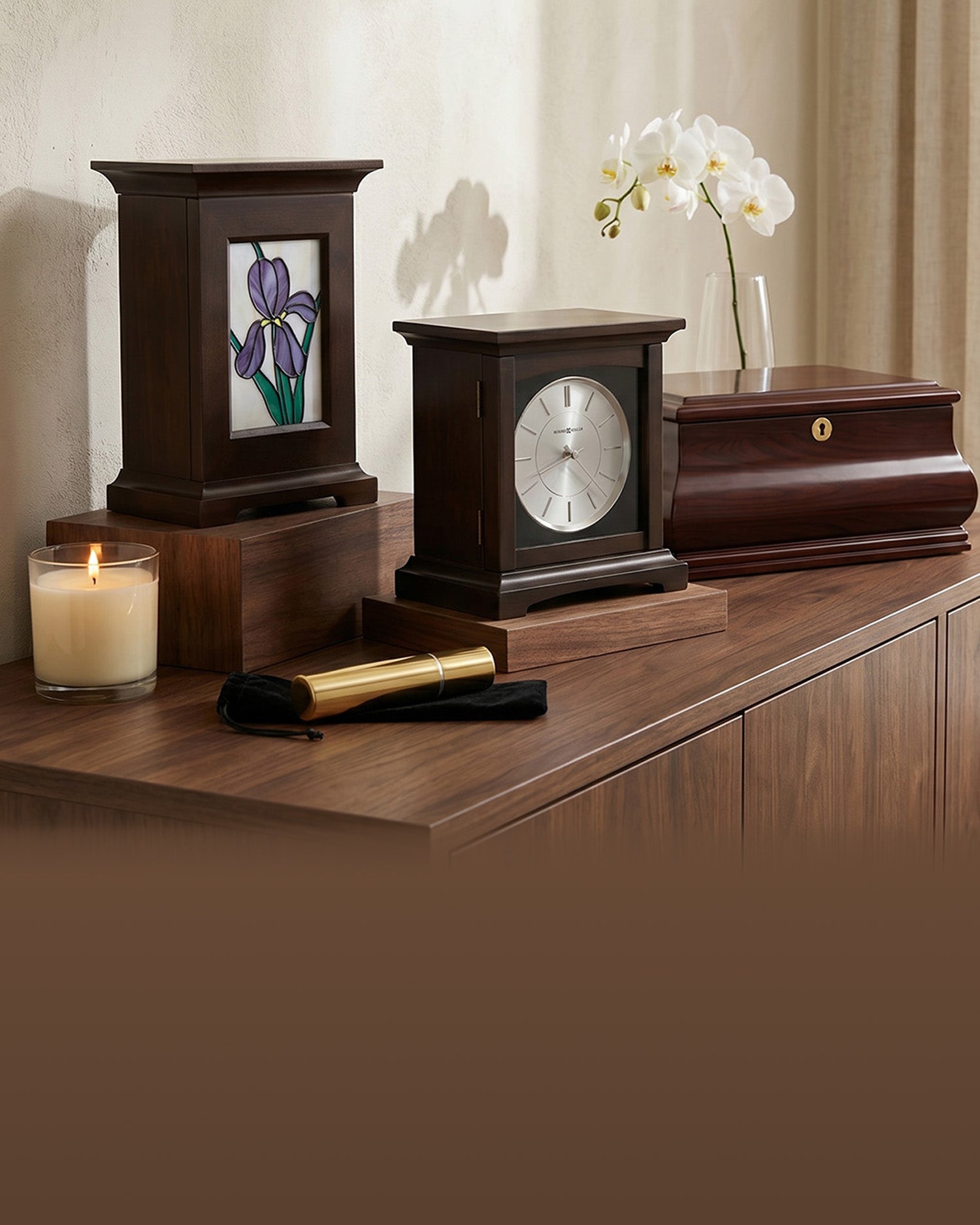
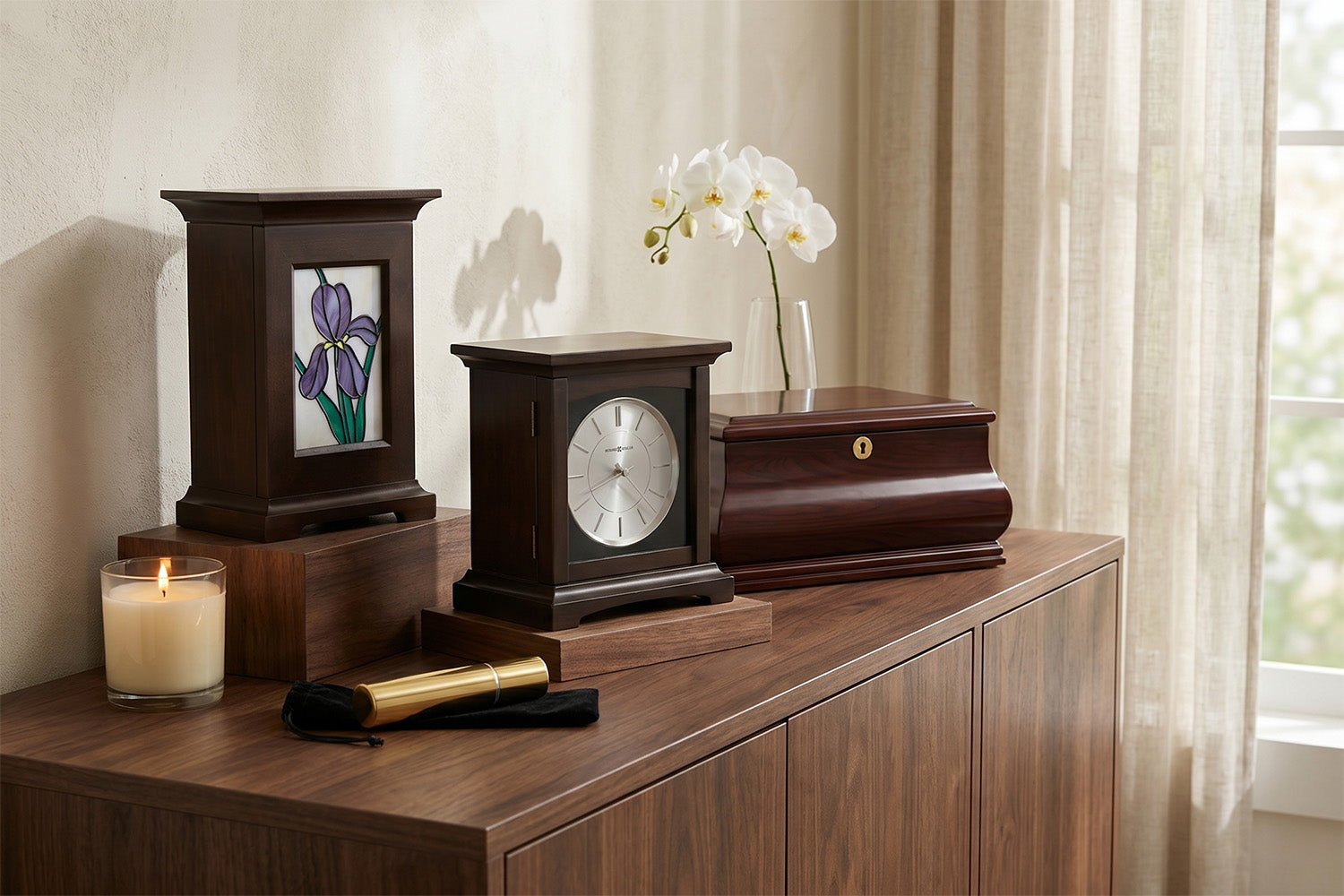
Howard Miller Memorial's urn chests are worth considering alongside the traditional urn shapes. These chests carry the same care around interior capacity and offer a distinctive heirloom aesthetic that sits naturally in a home. As with any urn, the figure to check is the product's stated interior capacity in cubic inches. A beautiful urn is only the right urn if the remains actually fit inside it.

Urn size chart
| Size category | Approximate capacity | Best suited for | Common uses |
|---|---|---|---|
| Keepsake | 3–50 cubic inches | Sharing a small portion of remains | Home display of a portion; dividing among several family members |
| Infant | 5–40 cubic inches | Infants, sized to weight | Primary urn for an infant; may complement a keepsake for older children |
| Child / youth | 40–175 cubic inches | Older infants through children, sized to weight | Primary urn for a child; varies significantly with the child's size |
| Standard adult | ~175–220 cubic inches | Most adults | Home display; burial with urn vault; columbarium niche placement |
| Oversize / extra-large | 220+ cubic inches | Larger individuals; peace-of-mind buffer | Full remains for a larger adult; added margin for families who prefer it |
| Companion (two people) | ~350–500+ cubic inches | Two adults | Co-mingled or divided remains for a couple; some designs include a compartment divider |
All capacity figures are approximate ranges drawn from widely cited industry guidelines. The actual volume of cremated remains varies from person to person. Confirm the actual volume with the funeral home or crematory, and verify the product's stated capacity in cubic inches before ordering.
4. How to figure out the size you need
Once you have the cubic-inch rule in hand, the calculation is straightforward. Here is how to apply it in the two most common situations.
4.1 If you know their weight
Start with the guideline: one pound of body weight equals approximately one cubic inch of capacity. Then add a buffer by rounding up to the next standard size category.
Say your loved one weighed 155 pounds. The rule suggests you need at least around 155 cubic inches. A standard adult urn at 200 cubic inches gives you roughly 45 cubic inches of comfortable margin, meaning you are not cutting it close, and you have room even if the actual volume of remains comes in slightly higher than the estimate. That is the size I would choose.
If the calculation puts you at 210 or 215 cubic inches, it is worth looking at an oversize or extra-large option rather than stretching a standard urn to the edge of its capacity. The difference in cost is rarely significant. The peace of mind is.
4.2 If you are not sure of their weight
This is more common than most families expect. You might be choosing for a parent whose precise weight you never tracked, or the records simply are not available.
In that situation, use height and general frame as a guide. A petite adult under five feet is unlikely to need more than a standard adult urn. A tall person with a heavier build may benefit from an oversize option. When genuinely uncertain, the standard adult urn at around 200 cubic inches covers the great majority of adults comfortably, and that is a reasonable place to start.
The most reliable step is to contact the funeral home or crematory. They can confirm the actual volume of remains, which removes any uncertainty and makes the sizing decision simple. Most funeral home staff are very familiar with this question and will answer it clearly.
5. Special situations: companion, child, and oversize urns
Most families fall into the standard adult urn category, but there are situations where the calculation and the considerations are different. Here are the three most common ones.
5.1 Companion urns for two people
A companion urn is designed to hold the remains of two adults. The commonly cited capacity is around 400 cubic inches, reflecting roughly double the standard adult benchmark, though designs vary, and companion urns can range from around 350 to well over 500 cubic inches depending on the manufacturer.
There are two things worth confirming when choosing a companion urn. First, check whether the design has a single shared interior or separate compartments. Some families prefer divided compartments; others are comfortable with co-mingled remains. Second, confirm the exterior dimensions. Companion urns are physically larger than standard adult urns, which matters significantly if you are planning for a columbarium niche or a specific shelf or display space at home.

5.2 Child and infant urns
The same one-cubic-inch-per-pound guideline applies when choosing an urn for a child or infant, though the resulting capacity will be considerably smaller. An infant urn might hold 5 to 40 cubic inches, while a child-sized urn can range from around 40 to 150 cubic inches or more, depending on the child's age and size. If you are uncertain, the funeral home can confirm the volume and help you choose appropriately. Many families also choose a small keepsake to complement the primary urn, so that close relatives each have something to hold.
5.3 Oversize and extra-large urns
If your calculation comes in above 200 cubic inches, or if you simply prefer the assurance of additional space, an oversize or extra-large urn is the right category to consider. These urns typically begin above 220 cubic inches and can go considerably higher. They are also worth looking at when the person's weight is genuinely uncertain and you want to err clearly on the side of comfort, or when you know the person had a taller or heavier build.
There is no downside to choosing an urn slightly larger than the estimate requires. An urn with extra space inside closes easily and creates no practical problem. One that is too small creates real stress at a moment when you least need it.
6. Sharing or dividing the ashes: keepsakes and scattering
One of the more common decisions families face is whether to keep all of the remains in a single urn or to divide them. There is no single right answer. Many families find that a primary urn for the home, combined with a small keepsake for a sibling or another close family member, gives everyone something tangible.
I have worked through this with families where four or five siblings each wanted a small portion, while the main urn remained with whoever was closest geographically. Planning that distribution ahead of time, rather than trying to work it out during the transfer, makes the whole process much steadier. Decide how many people want a keepsake, estimate how much capacity each one needs, and then confirm the primary urn still holds the remainder comfortably.
Howard Miller Memorial's keepsake urns are designed for exactly this situation: a small, carefully finished container that holds a meaningful portion without requiring the full set of remains. They complement a primary urn rather than replacing it, and they make it possible for several people in a family to each have something real to keep close.
For families planning to scatter most or all of the ashes, a scattering tube is a practical and dignified option. It holds the remains securely for transport and scattering, and many families pair it with a small keepsake urn so that something remains in the home afterward. The ceremony of scattering, whether at sea, on a hillside, or in a place that meant something to the person, has its own significance, and having a container made for that purpose makes the moment feel more intentional.

7. Sizing for burial, niches, and columbariums
If you are planning to place the urn in a columbarium niche or bury it at a cemetery, capacity is only half of what you need to know. The exterior dimensions of the urn matter just as much, and for niche placement, they matter more.
A niche is a defined physical space with fixed interior dimensions. There is no universal standard: niche sizes vary significantly between cemeteries and columbarium facilities. An urn can hold exactly the right volume of remains and still not fit if its height, width, or depth exceeds what the niche allows. The niche opening or door may also be narrower than the interior, which is a detail families sometimes discover only when they arrive.
Before ordering an urn for niche placement, ask the cemetery or columbarium for the niche's interior dimensions and the dimensions of the door or opening. Then compare those figures against the urn's exterior dimensions, not its capacity. If both numbers check out, you can order with confidence.
For cemetery burial, check with the cemetery about whether an urn vault or outer burial container is required before interring cremated remains. Vault requirements vary by cemetery. If one is required, confirm its interior dimensions and choose an urn whose exterior measurements fit within them.
This distinction, capacity versus exterior dimensions, is the most common avoidable frustration in the whole process. Capacity answers, "Will the remains fit inside the urn?" Exterior dimensions answer, "Will the urn fit where it needs to go?" Both questions deserve an answer before you order. For a broader overview of urn types and how each one is typically used, the Howard Miller Memorial guide to types of cremation urns is a useful companion to this one.
8. Quick urn size guide
Here is the process distilled into a short reference list you can come back to at any point.
- Start with the cubic-inch rule. About one cubic inch of interior capacity for every pound of body weight before cremation. This is a planning guideline, not a guarantee. Results vary.
- Round up when unsure. If the weight is unknown, the person had a larger frame, or the calculation puts you near the top of a standard urn's capacity, choose a larger size rather than cutting it close.
- Confirm capacity before you order. Check the product's stated interior capacity in cubic inches on the product page. The label "adult" or "standard" is not enough on its own; the number is what matters.
- Check exterior dimensions if placement matters. For a columbarium niche, a display cabinet, or an urn vault, compare the urn's exterior height, width, and depth against the available space. Capacity and exterior dimensions answer different questions.
- Ask the funeral home or crematory for the actual volume. They can confirm the precise volume of remains, which takes any guesswork out of the sizing decision. This is a routine request.
- Confirm niche or vault requirements with the cemetery. If burial or niche placement is planned, get the interior dimensions and any outer container requirements from the cemetery or columbarium before ordering the urn.
- Plan keepsakes and sharing pieces up front. Decide how many keepsakes are needed and at what approximate capacity, so the primary urn and the sharing pieces can be chosen together rather than as an afterthought.
Questions to ask before you choose a size
- Will this urn hold all of the remains, or only a portion?
- Is the urn intended for home display, burial, or placement in a columbarium niche?
- Does the cemetery or columbarium have specific size or outer container requirements?
- Are you planning to divide the ashes among family members?
- Have you confirmed the urn's stated interior capacity in cubic inches on the product page?
- Have you compared the urn's exterior dimensions against the space where it will be placed?
9. Final thoughts
Choosing an urn can feel like one more thing to get right in an already difficult time. In practice, once you know the cubic-inch guideline and have a sense of the weight and placement plan, the decision becomes much more manageable than it seems from the outside.
The simplest way to approach it: capacity first, design second. An urn that holds what it needs to hold, fits where it needs to go, and is beautiful to look at is the right urn. The sizing is the foundation, and everything else follows from it.
Howard Miller Memorial's adult urns and urn chests cover the standard capacity range for most adults, with capacity listed on each product page so you can verify the figure before ordering. If you are planning to divide the remains, the keepsake urns are designed to complement a primary urn without replacing it. And if scattering is part of the plan, the scattering tubes offer a dignified, purpose-made container for that ceremony.
If you have a specific question about what will work for your family's situation, the funeral home is the right first call. They know the actual volume of remains, and that number makes everything else clear.
10. Frequently asked questions
What size urn do I need?
For most adults, a standard adult urn holding around 200 cubic inches of interior capacity is the right choice. The widely used guideline is approximately one cubic inch per pound of body weight before cremation. So for someone who weighed 160 pounds, you would look for an urn of at least 160 cubic inches, and then round up to a standard size for a comfortable margin. The funeral home or crematory can confirm the actual volume of remains, which gives you a definitive answer rather than an estimate.
How big is a standard adult urn?
The Cremation Association of North America established 200 cubic inches as the benchmark for a standard adult urn. Most urns marketed as adult or standard fall within roughly 175 to 220 cubic inches of interior capacity. This refers to the interior volume, not the exterior height or width. Two urns that look similar on a shelf can have meaningfully different interior capacities, so always check the product's stated capacity figure before ordering rather than relying on the size category label alone.
How do I calculate urn size by weight?
The widely used rule of thumb is one cubic inch of urn capacity for every pound of body weight before cremation. For a 165-pound person, you would start by looking for an urn of at least 165 cubic inches, then round up to a standard adult size of around 200 cubic inches for a comfortable margin. The calculation is a guideline, not a guarantee. Actual remains vary based on bone density, frame, and the cremation process. When in doubt, round up and confirm the actual volume with the funeral home or crematory.
What size urn do I need for a child or infant?
The same one-cubic-inch-per-pound guideline applies for children and infants, though the resulting capacity will be considerably smaller than an adult urn. Infant urns typically fall in the 5 to 40 cubic inch range. Child urns can vary from around 40 to 150 cubic inches or more, depending on the child's age and size. The funeral home can confirm the volume and help you choose an appropriate size. Many families also choose a small keepsake alongside the primary urn so that close family members can each have something to hold.
What size is a companion urn for two people?
Companion urns are designed to hold the remains of two adults and are commonly cited at around 400 cubic inches, reflecting roughly double the standard adult benchmark. Actual capacities vary by design, typically ranging from around 350 to over 500 cubic inches. Companion urns are also larger in exterior dimensions than a standard single urn, which matters when confirming fit for a columbarium niche or display space. Some designs include a divider between compartments; others have a single shared interior. Confirm both the capacity and the structural design before ordering.
How small are keepsake urns?
Keepsake urns are intentionally compact, designed to hold a portion of remains rather than the full set. Capacities typically range from a few cubic inches up to around 50, with most common designs holding somewhere between 3 and 20 cubic inches. Many are small enough to fit comfortably in the palm of a hand. The purpose is to allow several family members to each keep a meaningful portion while a primary urn holds the rest of the remains.
What is the difference between urn capacity and dimensions?
Capacity, measured in cubic inches, refers to the interior volume of the urn: how much it can hold inside. Exterior dimensions refer to the urn's physical size on the outside: its height, width, and depth. Both matter, but for different reasons. Capacity tells you whether the cremated remains will fit inside. Exterior dimensions tell you whether the urn will fit on a shelf, inside a columbarium niche, or within an urn vault. For placement in a niche or vault, always compare the urn's exterior dimensions against the available space, not the capacity figure.
What if I do not know the person's weight?
This is very common, and it does not have to be a problem. Use height and general frame as a rough guide: a petite adult is unlikely to exceed a standard adult urn, while a taller person with a heavier build may benefit from an oversize option. When genuinely uncertain, a standard adult urn at around 200 cubic inches covers the great majority of adults comfortably. The most reliable step is to contact the funeral home or crematory. They can confirm the actual volume of remains and give you a definitive answer, which takes any remaining uncertainty out of the decision.

Leave a comment
All comments are moderated before being published.
This site is protected by hCaptcha and the hCaptcha Privacy Policy and Terms of Service apply.