

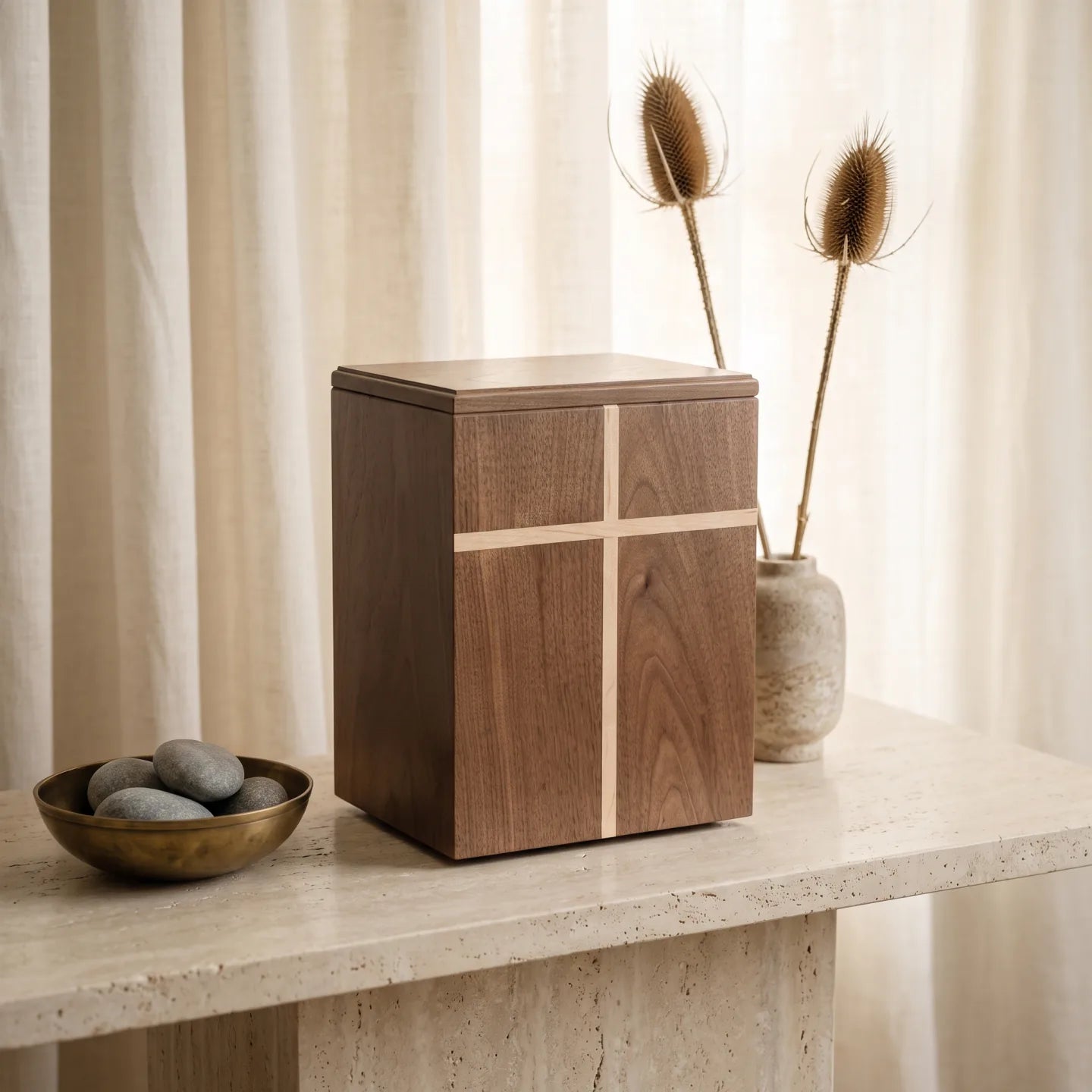

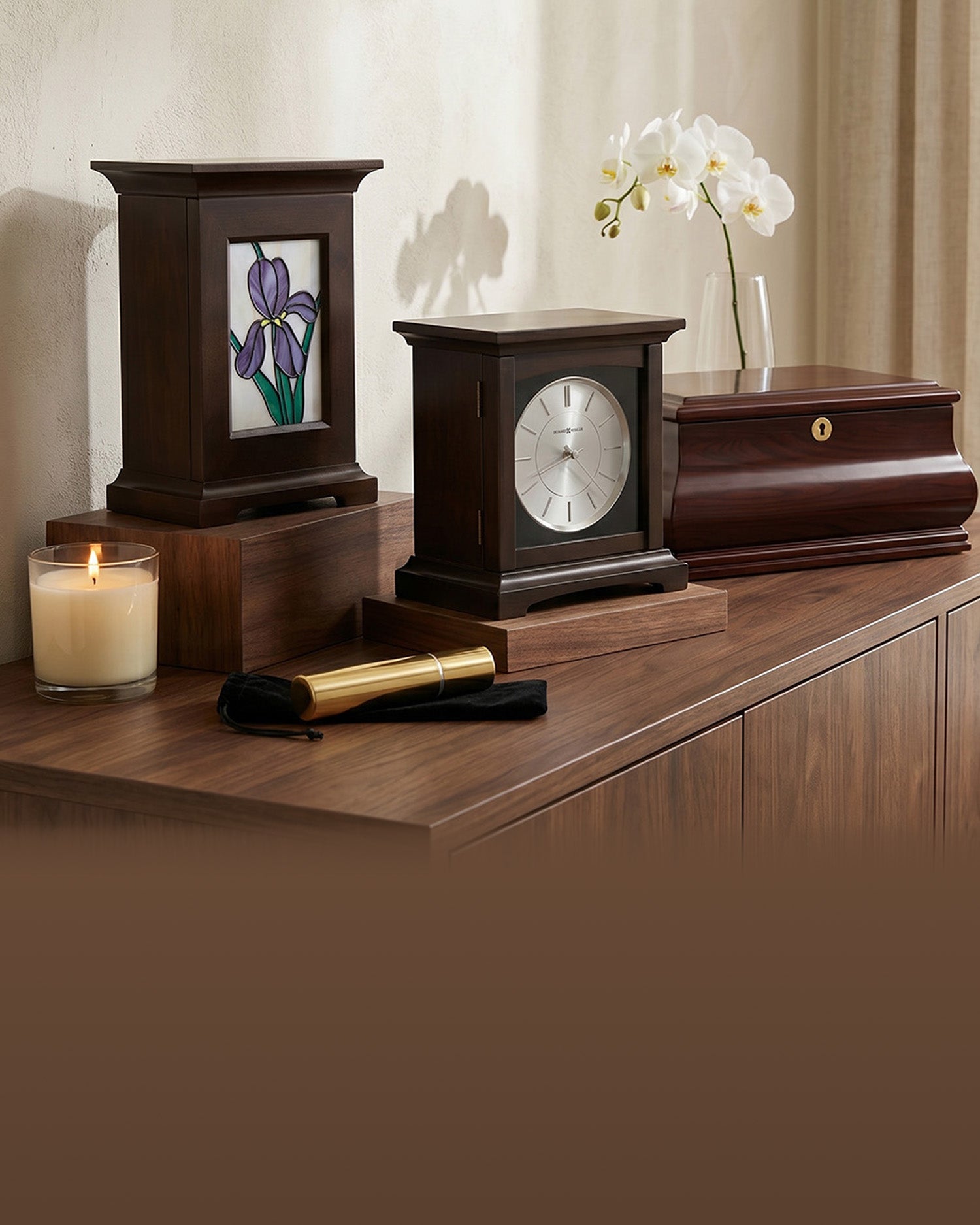
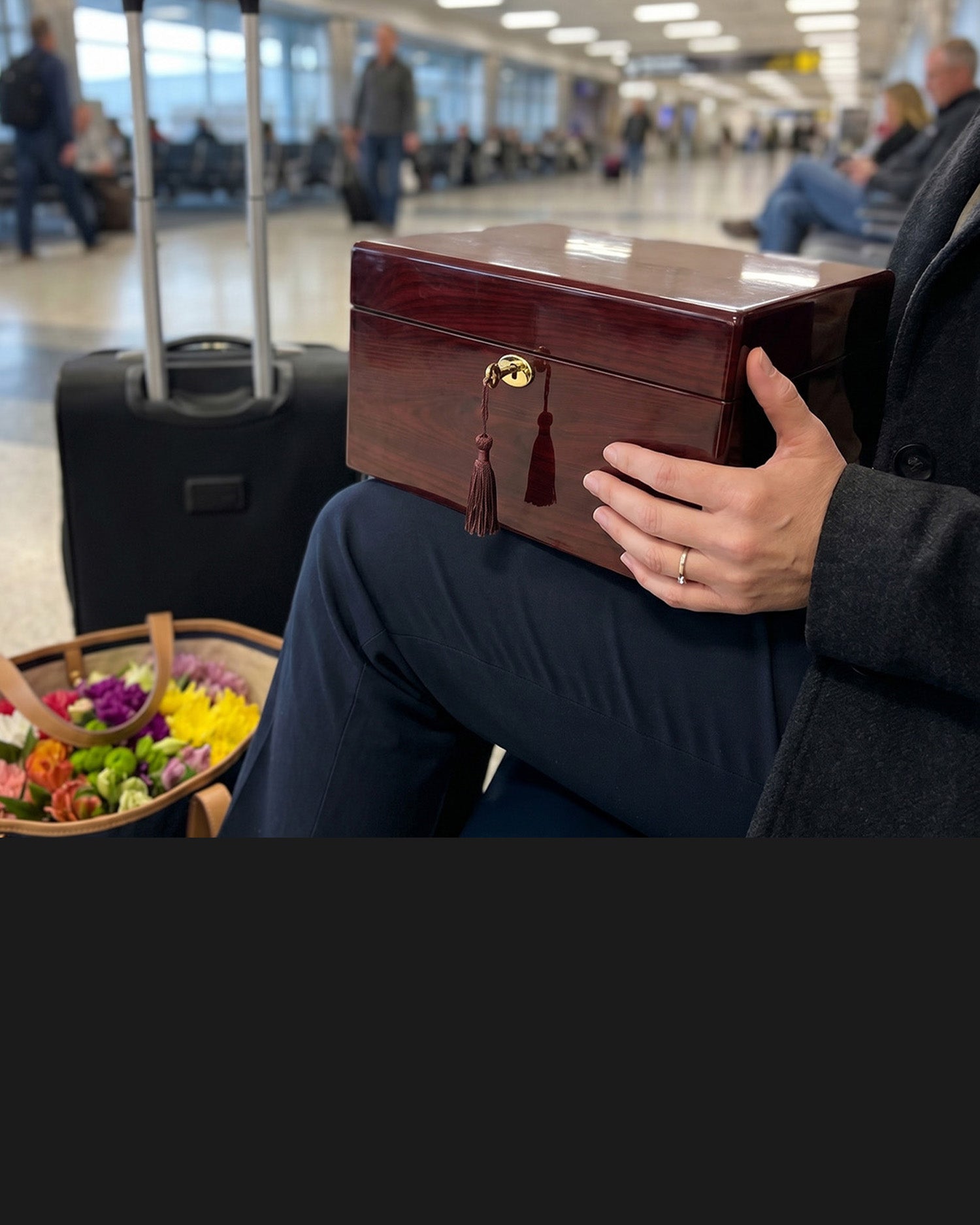
Search for a wooden urn and you will find hundreds of options, many of them looking similar in a small product photo. Prices can range from very affordable to several hundred dollars or more for what appears to be the same basic box. Construction explains much of that difference.
This guide explains what goes into a wooden urn, what the common terms mean, and how to judge quality when you cannot hold the urn in your hands. There is no wrong budget. The goal is simply to know what you are getting.
Jump to a section
1. Does construction matter?
For an urn that will be kept at home, construction matters a great deal, because the urn may be on display for decades and may eventually be passed down. Good construction shows in how the urn looks up close, how the lid or panel closes, and how it holds up to years of dusting, moving and handling.
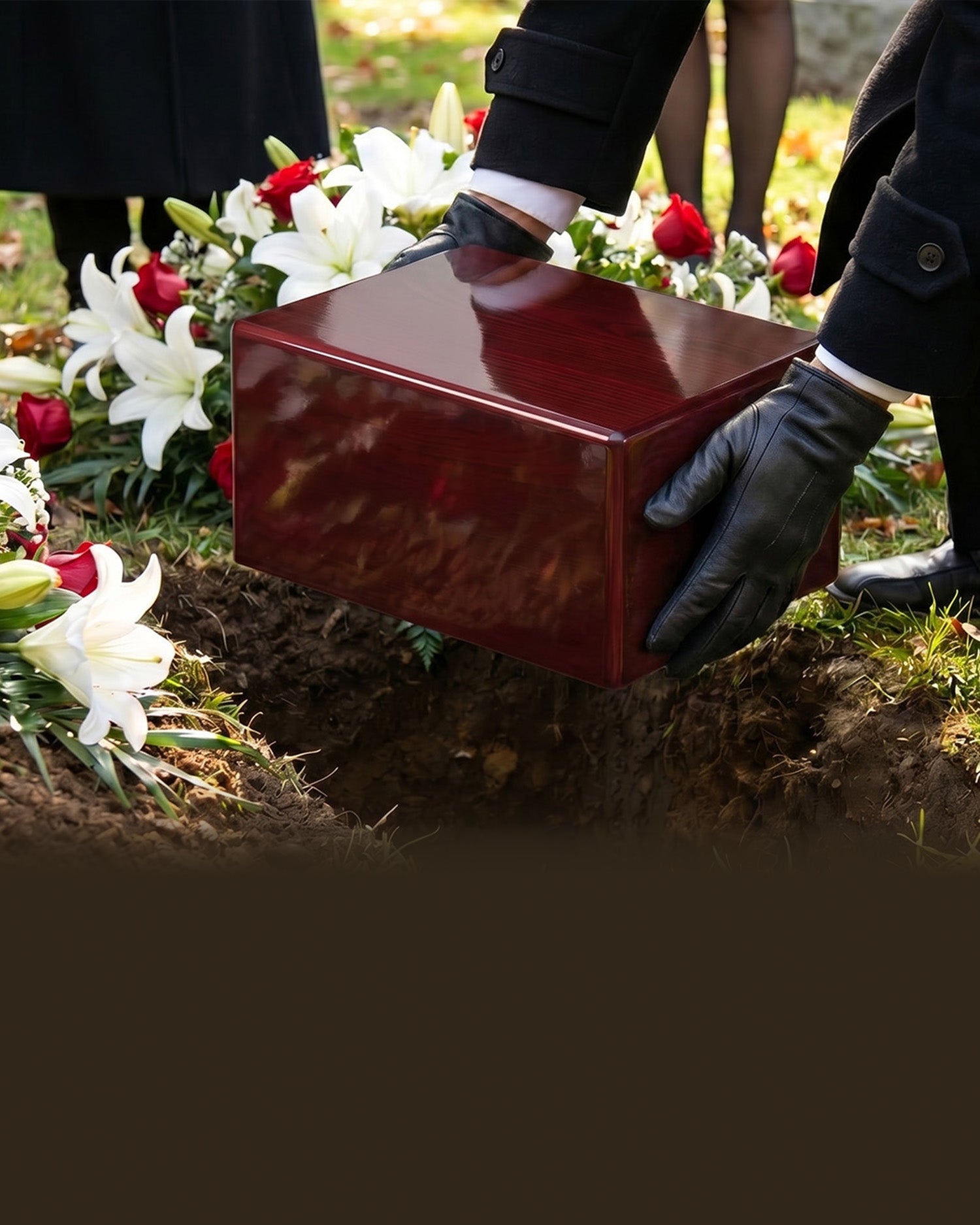
For an urn that will be buried inside a vault or used only briefly, construction may matter less, and a simpler urn can be a sensible choice. Knowing the plan helps you decide where to spend.
2. Solid wood, veneer and engineered wood
Three terms come up again and again, and they are often misunderstood.
- Solid wood means the parts are cut from boards of natural wood. It can be sanded and refinished, and it shows natural grain throughout. It also moves slightly with changes in humidity, which good construction accounts for.
- Veneer is a thin layer of real wood bonded to a stable core. Veneer is not a shortcut in itself. It has been used in fine furniture for centuries because it allows beautiful grain patterns, such as burl, to be used in stable, crack-resistant panels. The quality depends on the thickness of the veneer, the quality of the core, and how carefully the edges are finished.
- Engineered wood, such as MDF or particleboard, is made from wood fibers or particles bonded with resin. It is stable and inexpensive. It is often used as a core under veneer, and on its own it is usually covered with a printed or laminated surface.
Many well-made urns combine these materials: select hardwoods for frames and edges, with veneered panels for the most striking grain. When a listing says "wood," look for more specific wording about which parts are solid and which are veneered.
3. Joinery: how the corners are put together
The corners of a box take the most stress, and how they are joined is one of the clearest signs of craftsmanship.
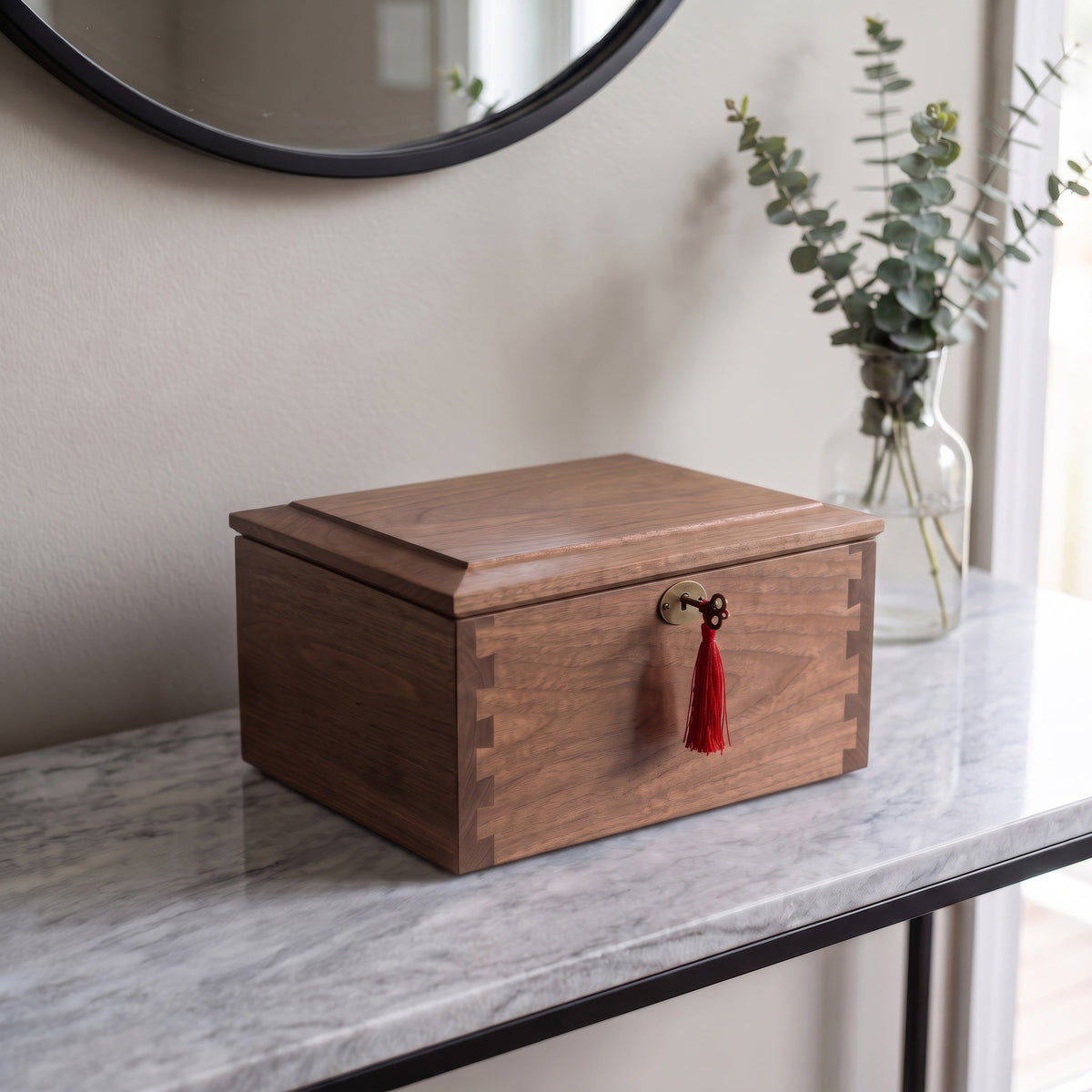
- Dovetail joints are interlocking, fan-shaped joints that are strong and attractive. When visible on the corners, they signal careful work.
- Box or finger joints interlock with square fingers, and are also strong and clean-looking.
- Miter joints meet at a 45-degree angle for a seamless look. Good mitered corners are tight, with no visible gaps, and are often reinforced with splines or keys inside.
- Butt joints simply meet flat, held with glue, nails or staples. They are the simplest method and are common on lower-cost boxes.
4. The finish
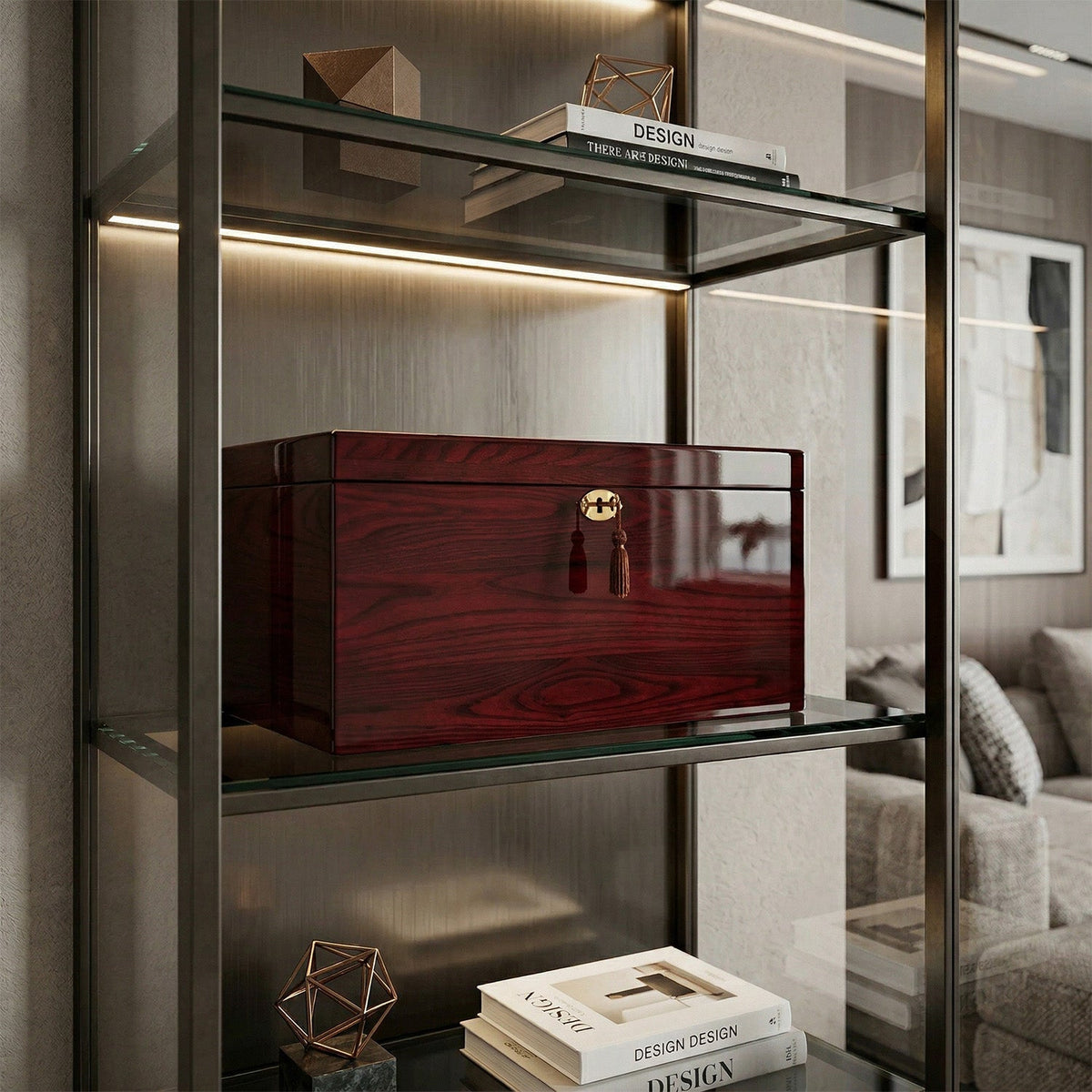
The finish protects the wood and gives the urn its final look, from a soft satin glow to a high-gloss piano finish. A quality finish is even across every surface, with no drips, rough spots, dull patches or dust trapped in the coating. The inside edges, the back and the bottom are good places to check, because they show whether the whole piece was finished with the same care as the front.
Multiple coats with sanding between them produce a smoother, more durable surface than a single sprayed coat. A good finish also resists fingerprints and light moisture, which matters for an urn that will be handled and dusted over the years.
5. How the urn opens and closes
Wooden urns load in several ways: a panel on the bottom, a removable back panel, a hinged front door, or a hinged lid. Each works well when it is built precisely.
- Panels should fit snugly and fasten securely, usually with screws, so they will not loosen when the urn is moved.
- Hinged doors and lids should open smoothly, close evenly, and line up with the body of the urn.
- Many quality wood urns hold the remains in a separate inner container, such as a sealed bag or a metal or plastic insert. This protects the remains and makes future transfer, such as for burial or dividing ashes, much easier.
Also check the stated capacity and interior dimensions, so you know the urn will hold the full remains. Our urn size guide explains how to calculate what you need.
6. Hardware, lining and the details
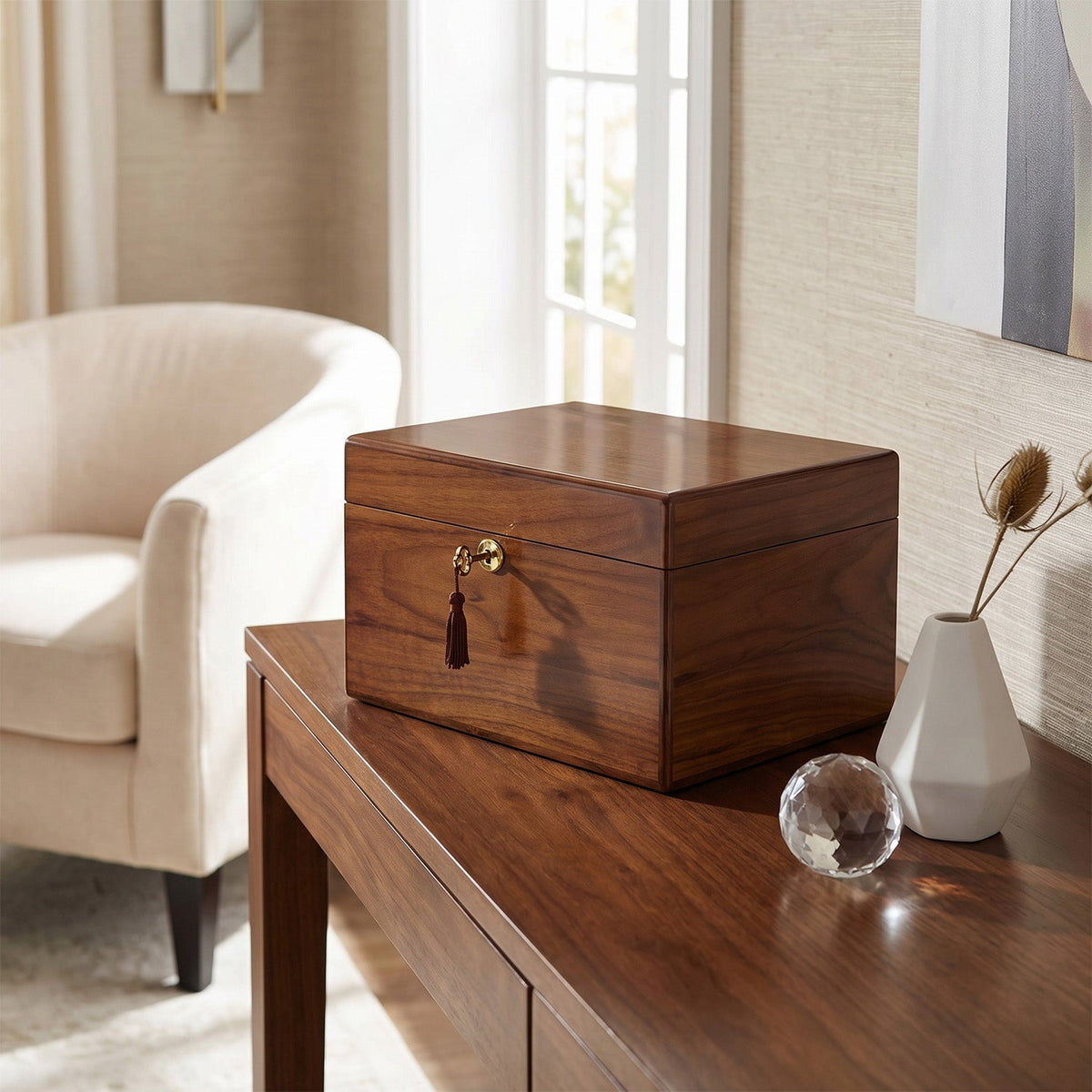
- Hardware. Hinges, locks, handles and feet should feel solid and be attached securely. Solid brass hardware is durable, while plated hardware varies in how well it wears over time.
- Lining. A velvet or felt interior lining is a thoughtful touch that shows attention to the whole piece, inside and out.
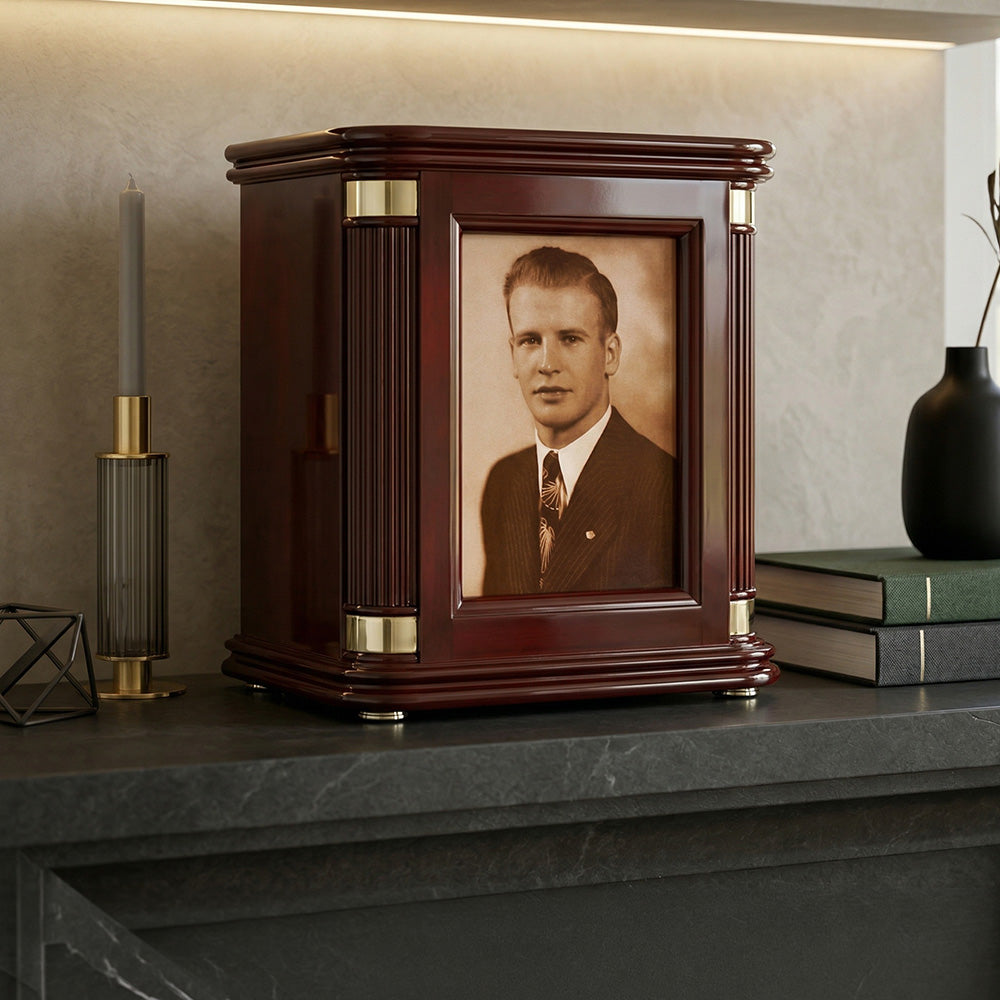
- Personalization. A dedicated plate for engraving, or a built-in photo frame, should be integrated cleanly into the design rather than added as an afterthought.
- Consistency. Grain and color should look intentional and well matched across panels.
You can see several of these details, from photo frames to engraved plates, in our urn chests and portrait urns.
7. How to judge construction when buying online
When you cannot hold an urn, a few questions and photos tell you a lot:
- Read the materials description closely. Look for specifics such as "select hardwoods and veneers" rather than just "wood."
- Look for photos of the corners, the back and the bottom, not only the front.
- Check how the urn is loaded and whether an inner container is included or recommended.
- Confirm the capacity in cubic inches and the exterior dimensions.
- Look for who made the urn and where. A maker that stands behind its work will say so.
- Ask questions. A good seller will answer clearly, and will send extra photos if you ask.
If you are weighing where to buy, our guide to buying an urn online or from a funeral director walks through the tradeoffs.
8. Frequently asked questions
8.1 Is a solid wood urn better than a veneer urn?
Not necessarily. Solid wood can be refinished and shows grain throughout, while quality veneer over a stable core resists cracking and allows striking grain patterns. Both can make an excellent urn. The quality of the materials and workmanship matters more than the label.
8.2 How can I tell if a wooden urn is well made?
Look for tight, well-made corner joints, an even finish on every surface including the back and bottom, a panel or lid that fits snugly, solid hardware, and a clear description of materials and capacity.
8.3 Why do wooden urns vary so much in price?
Differences in wood type, the use of solid wood or veneer, joinery, finishing steps, hardware and personalization all affect cost, along with where and how the urn is made.
8.4 How long does a wooden urn last?
A well-made wooden urn kept indoors, away from direct sunlight, heat and moisture, can last for generations. Buried wood urns last longest inside an urn vault.
8.5 Do wooden urns come with an inner container?
Many do, or are designed to hold one. An inner container, such as a sealed bag or a metal or plastic insert, protects the remains and makes future transfers easier. Check the product details before buying.

Leave a comment
All comments are moderated before being published.
This site is protected by hCaptcha and the hCaptcha Privacy Policy and Terms of Service apply.