

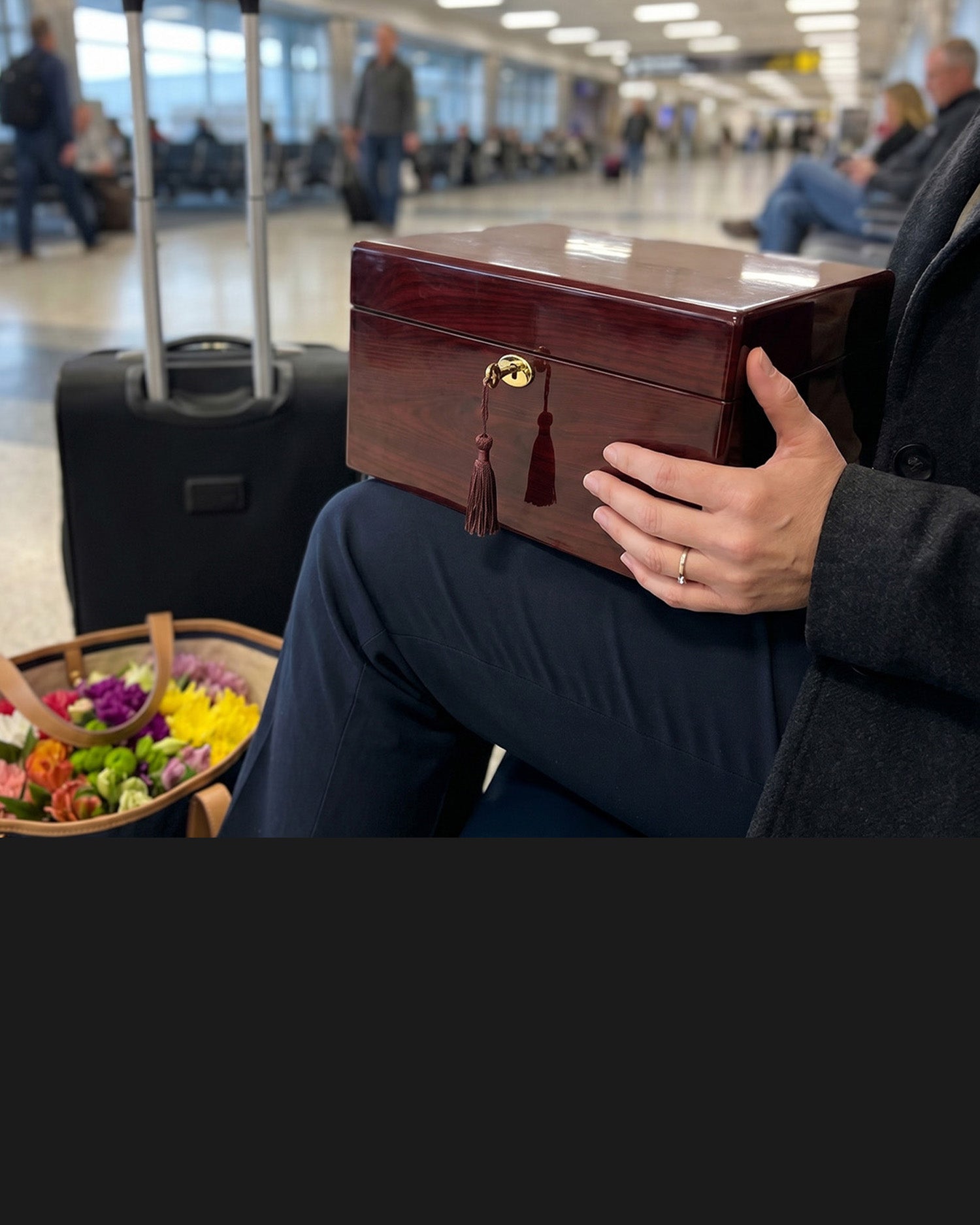
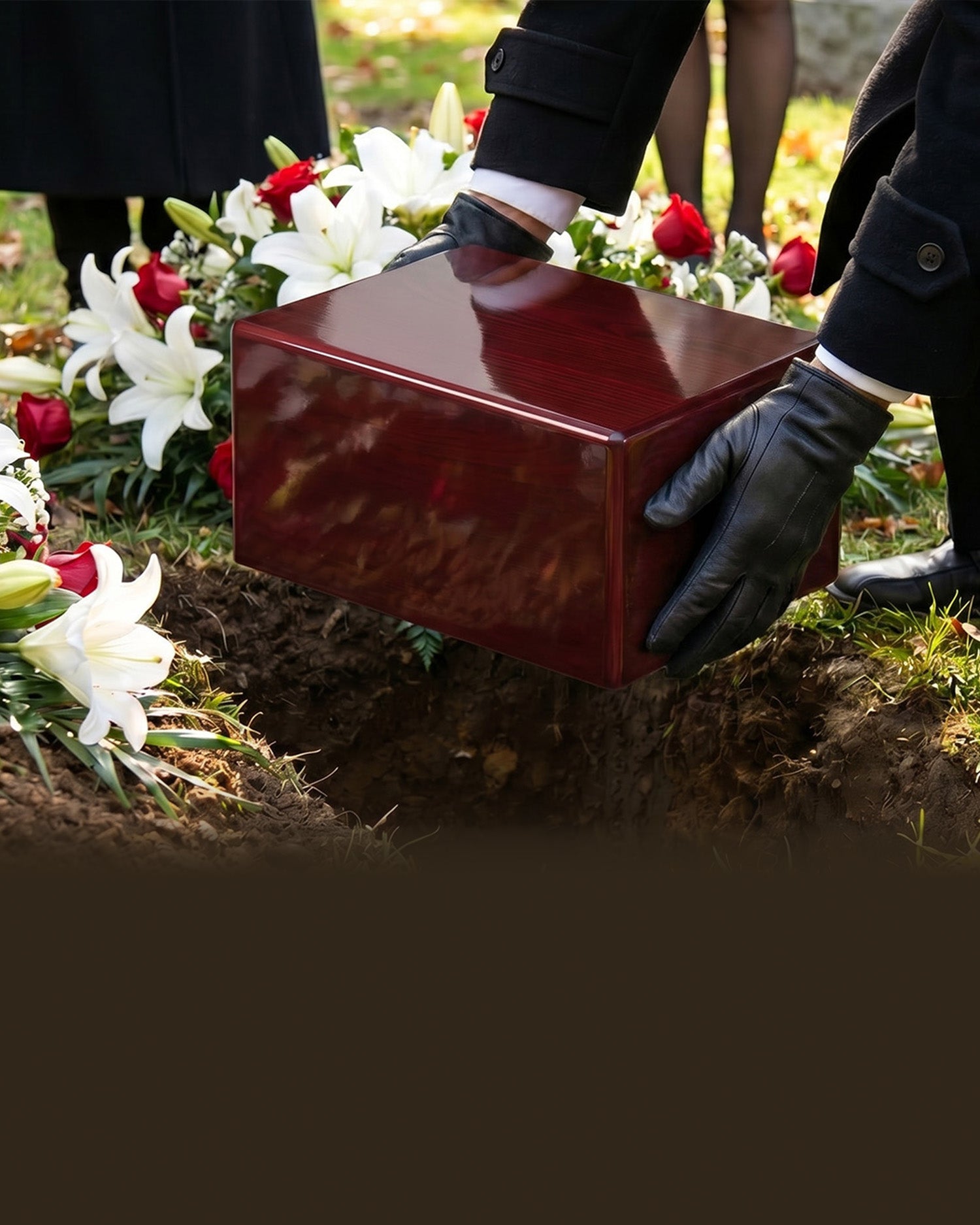
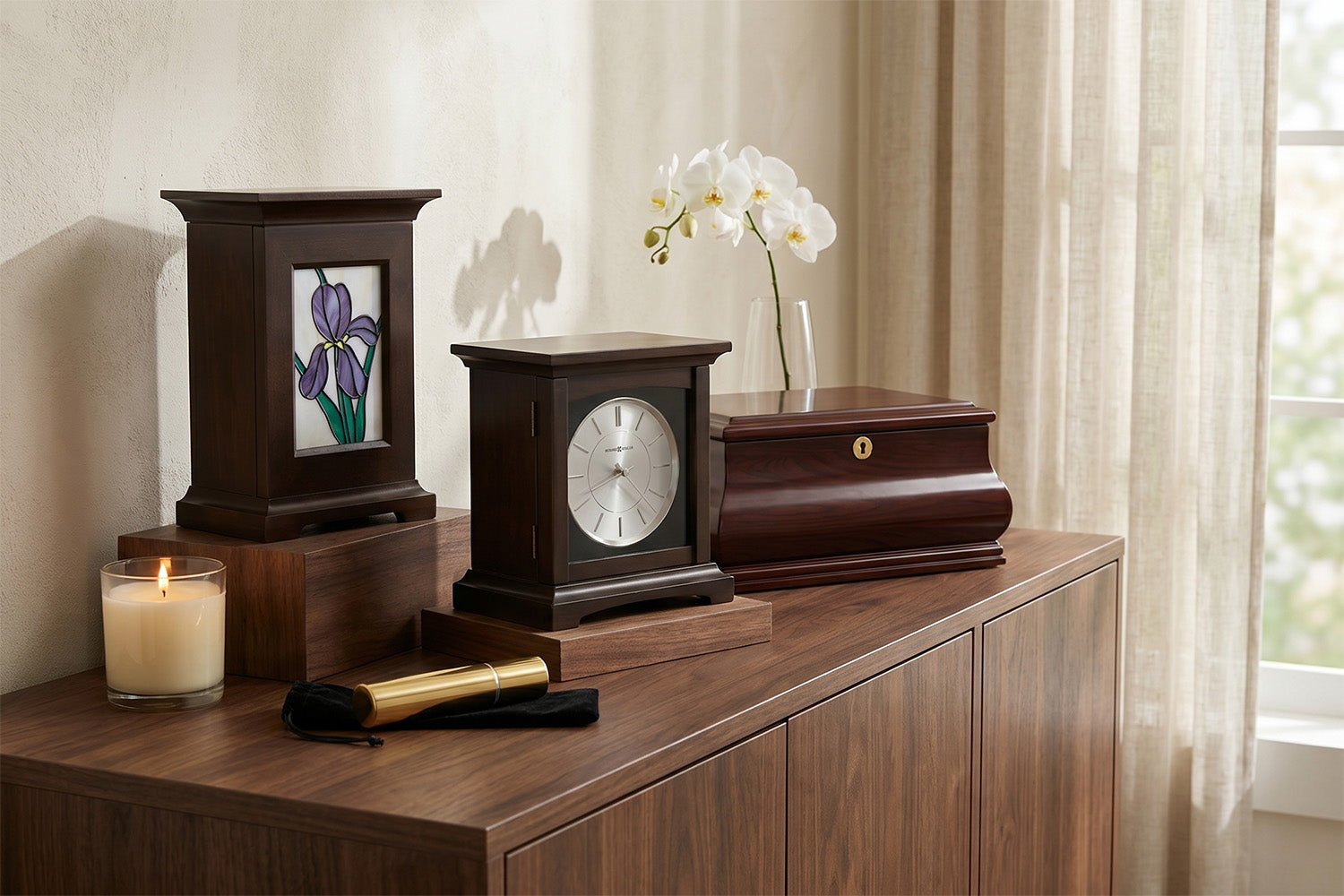
You'd be surprised how many people pause when I ask what type of urn they're looking for.
"What do you mean, what type? Like a vase-style urn?"
Not exactly.
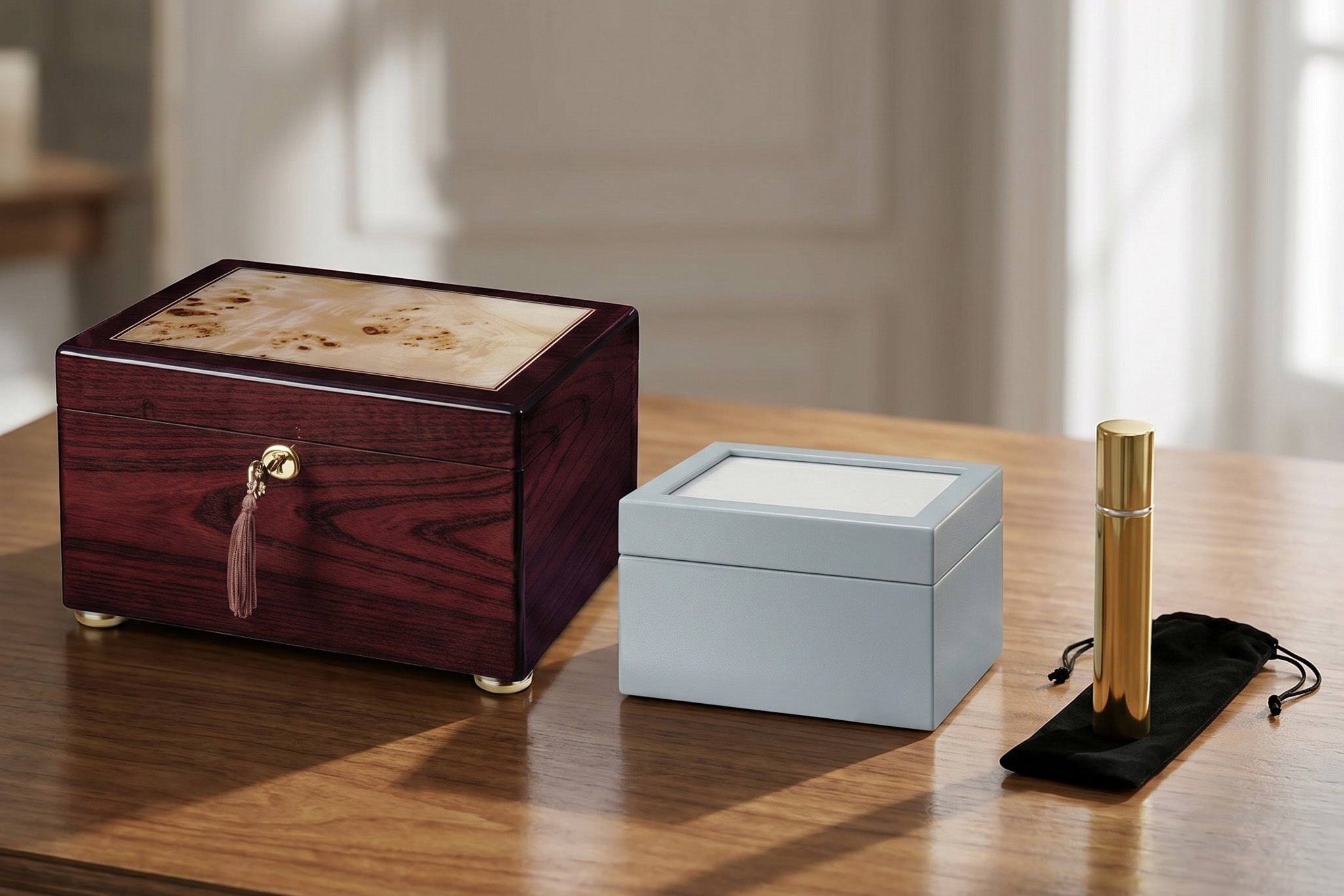
There are several types of urns, and each one solves a different problem. Display urns are made to be kept at home. Keepsake urns help families share ashes. Companion urns honor two people together. Burial urns are made for cemetery burial. Scattering urns help with scattering ashes. Biodegradable urns return naturally to earth or water. Specialty memorial urns, like a clock urn, are made to feel personal.
So before you choose a cremation urn, it helps to ask a simpler question: what does your family plan to do with the ashes?
Here's what we'll cover.
Jump to a section
- 1. What are the main types of urns?
- 2. Display urns: best if you want to keep ashes at home
- 3. Keepsake urns: best for sharing ashes with family
- 4. Companion urns: best for two people
- 5. Burial urns: best for cemetery ground burial
- 6. Scattering urns: best for scattering ashes
- 7. Biodegradable urns: best for a natural return
- 8. Specialty memorial urns: best when you want something personal
- 9. How to choose the right urn type for your family
- 10. What size urn do you need?
- 11. Final thoughts: the right urn fits your plan and your person
- 12. Frequently asked questions about types of urns
1. What are the main types of urns?
The main types of urns are display urns, keepsake urns, companion urns, burial urns, scattering urns, biodegradable urns, and specialty memorial urns. Each type is designed around a different plan for the ashes, not just a different look.
- Display urns: best for keeping ashes at home in a visible, dignified place.
- Keepsake urns: small urns that hold a portion of ashes for family members.
- Companion urns: larger urns made to hold the ashes of two people.
- Burial urns: urns chosen for cemetery ground burial, often with an urn vault.
- Scattering urns: urns or tubes made to help scatter ashes with more control.
- Biodegradable urns: urns designed to break down naturally in earth or water.
- Specialty memorial urns: personal designs such as clock urns, portrait urns, photo urns, stained glass urns, and urn chests.
These categories can overlap. A wooden urn can be a display urn, a companion urn, an urn chest, or a personalized memorial urn. A biodegradable urn can be used for burial or water placement, depending on the product and local rules.
2. Display urns: best if you want to keep ashes at home
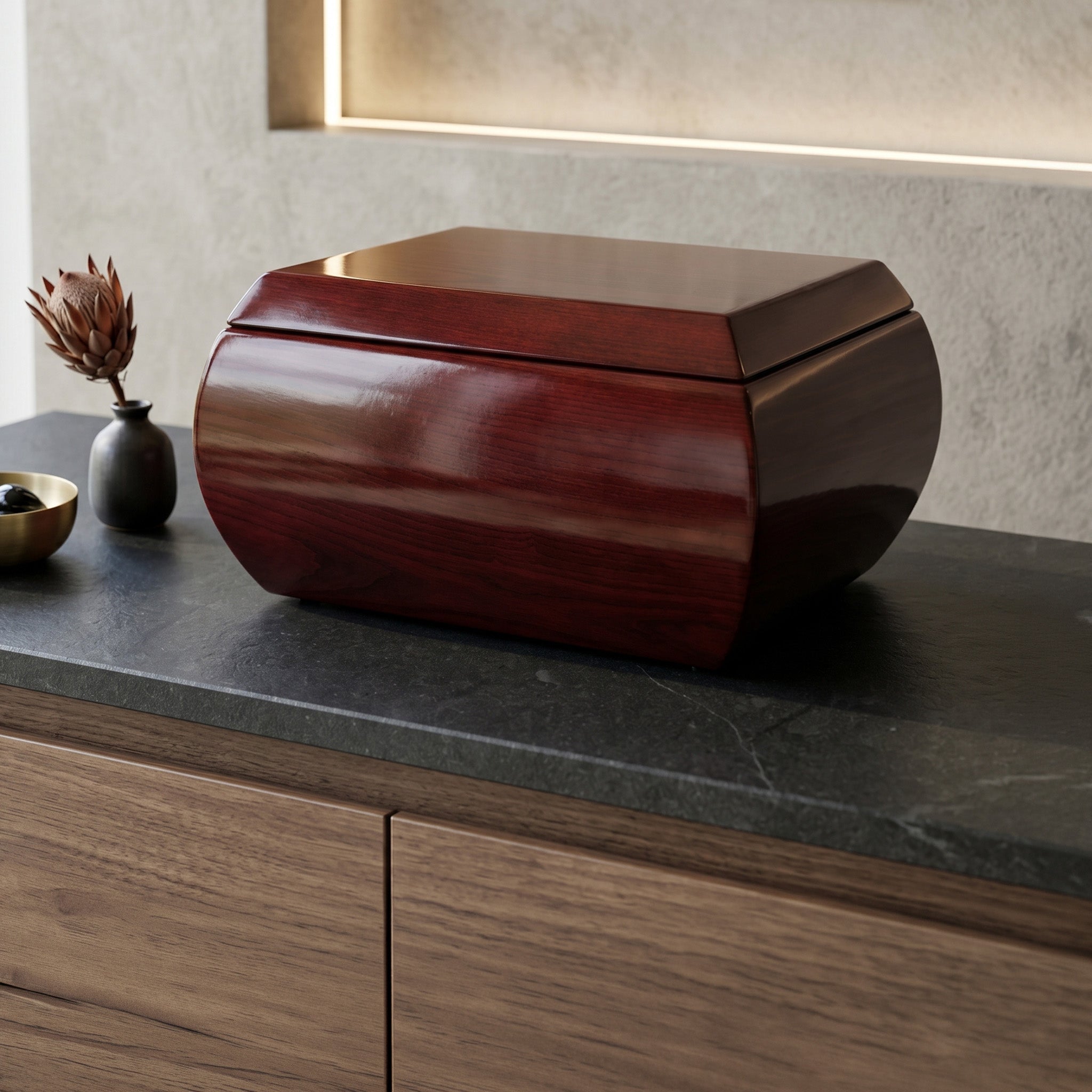
A display urn is a cremation urn chosen to stay in the home. It might sit on a mantel, shelf, bookcase, memorial table, or in a quiet room where family members can pause for a moment when they need to.

I have heard families say, very quietly, "I want them close, but I do not want the room to feel like a funeral home." That is where display urns can be helpful. They let you keep a loved one nearby while choosing something that feels natural in your home.
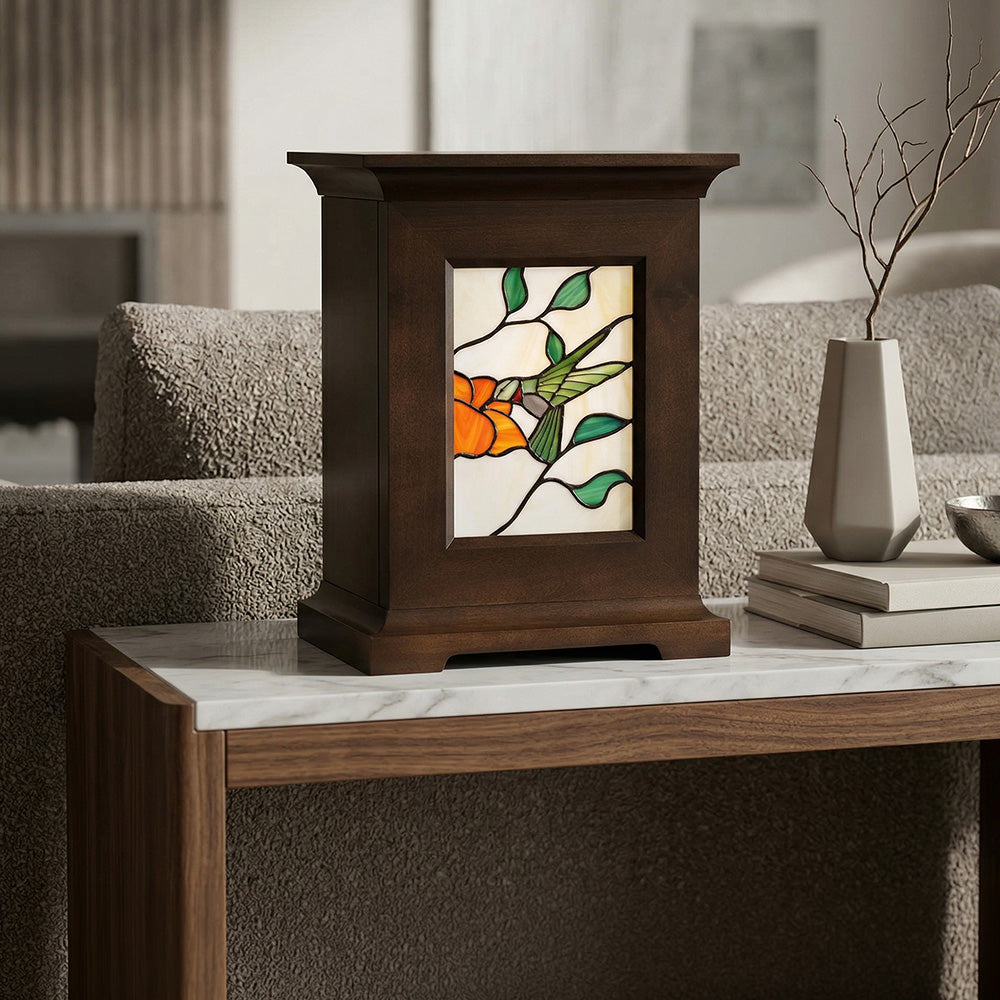
For some families, that means a simple vessel. For others, it means a clock urn, portrait urn, urn chest, stained glass design, or another memorial urn that feels more like furniture, art, or a family keepsake.
2.1 Who display urns are best for
Display urns are best for families who want a permanent place for the ashes at home. They are also a good fit when one person will keep the main urn while other family members receive smaller keepsakes.
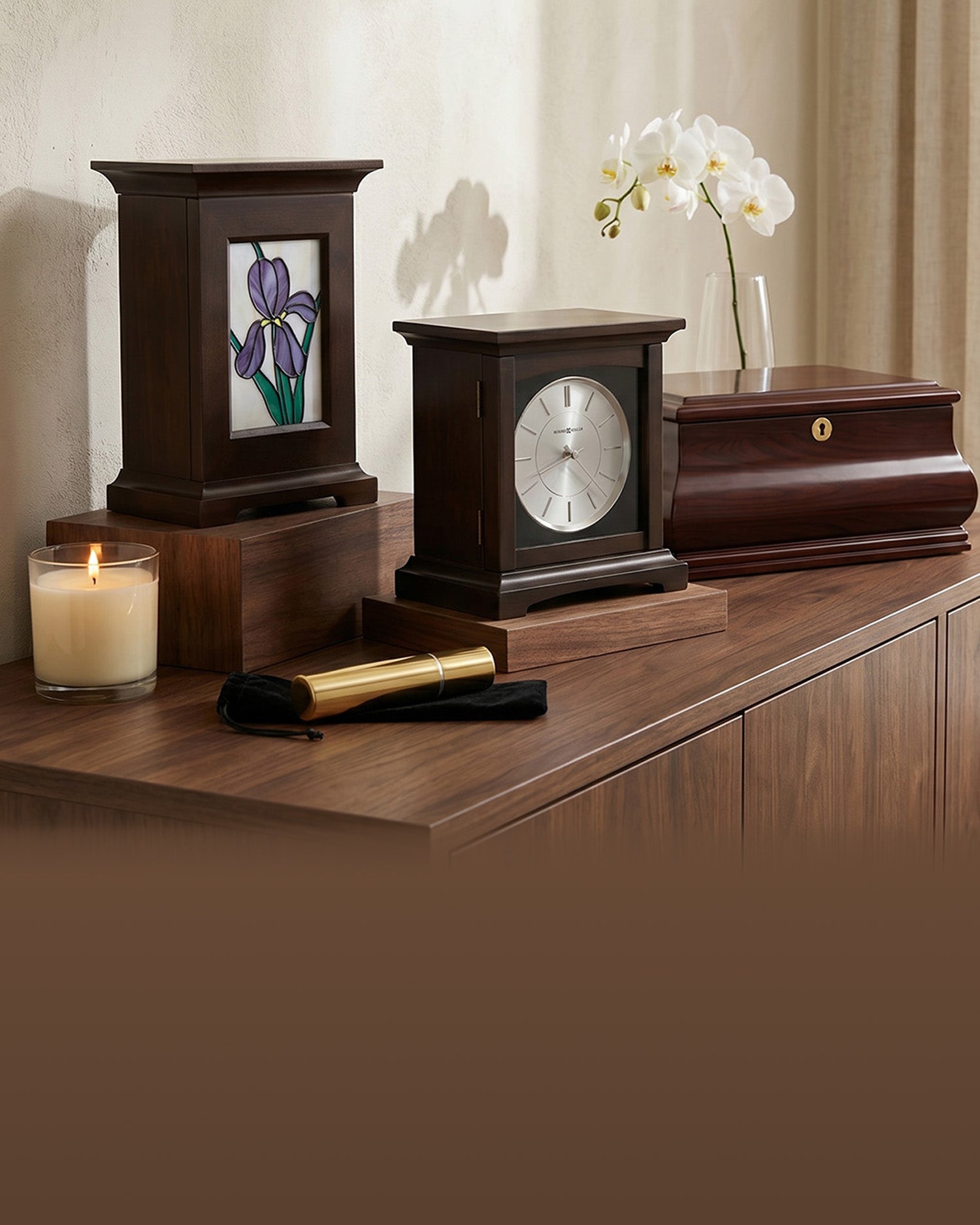
If you are comparing different types of cremation urns, start here if your plan is home display. Howard Miller Memorial's strength is in heirloom-quality display pieces, including wooden urns, clock urns, portrait urns, urn chests, and stained glass urns designed to sit respectfully in the home.
2.2 Where to place a display urn at home
There is no single right place for displaying urn at home. Some families choose a mantel because it is central. Others prefer a bedroom, study, bookcase, or small memorial table with a photo, candle, flowers, or military keepsakes.
The practical detail I always remind people to check is space. Look at the urn's dimensions, not just its capacity. A beautiful urn still needs to fit the shelf, niche, cabinet, or table where it will live.
3. Keepsake urns: best for sharing ashes with family
A keepsake urn is a small urn for ashes that holds only a portion of cremated remains. It is often chosen when several family members want to keep a small memorial close to them.
This comes up more often than people expect. One sibling may want the main urn at home. Another may live across the country and want a small keepsake. A grandchild may want something modest for a bedside table. A keepsake urn gives the family room to share without forcing one person to hold the entire responsibility.
Keepsakes can also help when a family plans to scatter most of the ashes but keep a small portion. That choice can bring comfort later, especially if the scattering location is far away or difficult to visit.
Many families choose one full-size cremation urn for the main memorial, then add several keepsake urns for siblings, children, grandchildren, or close friends.

3.1 Keepsake urns vs full-size urns
A full-size urn is usually made to hold most or all of one adult's ashes. A keepsake urn is much smaller and is made to hold only a small portion. That difference matters because a keepsake should not be mistaken for a full-size urn.
When you are buying cremation urns for ashes, always check the listed capacity in cubic inches. The size tells you whether the urn is meant for all ashes, a portion, or only a symbolic amount.
3.2 When several family members want a portion
Ashes can usually be divided among multiple urns, keepsakes, or cremation jewelry if your family chooses. If you are unsure how to divide them, ask your funeral director for help transferring the ashes safely and respectfully.
The "right" urn is not always one urn. Sometimes the right plan is one main urn, three keepsakes, and a scattering ceremony later.
4. Companion urns: best for two people
A companion urn is designed to hold the ashes of two people. Families often choose one for spouses, partners, or two loved ones who wished to remain together.
Companion urns tend to be larger than standard adult urns, so they need extra attention. You will want to check both the capacity and the physical dimensions, especially if the urn will be displayed on furniture or placed in a columbarium niche.
4.1 Companion urn capacity and compartments
Some companion urns have one shared compartment. Others have two separate compartments inside the same memorial. The right choice depends on your family's preference, religious or cultural considerations, and whether the ashes are already separated.
Because a companion urn holds more, it can also feel more substantial in the home. If it will be visible, choose a design that feels stable, respectful, and appropriate for the space.
5. Burial urns: best for cemetery ground burial
A burial urn is used when ashes will be buried in the ground at a cemetery or another approved burial location. This is a different purpose from keeping an urn at home, and it usually comes with more rules.
Many of our wooden urns and urn chests can also be used for burial, not just home display. In most cases a wooden urn is placed inside an urn vault for ground burial, which protects it and helps keep the ground above stable. The catch is that the rules vary from one cemetery to the next, so it's worth confirming what your chosen location requires before you buy. I've written a separate guide that walks through [burial urns and cemetery rules] in more detail.

The mistake I see families make is buying a beautiful urn first, then discovering the cemetery has specific requirements. Some cemeteries require an urn vault, which is an outer container that protects the urn and helps maintain the ground above it.
If burial is your plan, call the cemetery first. Ask about approved materials, urn vault requirements, dimensions, and whether the ashes will be buried in a plot or placed in a niche.
5.1 Cemetery requirements and urn vaults
Every cemetery can have its own rules. Some allow many urn materials. Others require a specific burial container or vault. Most cemeteries will tell you their requirements before you buy, and it is better to ask early than to reorder later.
Durable materials may be preferred for ground burial, while biodegradable options may be allowed in certain green burial settings. Always confirm before choosing a burial urn.
5.2 Columbarium niches and size limits
A columbarium niche is not the same as ground burial. It is a fixed space, often in a cemetery or memorial wall, where an urn is placed. The key detail is measurement.
Ask the cemetery for exact niche dimensions before ordering. An urn may have enough capacity for the ashes but still be too wide, tall, or deep for the niche.
6. Scattering urns: best for scattering ashes
A scattering urn is made to help families scatter ashes in a more controlled and respectful way. It is especially useful outdoors, where wind, footing, and emotion can make the moment harder than people expect.
Some families scatter all the ashes. Others scatter a portion and keep the rest in a display urn or keepsake urn. Both choices are common, and neither is more correct than the other.
Before scattering ashes, check the rules for the location. Public parks, waterways, private land, and travel settings can each have different requirements. If you are not sure, ask the local authority, property owner, cemetery, or funeral director.
A scattering tube can make the ceremony feel calmer because it gives you something designed for the moment, rather than trying to pour ashes from a temporary container.

6.1 Scattering tubes and controlled ceremonies
Scattering tubes are designed for grip, direction, and ease of use. That may sound simple, but it matters when a family is standing together and trying to create a peaceful farewell.
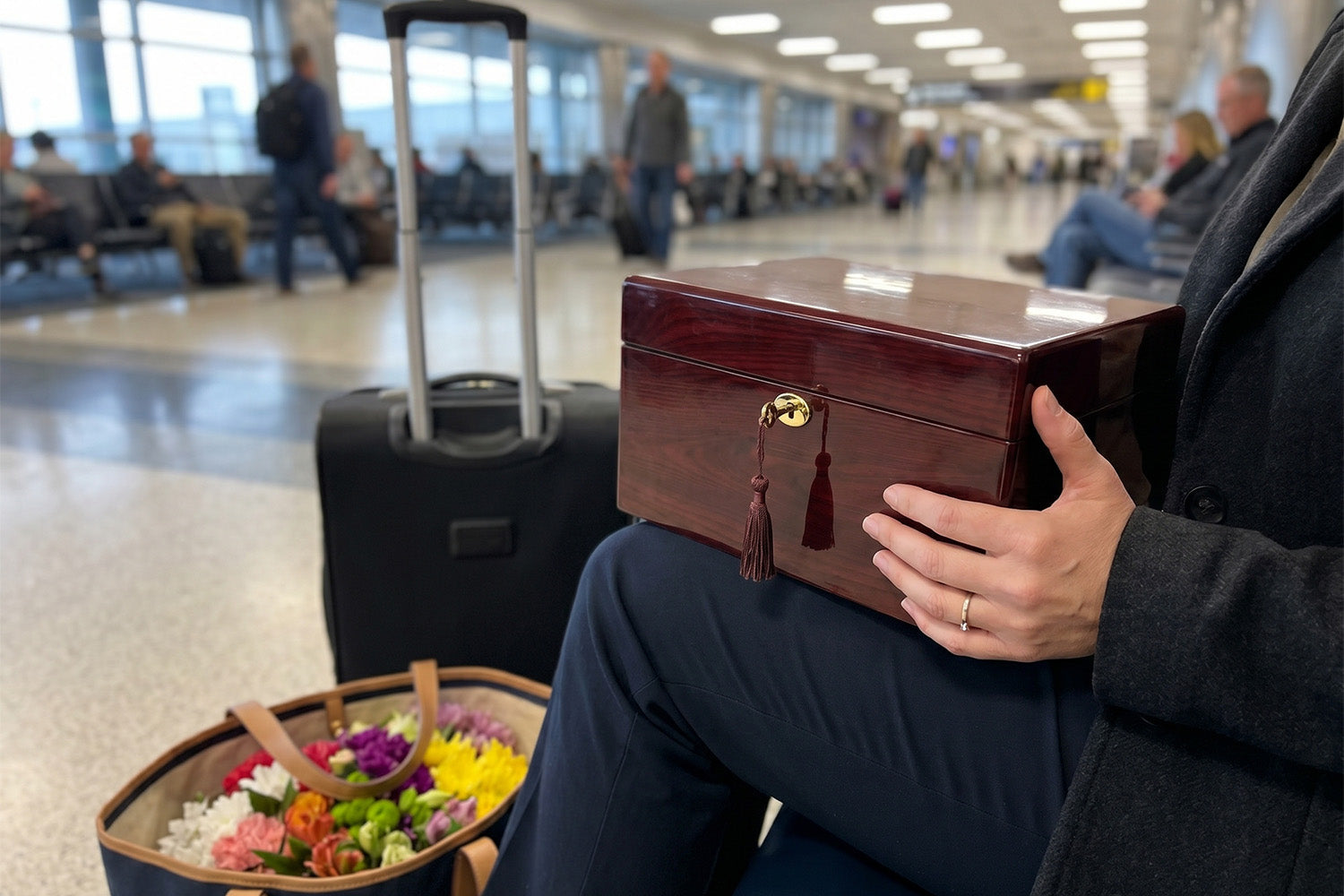
If your family is traveling for the ceremony, review the [TSA rules for traveling with urns and cremated remains] before you leave, and bring any documentation your funeral home recommends.
7. Biodegradable urns: best for a natural return
A biodegradable urn is designed to break down naturally over time. Families often consider this type of urn for green burial, water burial, or an earth-friendly memorial.
Biodegradable urns are not all the same. Some are made for water and begin to break down more quickly. Others are designed for earth burial. Some are connected to tree or planting memorials, although the exact result depends on the product, location, and care.
This is also where rules matter. Check local guidelines before placing an urn in water, burying it on private land, or using it in a public space. A biodegradable urn can be meaningful, but it should match both your family's values and the rules of the place you choose.
8. Specialty memorial urns: best when you want something personal
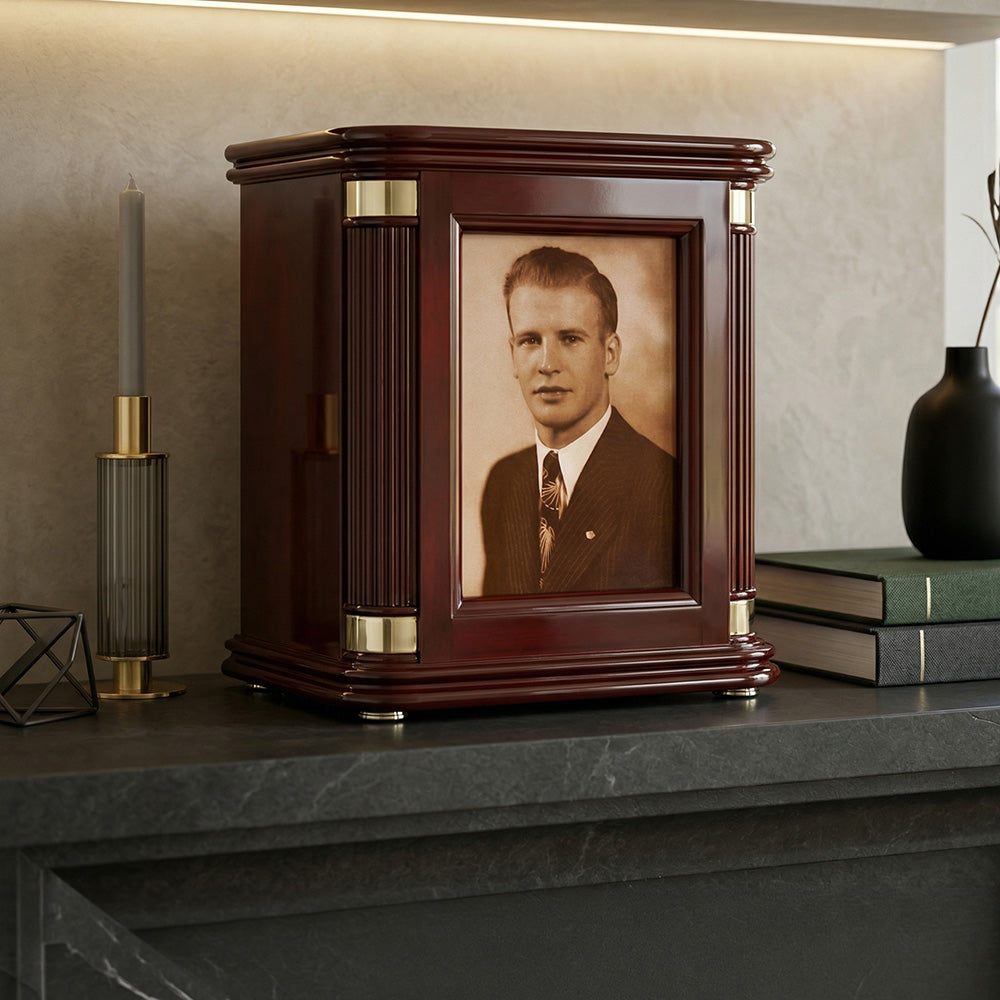
A specialty memorial urn is chosen because it reflects the person, not just the practical plan for the ashes. This may include a clock urn, portrait urn, photo urn, urn chest, stained glass urn, military-style urn, religious urn, or another personalized design.
This is often the section where families breathe a little. They realize the urn does not have to look one specific way. It can feel like him. It can feel like her. It can match the home, the story, the hobby, the faith, or the quiet corner where the family wants to remember.

For a family that wants something dignified but less traditional, specialty urns can be the right answer. A clock urn can feel like an heirloom. A portrait urn keeps a favorite image close. An urn chest can feel classic and understated.
Howard Miller Memorial is especially suited for this kind of home memorial, with designs that focus on craftsmanship, display, and a sense of permanence rather than a hard funeral-store feeling.
8.1 Clock urns, portrait urns, and urn chests
Clock urns are a thoughtful choice when a family wants a functional memorial that blends into the home. Portrait urns are helpful when a photo feels central to the remembrance. Urn chests are often chosen by families who prefer a classic, furniture-like style.
These are still urns, but they do not always read as urns at first glance. For some families, that makes daily life feel gentler.
8.2 Urns that feel like part of the home
When someone asks where to keep cremation urn, I usually tell them to think about where they naturally pause. A favorite chair, a mantel, a study, or a family room can all make sense.
The best display choice is one that feels respectful without demanding attention every time someone walks into the room.
9. How to choose the right urn type for your family
The easiest way to choose among the different types of urns is to start with the plan, then choose the style. Ask what will happen to the ashes first. The design comes second.
- Will the ashes stay at home, be buried, placed in a niche, scattered, or divided?
- Does more than one family member want a portion?
- Do you want the urn visible or private?
- Does the urn need to fit a cemetery niche?
- Do you want something traditional or something that blends into the home?
- What budget feels comfortable for your family?
| Family situation | Best type of urn | Why it fits | What to check before buying |
|---|---|---|---|
| Keeping ashes at home | Display urn | Creates a permanent, visible memorial | Capacity, dimensions, material, and room placement |
| Sharing ashes among siblings | Keepsake urns | Allows several people to keep a small portion | How the ashes will be divided and transferred |
| Honoring two people together | Companion urn | Holds the ashes of two people in one memorial | Total capacity, compartments, and display space |
| Cemetery ground burial | Burial urn | Made for burial requirements | Cemetery rules and urn vault requirements |
| Columbarium niche placement | Niche-compatible urn | Fits into a fixed memorial space | Exact niche height, width, and depth |
| Scattering ashes | Scattering urn or tube | Makes the ceremony easier to control | Location rules, wind, travel, and timing |
| Eco-friendly return | Biodegradable urn | Breaks down naturally over time | Product design and local rules |
| Wanting something personal | Specialty memorial urn | Reflects the person's life, home, or story | Style, personalization, and where it will be displayed |
If you are still unsure, narrow the choice to two questions: will the urn be kept, buried, scattered, or shared, and do you want it to look traditional or blend into the home?
10. What size urn do you need?
Cremation urn size is usually measured in cubic inches. A common rule of thumb is 1 cubic inch of urn capacity for every 1 pound of healthy body weight.
For example, if your loved one weighed about 180 pounds, you would usually look for an urn with at least 180 cubic inches of capacity. Standard adult urns are often around 200 cubic inches, but you should always check the product details.
Keepsake urns hold much less because they are meant for a small portion. Companion urns need more capacity because they are made for two people. If the urn will go into a columbarium niche or onto a narrow shelf, check both capacity and dimensions before choosing.
If you are not sure how much capacity you need, ask your funeral director. They can usually tell you whether a specific urn for ashes will be large enough before the ashes are transferred.
11. Final thoughts: the right urn fits your plan and your person
The right urn is not always the most expensive one, the largest one, or the one someone else would choose. It is the one that fits your plan and your person.
If your loved one will stay close at home, a display urn or specialty memorial urn may feel right. If several people want a portion, keepsakes may help. If the ashes will be buried, ask the cemetery what they require. If your family wants a ceremony outdoors, a scattering tube may make the moment easier.
You do not have to make every decision at once. Many families keep ashes at home for a while, divide a portion into keepsakes, or scatter later when everyone can be together.
When you are ready, Howard Miller Memorial offers display-focused memorial options such as clock urns, portrait urns, urn chests, keepsake urns, wooden urns, stained glass urns, and scattering tubes for families who want something dignified and lasting.
12. Frequently asked questions about types of urns
12.1 What are the different types of urns?
The main types of urns are display urns, keepsake urns, companion urns, burial urns, scattering urns, biodegradable urns, and specialty memorial urns. Each one serves a different purpose, so the best choice depends on whether the ashes will be kept at home, shared, buried, scattered, or placed in a niche.
12.2 What type of urn should I buy?
You should buy the type of urn that fits your family's plan for the ashes. Choose a display urn for home, a keepsake urn for sharing, a companion urn for two people, a burial urn for cemetery burial, or a scattering urn if you plan to scatter ashes in a meaningful location.
12.3 What is the best urn for ashes kept at home?
The best urn for ashes kept at home is usually a display urn or memorial urn that fits your space and feels appropriate for your loved one. Wooden urns, clock urns, portrait urns, urn chests, and stained glass urns can all work well for home display.
12.4 What is the difference between a keepsake urn and a full-size urn?
A keepsake urn holds only a small portion of ashes, while a full-size urn is usually designed to hold most or all of one adult's ashes. Families often choose one full-size urn for the main memorial and several keepsake urns for relatives who want a portion.
12.5 Can ashes be divided between multiple urns?
Yes, ashes can usually be divided between multiple urns if your family chooses. Some families divide ashes among keepsake urns, cremation jewelry, a main display urn, or a scattering ceremony. Ask your funeral director for help if you want the ashes separated before they are placed.
12.6 What size cremation urn do I need?
A common sizing rule is 1 cubic inch of urn capacity for every 1 pound of healthy body weight. For example, a person who weighed about 180 pounds would usually need at least 180 cubic inches. Always check the listed capacity before buying.
12.7 What type of urn is best for scattering ashes?
A scattering urn or scattering tube is usually best for scattering ashes. These containers are designed to make the ceremony easier to control, especially outdoors. Before scattering, check the rules for the location and consider keeping a small portion in a keepsake if your family wants one.
12.8 Do I need a burial urn if the ashes will be buried?
If ashes will be buried in a cemetery, choose a cemetery-approved burial urn and ask whether an urn vault is required. Cemetery rules vary, so confirm the requirements before buying. Many of Howard Miller Memorial's wooden urns and urn chests can also be used for burial when placed in a vault, though it's always best to confirm your cemetery's specific requirements first.

Leave a comment
All comments are moderated before being published.
This site is protected by hCaptcha and the hCaptcha Privacy Policy and Terms of Service apply.