


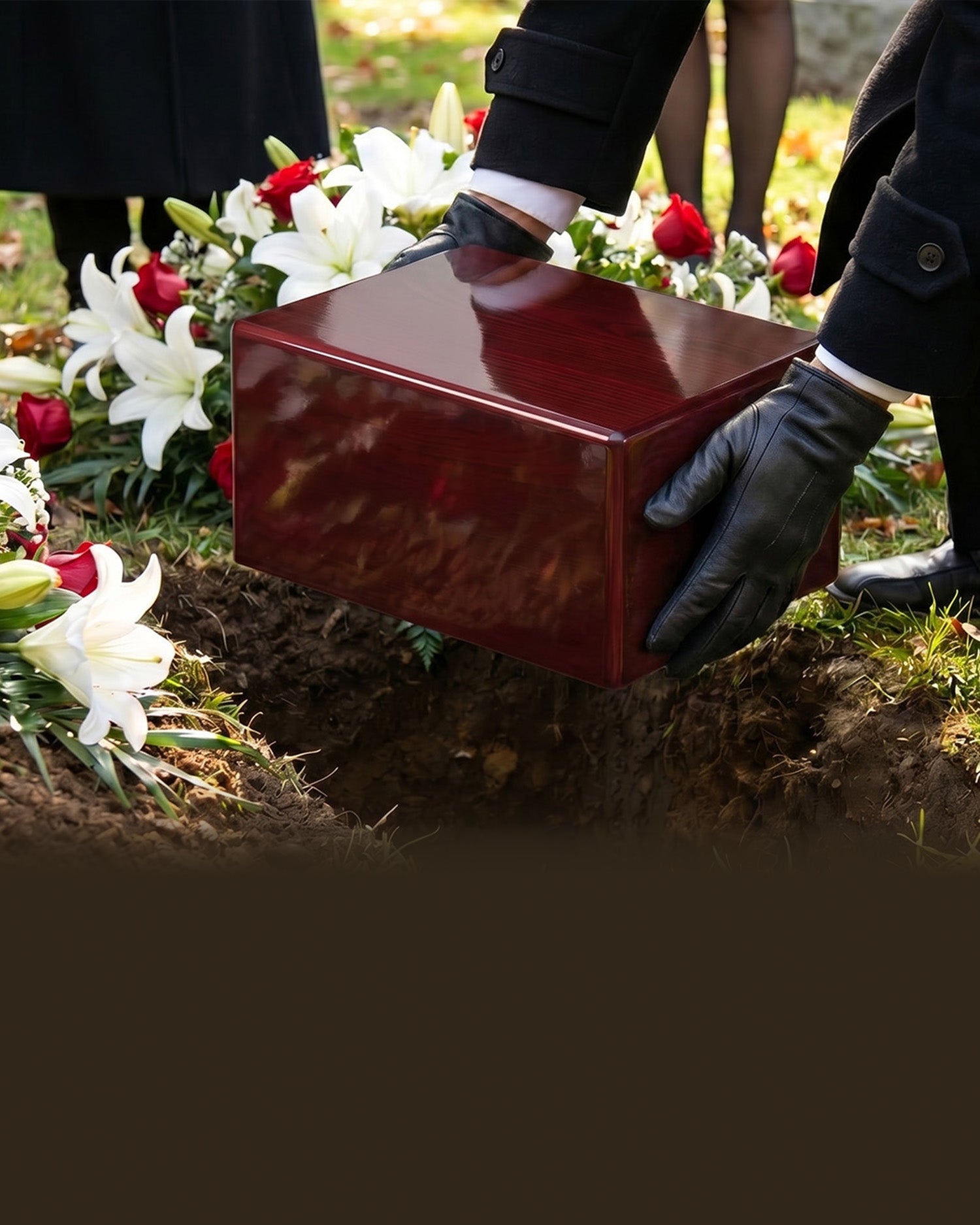
For most of the last century, "cremation" meant one thing. Today families may be offered three different options: traditional flame cremation, water cremation, and natural organic reduction, sometimes called human composting. Each is a respectful choice, and each leaves a different amount and type of remains.
That difference matters more than most families expect when it is time to choose an urn. This guide explains how each method works in plain language, how the volume of remains changes, and how to size an urn or keepsake for each.
Jump to a section
1. Three options at a glance
| Method | What it uses | What the family receives | Typical amount for an adult | Availability |
|---|---|---|---|---|
| Flame cremation | Heat | Fine, light gray to tan cremated remains | About 3 to 7 pounds | Available in every state |
| Water cremation | Water, an alkaline solution and heat | Fine, white remains | Roughly a third more than flame cremation | Permitted in about half of U.S. states |
| Natural organic reduction | Plant material and natural microbes | Soil | About one cubic yard | Permitted in a growing number of states |
Availability changes as states pass new laws, and a method being legal does not always mean a provider operates nearby. Your funeral director can tell you which options are offered where you live.
2. Traditional flame cremation
Flame cremation uses high heat in a specially designed chamber over a few hours. What remains are bone fragments, which are then processed into a fine, granular material. These are the cremated remains most families are familiar with, often called ashes.
For an adult, flame cremation typically leaves about 3 to 7 pounds of remains. The long-standing sizing rule of about 1 cubic inch of urn capacity for every pound of healthy body weight was built around flame cremation. Our urn size guide walks through that rule in detail.
3. Water cremation (alkaline hydrolysis)
Water cremation, also called alkaline hydrolysis, aquamation, resomation or flameless cremation, uses water, an alkaline solution and heat to gently break down the body over several hours. As with flame cremation, the bone that remains is dried and processed into a fine material that is returned to the family.
Two differences are worth knowing. The remains are usually bright white and very fine. And there are more of them. The Cremation Association of North America reports that water cremation returns approximately 32 percent more remains than flame cremation, because less of the bone is lost in the process. That means an urn sized for flame cremation may be too small.
As of early 2026, water cremation is permitted in 26 states, with more considering it.
4. Natural organic reduction
Natural organic reduction, often called human composting or terramation, places the body in a vessel with plant material such as wood chips, alfalfa and straw. Over several weeks, natural microbes transform everything into nutrient-rich soil. The process typically takes about 30 to 45 days, followed by a curing period.
The result is very different from cremated remains: about one cubic yard of soil. That is roughly 46,000 cubic inches, or around 170 times the capacity of a typical full-size urn. Families usually keep only a small portion and donate the rest to a conservation or land restoration project, or use it to plant a tree or garden.
As of 2026, natural organic reduction is legal in 14 states, including Washington, Colorado, Oregon, Vermont, California, New York and Minnesota, with legislation proposed in many others.
5. How the volume of remains changes
Here is a simple way to picture the difference for an adult who weighed about 180 pounds:
- Flame cremation: roughly 180 cubic inches of remains, which fits a standard adult urn.
- Water cremation: roughly 240 cubic inches, about a third more, so a larger adult urn is the safer choice.
- Natural organic reduction: about one cubic yard of soil, so the question becomes how much the family wants to keep, not how to fit it all.
These are estimates. Bone density, height and the specific process all affect the final amount, which is why the most reliable number is the one your provider gives you.
6. Tips for choosing the right urn
6.1 Ask your provider for the actual amount
Before you order, ask the funeral home or provider for the weight or volume of the remains. They can usually tell you, and it takes the guesswork out of sizing.
6.2 For water cremation, size up
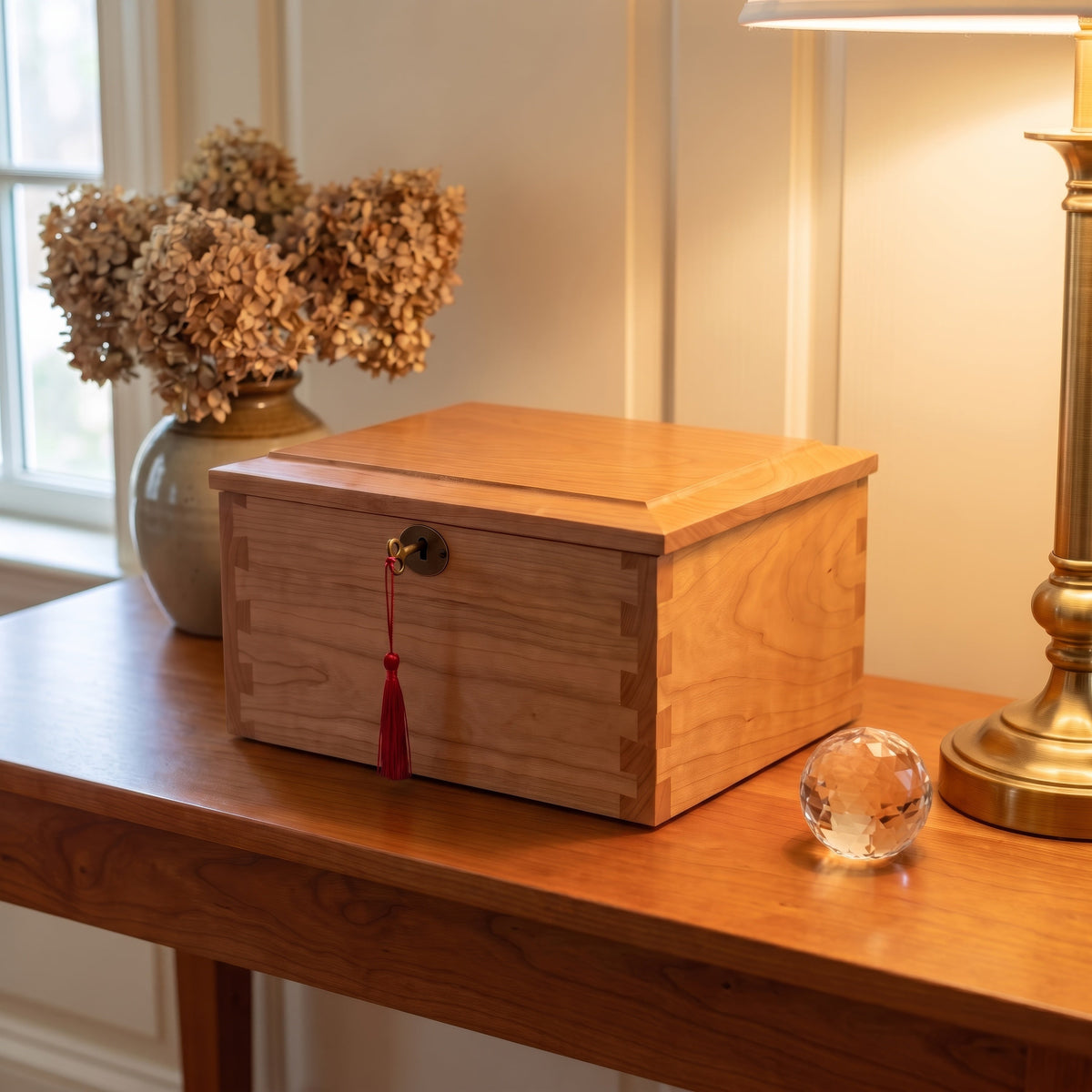
Add about a third to the capacity you would choose for flame cremation, and round up. Many of our adult urns and urn chests hold around 275 cubic inches, with models ranging from about 215 to 300 cubic inches, which gives comfortable room for water cremation remains for many adults. Check the listed capacity on each product, and choose the larger end of the range for taller or larger individuals.
6.3 Consider an urn with an inner container
Many urn chests hold the remains in a separate insert or sealed bag. This keeps very fine remains, such as those from water cremation, contained neatly and makes future transfer easier if you later divide the remains or move them for burial. Our bronze-finished urn insert holds 240 cubic inches and fits many of our urn chests.
6.4 For natural organic reduction, plan for a portion
Decide how much soil the family wants to keep, and who will keep it. A small amount can be held in a keepsake or scattering capsule, and a larger portion in a full-size urn or urn chest kept at home. Ask your provider how they recommend storing the soil long term, and keep it in a sealed container or liner inside the urn.
6.5 Plan ahead if you are sharing
Whatever the method, if several family members want a portion, plan for keepsakes from the start. Our guide to splitting ashes between siblings covers how families handle it.
6.6 Choose for where the urn will rest
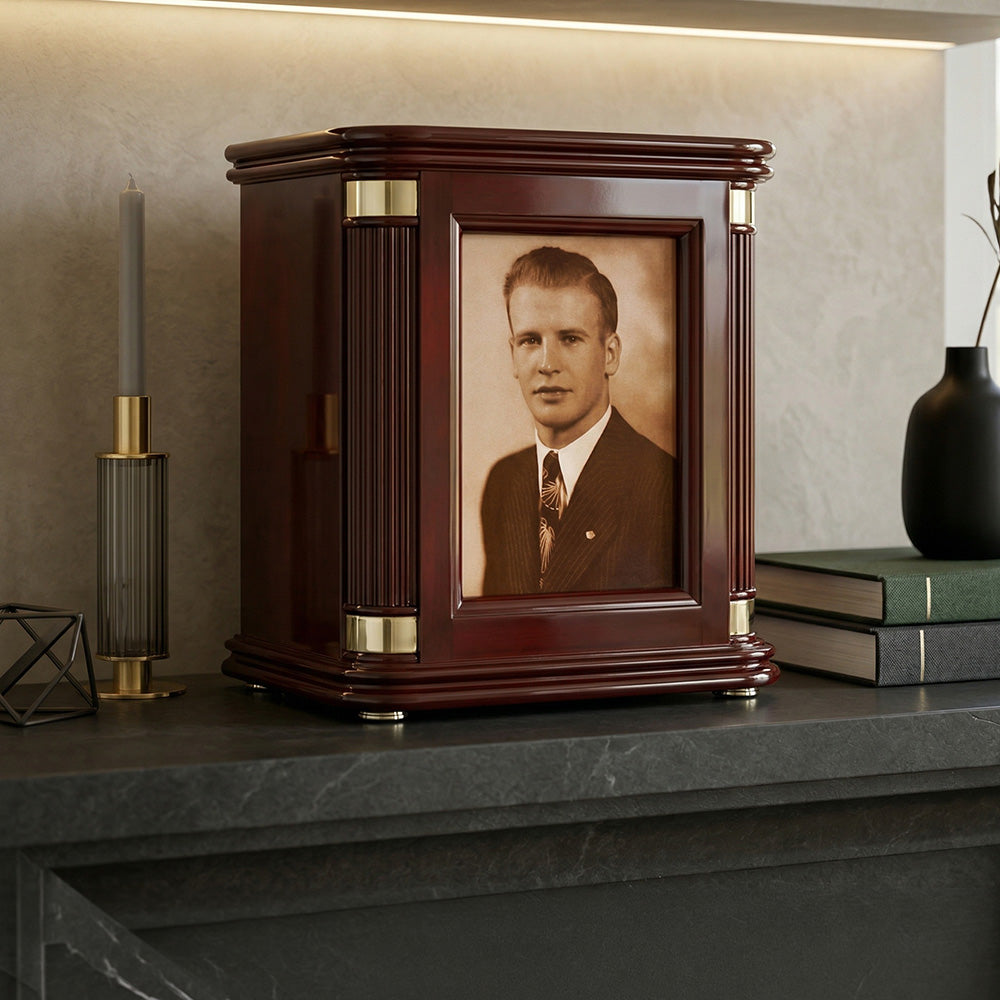
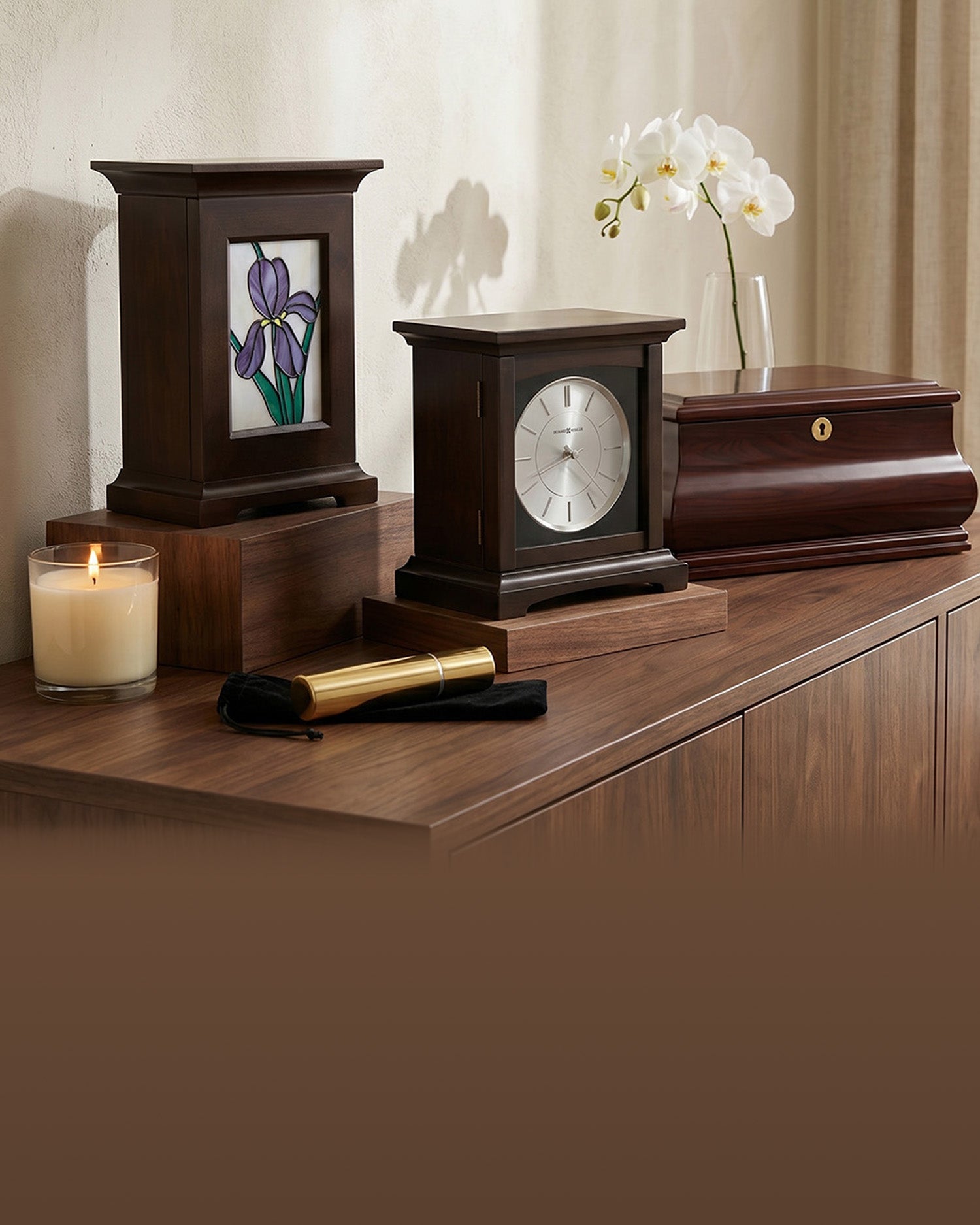
The method changes how much there is to hold, but not how the urn will live in your home or at the cemetery. For display ideas, see how to display an urn at home, and for materials, our guide to urn materials. If you are looking for something that feels like part of the home, our portrait urns and clock urns are designed with that in mind.
7. Frequently asked questions
7.1 Does water cremation produce more ashes than flame cremation?
Yes. Water cremation typically returns about a third more remains than flame cremation, and they are usually whiter and finer. Choose an urn with more capacity than you would for flame cremation.
7.2 What size urn do I need for water cremation?
Start with about 1 cubic inch per pound of healthy body weight, then add roughly a third. For a 180-pound adult, that is about 240 cubic inches. Your provider can confirm the actual volume.
7.3 Can you put human composting soil in an urn?
Yes, a portion of it. Natural organic reduction produces about one cubic yard of soil, far more than any urn holds, so families usually keep a small amount in an urn or keepsake and use or donate the rest.
7.4 Can I use the same urn for any method?
Often, as long as it has enough capacity. Water cremation needs more room than flame cremation, and natural organic reduction requires choosing how much soil to keep. Check the capacity in cubic inches before you buy.
7.5 Is water cremation or human composting legal in my state?
It depends on where you live, and the laws are changing. Water cremation is permitted in about half of U.S. states and natural organic reduction in 14 states as of 2026. Your funeral director can tell you what is available locally.

Leave a comment
All comments are moderated before being published.
This site is protected by hCaptcha and the hCaptcha Privacy Policy and Terms of Service apply.