

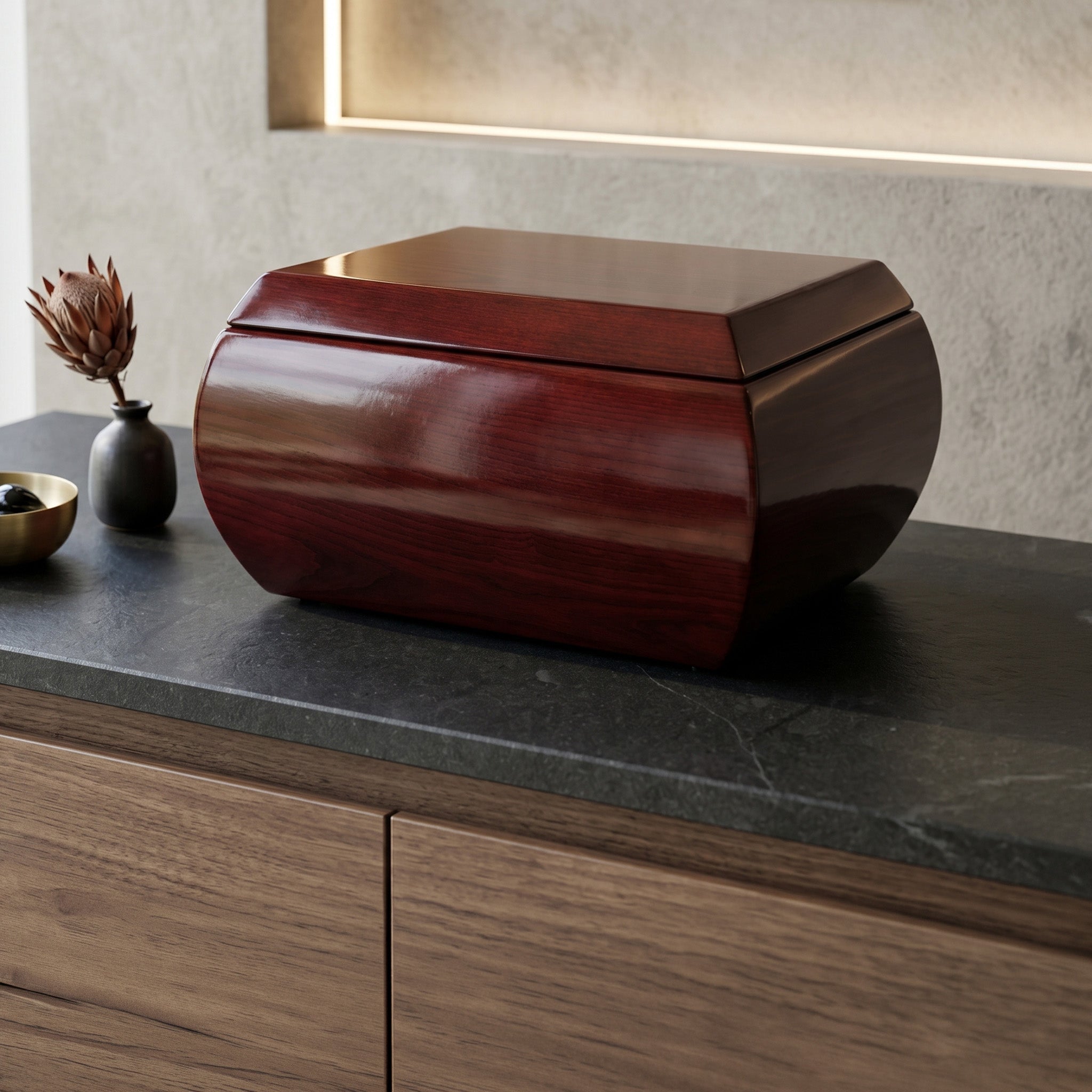
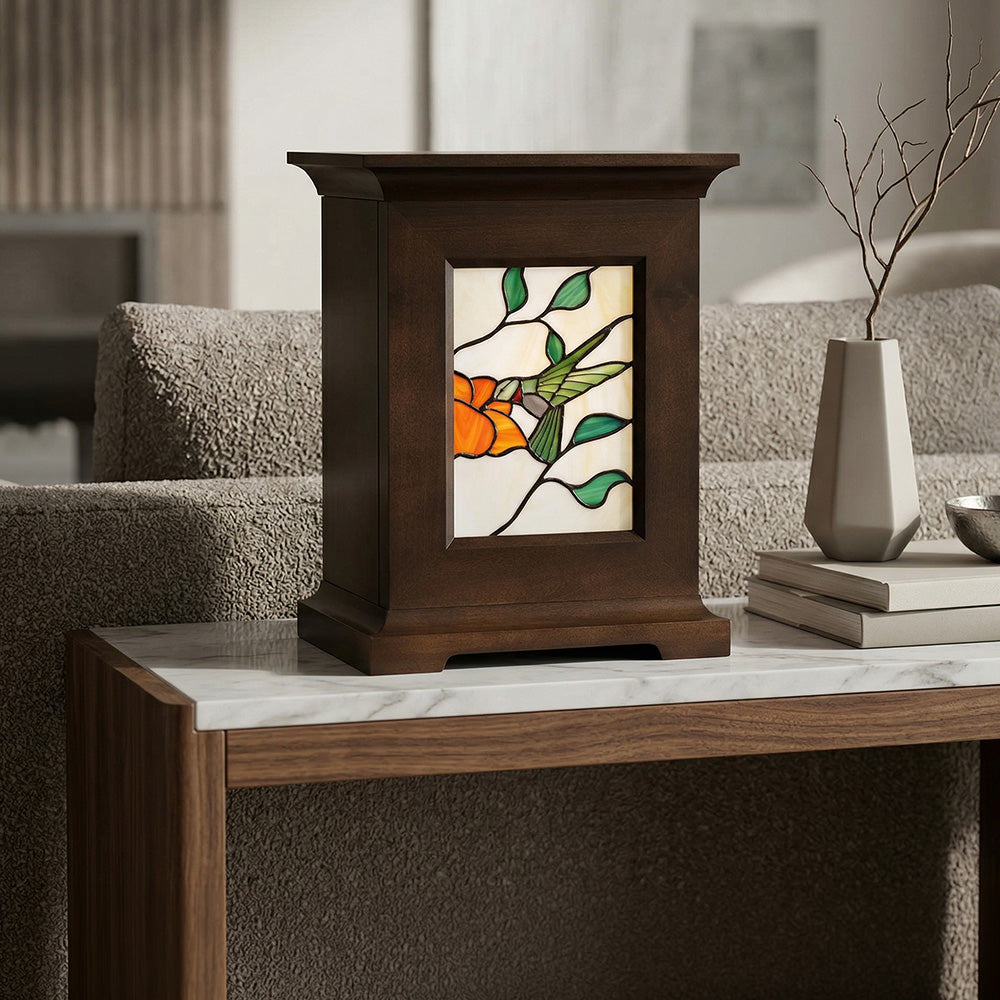
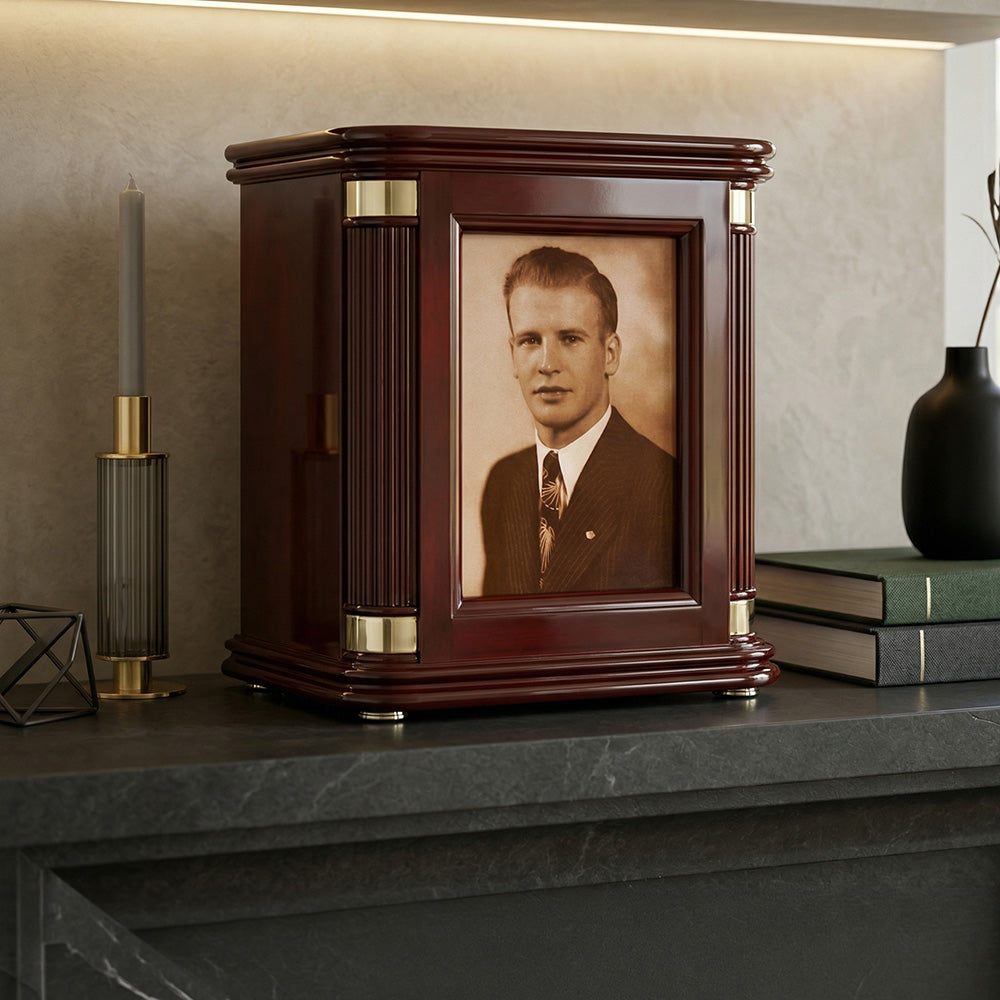
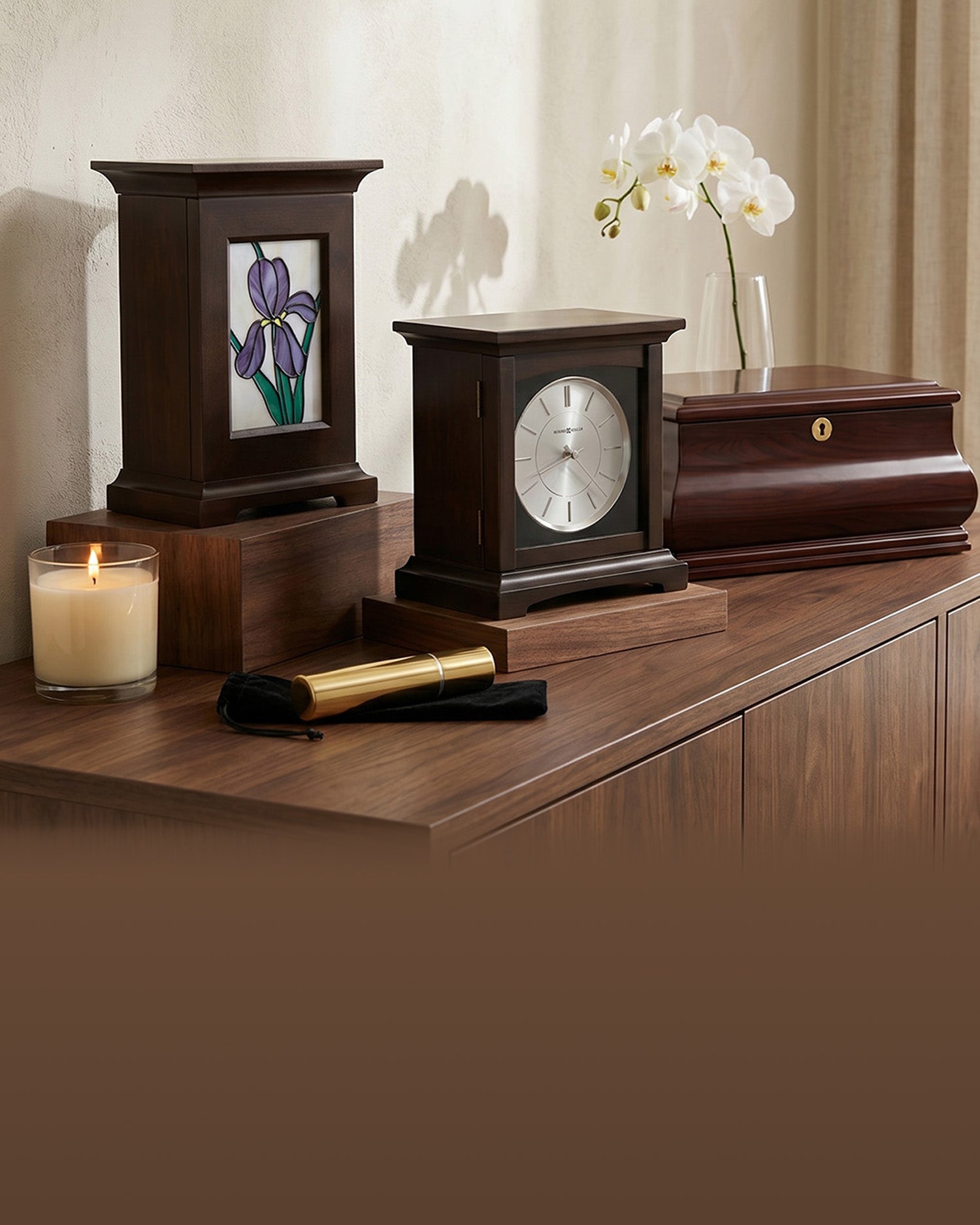

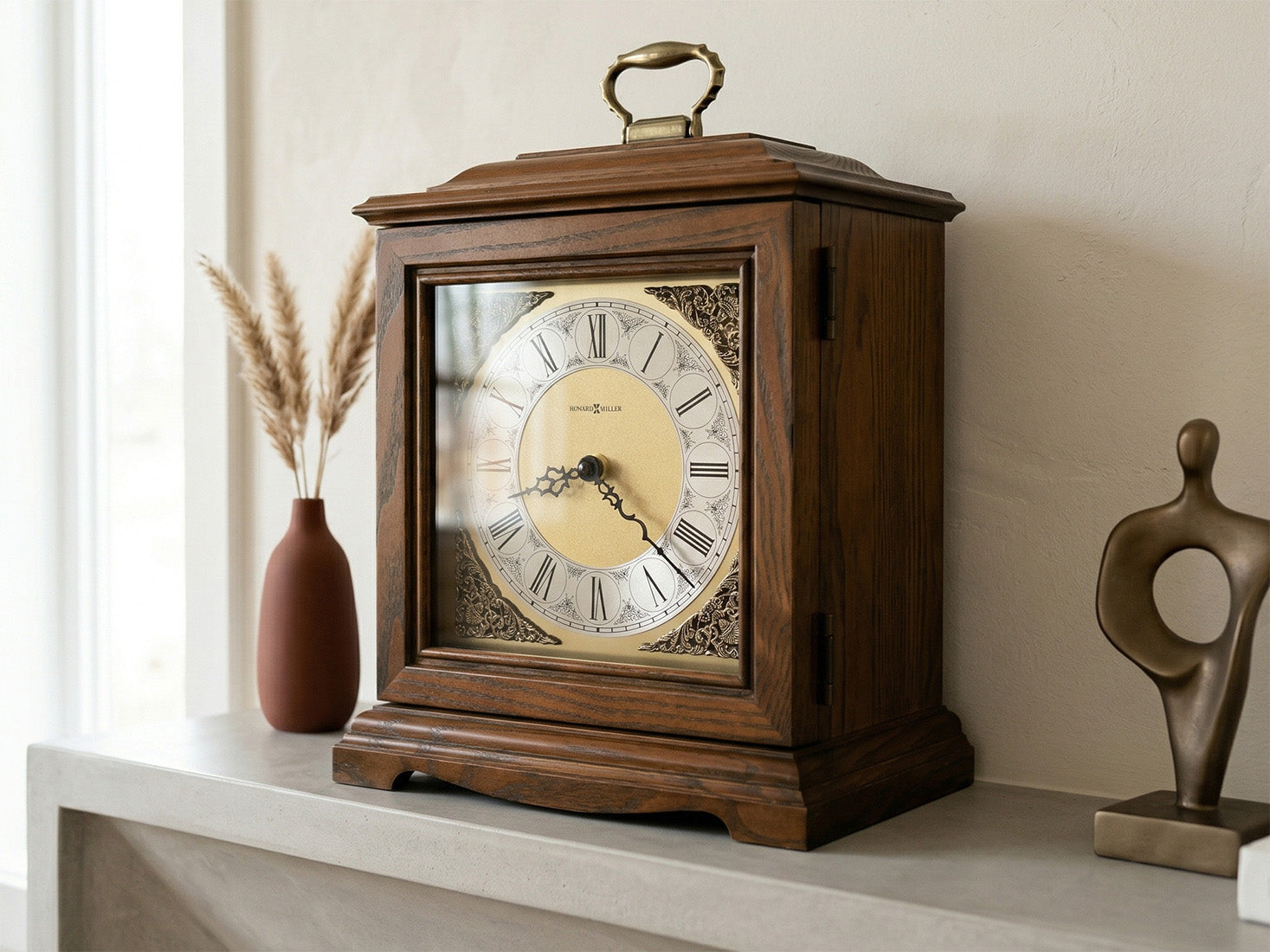
The first time most people see a clock urn, they do not realize what they are looking at. It reads as a handsome mantel clock, the kind that might have sat in a grandparent's living room for decades. That is exactly the point. A clock urn is a fully working timepiece designed to also hold a loved one's cremated remains, usually in a discreet compartment within the body of the clock.
If you want the short answer: yes, the clock keeps time like any other clock, and the ashes rest safely inside, out of sight. Below I will walk through how a clock urn actually works, who tends to choose one, how much it holds, and the practical questions worth asking before you decide.
Jump to a section
1. What a clock urn is
A clock urn is a memorial that does two jobs at once. It functions as a real clock, and it serves as a permanent resting place for cremated remains. The remains are held in a sealed or closed compartment that is built into the piece, most often accessed through a panel on the bottom or back.
What makes the clock urn distinctive is that it is meant to be seen and used. A traditional urn often ends up tucked on a high shelf or in a cabinet because families are unsure how to display it. A clock urn solves that quietly. It belongs on a mantel, a bookshelf, or a side table, where it does something useful every day while keeping your loved one close.
Howard Miller Memorial grew out of a clock company that has been making timepieces for close to a century, so the clock urn is a natural extension of that craft rather than a novelty. You can see our current range on the clock urn chest collection here.

Because a clock urn is built to be a centerpiece, the quality of the woodwork and the movement matters more than with a hidden urn. A good one feels like an heirloom you would have wanted in the home anyway, which is part of why families find them comforting rather than somber.
2. How a clock urn works
The mechanics are simpler than people expect. The clock runs on a standard quartz movement, powered by a single battery, so there is nothing to wind and no special maintenance to keep it ticking. You set the time once, change the battery roughly once a year, and it behaves like any quality mantel clock.
The remains sit in a separate interior compartment, kept entirely apart from the clock mechanism. On the Howard Miller Memorial clock urns, you reach this compartment through a hinged door, and some models add a removable back panel for easier access. The ashes are held inside, often in an urn insert, and on many clock urns that metal insert is sold separately, so it is worth checking the product page before you order.
Filling a clock urn usually means placing the ashes, still inside the plastic bag the crematory provides, into the interior compartment or insert, then closing the door. Many families ask their funeral director to handle this, and that is completely normal. If you would rather do it yourself at home, it is a calm and manageable task when you are ready.
3. Who tends to choose a clock urn
In my experience, families gravitate toward a clock urn for one of a few honest reasons. Some want something on display that does not announce itself as an urn, especially when children or guests are often in the home. A clock gives them that privacy without hiding their loved one away.
Others choose it because the person who died loved clocks, woodworking, or fine furniture, and a timepiece simply fits who they were. There is also a quiet symbolism many people find meaningful in a clock that keeps going, marking time alongside the family rather than stopping it.
It is also a practical choice for households that do not want a cemetery plot or columbarium niche but still want a defined, dignified resting place at home. If you are weighing different formats, our overview of the main types of cremation urns can help you compare a clock urn against other options side by side.
4. How much a clock urn holds
Capacity is the single most important practical question, and the rule of thumb is reassuring: an urn needs roughly one cubic inch of interior space for each pound of the person's healthy body weight. The Cremation Association of North America uses this same guideline, which means a typical adult needs an urn of around 200 cubic inches.
Most full-size clock urns are built to hold the remains of one adult. Howard Miller Memorial's models sit comfortably in that range and a little above it: the Continuum II holds up to 240 cubic inches, while the Midtown holds 275 cubic inches and is rated for a larger adult. Companion clock urns and urn chests are designed to hold two people together, often around 400 cubic inches. Smaller keepsake-style designs hold only a small portion, which suits families who plan to share or scatter the rest.
| Clock urn size | Typical capacity | Best for |
|---|---|---|
| Standard adult clock urn | Around 200 to 285 cubic inches | One adult; larger sizes suit a bigger build |
| Companion clock urn or urn chest | Roughly 350 to 400-plus cubic inches | Two people resting together |
| Keepsake clock urn | A small fraction of a full urn | Sharing a portion among family |
Because exact capacity varies by model, always confirm the cubic-inch figure on the specific product before you buy. If you want to understand the math behind sizing, our guide to urn sizes and cubic inches explains it in plain terms.
If the person was larger than average, or if you are choosing a companion piece for two, give yourself a small margin and pick the next size up rather than the exact minimum. There is no downside to a little extra room, and it spares you any worry on the day you fill it.

5. Styles and types of clock urns
Clock urns are not one shape. The most common is the mantel clock urn, sized to sit on a fireplace mantel or wide shelf, often in a warm wood like oak, cherry, or walnut. These are the pieces most people picture, and they suit a traditional or transitional home.
5.1 Mantel clocks and urn chests
Some designs combine a clock face on top with a larger chest below, which increases capacity and gives a flat surface for a folded flag or a small framed photo. These urn chests work well for veterans' families and for couples choosing a companion piece. You can see chest-style options in the urn chest collection.
5.2 Material and finish
Wood is the traditional choice and the most common, prized for warmth and the sense of furniture-grade craftsmanship. Some clock urns use metal accents or a metal body for a more contemporary look. The finish matters because this piece will sit in daylight for years, so choose a tone that fits the room it will live in.
6. How to choose the right clock urn
Start with capacity, because no other feature matters if the urn cannot hold the remains. Confirm the cubic-inch figure first, then think about whether you need a single or companion size.
Next, picture exactly where it will sit. Measure the mantel or shelf, allow clearance above for the clock's height, and consider the wood tone against your existing furniture. A clock urn earns its place by blending in, so a finish that clashes will undercut the whole reason for choosing one.
Finally, weigh the things that signal lasting quality: a reliable quartz movement, solid construction, a clean and secure access panel, and a warranty that reflects the maker's confidence. Because Howard Miller has built clocks for generations, the movements and cabinetry are held to the same standard as the company's heirloom clocks, which is reassuring when you are choosing something meant to last decades.
7. Caring for a clock urn over the years
A clock urn asks very little of you. Dust it as you would any fine wood piece, using a soft dry or barely damp cloth and avoiding harsh sprays that can dull the finish over time. Keep it out of direct, prolonged sunlight where you can, since strong light can slowly lighten some wood finishes.
Change the battery about once a year so the clock never stops, and many families choose a meaningful date for this, such as a birthday or anniversary, which turns simple maintenance into a small moment of remembrance. Beyond that, there is nothing to seal or service unless you ever need to open the compartment again.
8. Quick checklist before you buy
Use this short list to feel confident in your choice. It is easy to screenshot and bring with you while you compare options.
- Capacity confirmed: the urn holds at least one cubic inch per pound of the person's healthy weight, around 200 cubic inches for an average adult.
- Single or companion: you have chosen the right size for one person or two.
- Space measured: the clock fits the mantel or shelf with room above for its height.
- Finish chosen: the wood tone suits the room where it will live.
- Movement and battery: you know it runs on a standard quartz movement and how often to change the battery.
- Access and insert: you know how the hinged door or back panel opens, and whether an urn insert is included or sold separately.
- Warranty checked: you have read what the maker covers.
Final thoughts
A clock urn lets you keep someone close without turning your home into a place of mourning. It sits in plain sight, doing the ordinary work of marking the hours, and only you need to know what else it holds. For many families that balance of presence and privacy is exactly what they were hoping to find.
If a clock urn feels right for your family, you can browse current designs, finishes, and capacities on the clock urn collection. Take your time. There is no wrong pace for a decision like this, and the right piece is the one that feels like your loved one whenever you look at it.
9. Frequently asked questions
9.1 Is a clock urn a real working clock?
Yes. A clock urn keeps time exactly like any quality mantel clock, typically running on a standard quartz movement powered by a single battery. The ashes rest in a separate, closed compartment that does not touch the clock mechanism, so the timepiece works normally and looks like an ordinary clock.
9.2 How much does a clock urn hold?
Most full-size clock urns hold the remains of one adult, following the guideline of about one cubic inch of space per pound of pre-cremation body weight. Howard Miller Memorial models range from roughly 200 up to 285 cubic inches, with the Midtown at 275 cubic inches suited to a larger adult. Companion sizes hold two people. Always confirm the exact capacity on the product page.
9.3 How do you put ashes into a clock urn?
The ashes, usually still in the sealed bag from the crematory, go into the interior compartment, often an urn insert, through a hinged door, with some models adding a removable back panel for access. You then close it. Your funeral director can do this for you, or you can do it calmly at home whenever you feel ready.
9.4 Can a clock urn hold two people?
Yes. Companion clock urns and clock-topped urn chests are made with larger interior capacity, often in the range of 350 to 400-plus cubic inches, so two people can rest together. If you are planning ahead for a couple, choose a companion size from the start rather than two separate pieces.
9.5 Do I need to maintain or wind a clock urn?
There is no winding. A quartz clock urn simply needs a fresh battery about once a year to keep accurate time. Otherwise, care for it as you would fine furniture, dusting gently and keeping it out of harsh direct sunlight. The compartment holding the ashes needs no ongoing maintenance once closed.
9.6 Where should I put a clock urn in my home?
A mantel, bookshelf, or sturdy side table all work well, ideally at a height where the clock is easy to see and out of reach of young children and pets. Because it looks like an ordinary clock, you can place it anywhere a clock would naturally belong without it feeling like a memorial display.
9.7 How much does a clock urn cost?
Pricing varies with size, material, and craftsmanship, so the most accurate answer is always on the current product page. As a category, clock urns sit toward the heirloom end of the urn market because they are working timepieces built from quality wood. Check the live collection for up-to-date pricing on each model.
9.8 Is a clock urn appropriate for a veteran?
Many families choose clock urns and urn chests for veterans, since the flat top or chest surface suits a folded flag or a framed photo, and the dignified furniture-grade look feels fitting. Confirm the dimensions if you plan to display a memorial flag case nearby, and choose a single or companion size as needed.

Leave a comment
All comments are moderated before being published.
This site is protected by hCaptcha and the hCaptcha Privacy Policy and Terms of Service apply.